
Dangote and GCL’s $4.2bn Gas-to-Fertilizer Megaproject
By Patience Ikpeme

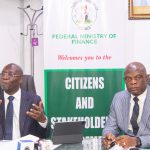
In a move set to redefine the industrial and agricultural landscape of East Africa, Dangote Industries Limited (DIL) has entered into a massive US$4.2 billion energy partnership with China’s GCL Group.
The 25-year natural gas supply agreement, signed recently in Lagos, provides the essential energy foundation for a 3-million-tonne-per-year urea fertilizer complex in Ethiopia, signaling a new era of China-Africa economic synergy.
The deal tethers GCL Group’s extensive energy infrastructure to Dangote’s US$2.5 billion fertilizer project, which is being developed through a 60:40 equity split between the Dangote Group and Ethiopian Investment Holdings (EIH). Scheduled to commence operations in 2029, the facility is positioned to become the largest modern fertilizer hub in the region, aimed at eliminating Ethiopia’s dependence on imported urea and serving the wider African market.
Under the terms of the long-term contract, GCL Group will deliver natural gas from the Calub Gas Field in the Ogaden Basin. The resource will travel through a dedicated 108-kilometer pipeline constructed to feed the Dangote complex in Gode, located within the Somali Region. This infrastructure loop creates a direct link between Ethiopia’s domestic natural resources and its agricultural productivity.
Aliko Dangote, President and Chief Executive of Dangote Industries Limited, voiced a firm stance on the continent’s need for industrial self-reliance during the signing ceremony. He noted that the era of shipping out raw materials only to buy back processed goods must come to an end if the continent is to prosper.
“Africa’s energy industry cannot continue indefinitely exporting raw materials while importing finished products. We must pursue a new path of highly autonomous development,” Aliko Dangote said. “Through seamless integration and strategic cooperation with GCL, we will achieve an efficient closed‑loop value chain from natural gas extraction to fertilizer production, taking a crucial step toward enabling Africa to secure greater autonomy over its food security.”
The partnership also represents a strategic pivot for GCL Group, which has operated in Ethiopia for two decades. The company’s Chairman, Mr. Zhu Gongshan, pointed out that the support of the Ethiopian government was instrumental in bringing this multi-billion-dollar framework to fruition. He suggested that the venture moves beyond simple commerce into a more integrated economic model.
“This cooperation will enable both sides to expand new frontiers in Ethiopia’s energy, chemical, and food security sectors while transitioning from a ‘business going global’ model toward a mutually beneficial ecosystem‑based framework,” Mr. Zhu Gongshan said. “Leveraging GCL’s integrated oil and gas operations in Ethiopia and Dangote Group’s extensive industrial footprint across Africa, the partnership will significantly enhance our service capabilities and market reach across the continent.”
Industry experts suggest the project carries weight far beyond the immediate balance sheets. By converting natural gas into fertilizer locally, the initiative provides a blueprint for low-carbon industrial growth. The project is expected to generate thousands of jobs and stimulate infrastructure development in the Somali Region, which has long awaited such high-value industrial investment.
For GCL, the agreement is an extension of its long-term commitment to the region, moving from initial exploration to the development of the country’s first gas liquefaction facilities. The group intends to continue focusing on its “gas-power-computing” model, utilizing Chinese technological solutions to meet African developmental goals.
The “gas-to-fertilizer” chain is being viewed as a flagship project for the Belt and Road Initiative, demonstrating how energy resources can be directly applied to solve food security challenges. By the time the first bags of urea roll off the production line in 2029, the partnership aims to have established a permanent shift in how African nations utilize their sovereign resources to fuel domestic industry.