
Experts Back Nigeria’s Reforms to Drive New Investment
By Patience Ikpeme

Nigeria’s recent economic overhaul is generating significant traction within the global financial community, with international investors and development financiers describing the nation’s new policy direction as credible.
Gathered at the Africa Capital Forum in London, held alongside President Bola Ahmed Tinubu’s State Visit to the United Kingdom, stakeholders met under the theme “From Stabilisation to Capital Mobilisation.”
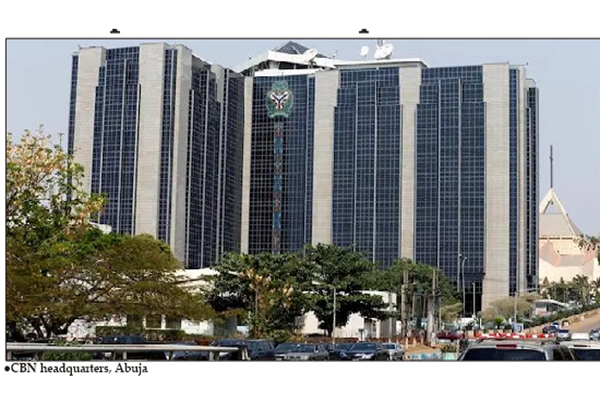
The dialogue, co-hosted by the Central Bank of Nigeria (CBN) and the UK Foreign, Commonwealth and Development Office (FCDO), focused on cementing Nigeria’s financial resilience and fostering long-term investor trust.
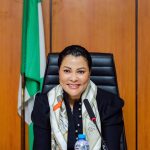
Representing the Minister of Finance and Coordinating Minister of the Economy, Mr. Wale Edun, the Special Adviser to the President on Finance and the Economy, Mrs. Sanyade Okoli, explained that the administration is focused on fostering high-quality growth.
She made it clear that the public sector cannot carry this burden alone. “We need to work with partners who will bring the sticky, equity capital,” she noted, pointing to the necessity of private investment to fuel the nation’s expansion.
The British Deputy High Commissioner to Nigeria, Mr. Jonny Baxter, indicated that the United Kingdom remains a dedicated partner with deep-rooted interests in Nigeria’s banking and capital markets.
Looking toward the future, Baxter said, “The next phase of the reforms should be converting renewed investor interest into long-term sustainable investments.” He added that the UK is committed to supporting an economic transformation that deepens the relationship between the two nations.
Adding a global perspective, the President of the European Bank for Reconstruction and Development (EBRD), Madame Odile Renaud-Basso, expressed optimism about the country’s trajectory. “We see all the potential in the economic stabilisation in Nigeria, the growth of the population, the appetite, the investment of new technologies, and the ability of the people to embrace the new technologies,” she remarked.
This sentiment was supported by Steve Gray, Head of West and Central Africa at UK Export Finance (UKEF), who linked current successes to improved governance. “Confidence is built through full fiscal transparency. But the reforms in Nigeria are providing transparency and building confidence,” Gray stated. He expressed a desire to see the global community better acknowledge Nigeria’s inherent strengths to better support its national priorities.
From within the Central Bank, Deputy Governor for Economic Policy, Dr. Muhammad Sani Abdullahi, provided a data-driven look at the recovery. He pointed out that both net and gross reserves are now in a strong position, with foreign reserves exceeding $50 billion. While he noted that the foreign exchange market has found its footing and inflation is retreating, he maintained that the bank remains “cautious” in its approach.
Mr. Philip Ikeazor, the Deputy Governor in charge of Financial System Stability, spoke on the permanence of these changes. He argued that the reforms are designed to reach across all stakeholder groups, ensuring their longevity. According to Ikeazor, the framework is being built so that “even at the end of this particular administration, people will see the need not to reverse these reforms.”
The forum also saw a united front from the leadership of Nigeria’s major commercial banks. Executives from First Bank, United Bank for Africa (UBA), GTCO, First City Monument Bank (FCMB), Access Bank, and Zenith Bank collectively stated that the current reforms have restored faith in the economy. They noted that these changes have empowered local banks to increase funding for domestic projects, further stimulating the local economy.
Over the last two years, under the guidance of CBN Governor Olayemi Cardoso, Nigeria has moved to unify the foreign exchange market and initiate a banking recapitalisation exercise. These efforts have seen inflation drop from 34% to 15% and exchange rate volatility ease significantly.
The London forum served as an assessment of these milestones, framing them as a “macroeconomic reset” intended to build a more permanent bridge between Abuja and the global financial hub of London.