

SEC Reports $96bn Digital Asset Transactions
…Capital Market Hits ₦127 Trillion
By Patience Ikpeme
The Securities and Exchange Commission (SEC) has revealed that Nigeria’s digital finance ecosystem now accounts for approximately $96 billion in cryptocurrency and virtual asset transactions.
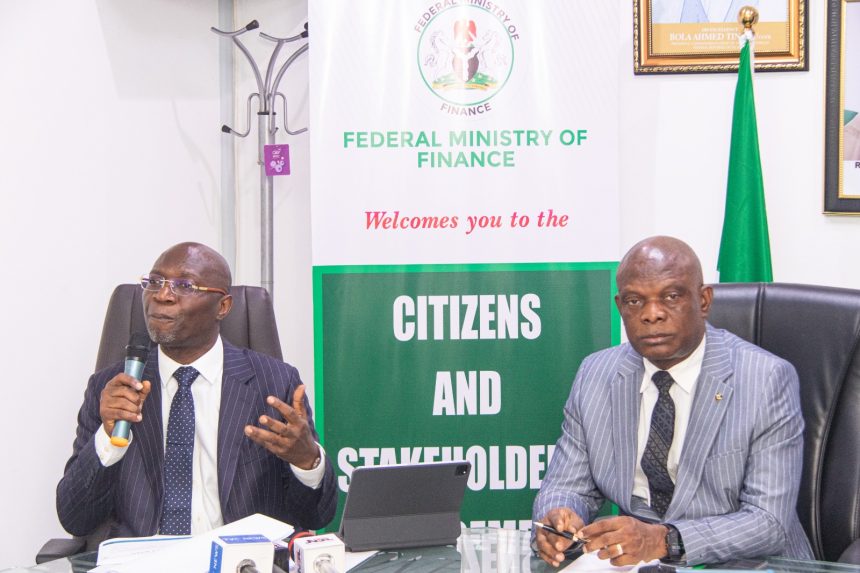
The Director-General of the SEC, Emomotimi Agama, shared these figures during a Citizens and Stakeholders Engagement Session hosted by the Federal Ministry of Finance in Abuja on Monday. He noted that the sheer scale of activity within the digital asset space necessitates strict oversight to safeguard investors and maintain market integrity.
According to the Director-General, the regulatory environment for these assets gained significant clarity following the enactment of the Investment and Securities Act 2025. This legislation grants the commission specific powers to oversee digital assets and emerging financial technologies, while also cementing the SEC’s role as the apex regulator of the Nigerian capital market.
“The law confirms the SEC as the apex regulator of the capital market while introducing provisions aimed at monitoring systemic risks and aligning Nigeria’s market operations with global standards,” Agama said.
Reflecting on broader market performance, the SEC boss noted that the Nigerian capital market has become a primary engine for economic funding. In 2024 alone, the commission cleared ₦3.68 trillion in new capital market issues across equities and fixed-income instruments. This liquidity proved vital during the recent banking sector recapitalization, where more than 31 banks utilized the market to meet elevated capital requirements.
The growth trajectory of the market remains steep. Agama pointed out that total market capitalization surged from ₦55 trillion in 2024 to approximately ₦127 trillion at present. This expansion has significantly altered the nation’s economic profile, with the market capitalization-to-GDP ratio jumping from 13 per cent to roughly 33 per cent.
Despite this growth, the regulator expressed concern over the rise of fraudulent financial activities. He disclosed that the SEC has issued over 90 advisory notices to alert the public against suspicious schemes and is currently collaborating with the Nigeria Police Force to investigate and prosecute operators of Ponzi schemes.
“Many people who fall victim to such schemes often invest in unregistered platforms promising unrealistic returns,” Agama warned, urging citizens to verify the registration status of any investment opportunity with the SEC before committing their capital.
Beyond private investment, the capital market has become a cornerstone for subnational development. Agama explained that state governments are increasingly using bond issuances to fund stadiums, markets, and critical infrastructure. He noted that these investments are secured through the Irrevocable Standing Payment Order (ISPO) system, which ensures repayments are deducted directly from state allocations at the federation level.
To further decentralize access to credit, the SEC has established an Office of Municipal Fund Development. This initiative aims to assist state and local governments in tapping into capital market financing for grassroots projects. Additionally, the commission supported the Ministry of Finance Incorporated Real Estate Investment Fund (MREIF) to provide long-term, single-digit interest rate mortgages aimed at reducing the national housing deficit.
Looking toward the future, Agama stated that the goal is to push the market capitalization-to-GDP ratio toward the levels seen in other major emerging economies. “We are working to deepen the market by raising the capital market capitalization-to-GDP ratio from about 30 per cent toward levels seen in emerging economies such as India, where the ratio stands at about 92 per cent,” he said.
During the same session, the Permanent Secretary of the Federal Ministry of Finance, Mr. Raymond Omenka Omachi, provided an update on the challenges facing federal budget implementation. He cited the difficulty in meeting the oil production benchmark of 2.1 million barrels per day and the impact of global price volatility.
“The budget benchmark was set at $75 per barrel, but oil prices at some point fell below $60 per barrel, reducing expected government revenue,” Omachi said. He added that rising debt obligations and salary commitments have further constrained the treasury.
To manage these pressures, the ministry has instituted weekly cash management meetings every Monday to monitor revenue and expenditure. Omachi also stated that the government intends to streamline the fiscal calendar, with plans to collapse overlapping budgets into a single national budget cycle starting in 2026.