

CBN Holds Interest Rate at 23% as Inflation Falls
By Patience Ikpeme

The Central Bank of Nigeria (CBN) has left its main interest rate unchanged at 23 per cent, saying that keeping borrowing costs high for now will protect the progress made in bringing down prices.
The decision came from the 308th meeting of the Monetary Policy Committee (MPC), held on Monday and Tuesday with ten members present. The committee also left the band for the bank’s lending and deposit rates at 50 basis points above and 300 basis points below the main rate. The Cash Reserve Requirement, the share of deposits banks must keep with the CBN, stays at 45 per cent for commercial banks, 16 per cent for merchant banks and 75 per cent for public sector deposits outside the Treasury Single Account.
The MPC said inflation has fallen for five months in a row. Headline inflation dropped to 14.06 per cent in October from 14.63 per cent in September. Core inflation, which leaves out food and energy, fell sharply to 10.78 per cent from 12.95 per cent. Food inflation eased to 19.13 per cent from 19.59 per cent as the harvest season brought down the prices of farm produce and processed food. The committee credited the tight policy stance and a steady foreign exchange market. It said keeping rates where they are would help anchor inflation expectations and support the fall in prices.
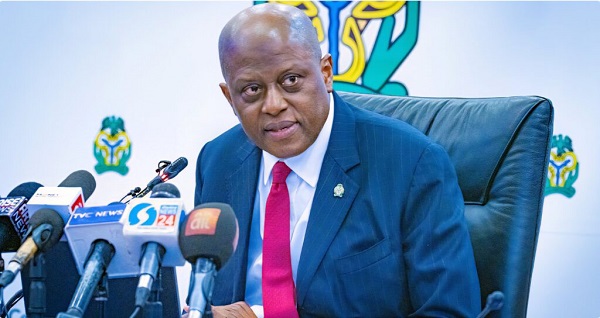
Asked where policy is heading before the next meeting in February, the CBN Governor, who briefed journalists after the meeting, gave no firm signal on a rate cut or rise. He said the committee will follow the numbers: “every time we meet, we will look at data and we will respond accordingly.” He added that the bank’s goal remains lower prices for all Nigerians: “Our goal is single-digit inflation, and we will not stop until we get there.”
On worries about foreign reserves and the naira, the Governor tried to calm nerves. Reserves stood at $54.02 billion on November 17, enough to pay for 10.26 months of imports. A journalist asked whether Nigerians should be worried, since reserves have fallen by about $391 million in two weeks and the naira has weakened recently. The Governor replied that “buffers remain strong. Very strong.” He called the dip temporary and normal for this time of year, when foreign investors adjust their holdings and local businesses and individuals buy dollars ahead of the new year. He said the fall was small against the size of the reserves: “It’s not something that anybody should lose sleep over.” He added that the country still has a current account surplus and that money sent home by Nigerians abroad was above $900 million last month. He also said Nigeria’s currency has been less volatile than those of many other emerging markets.
The MPC also welcomed a new agreement between the CBN and the Nigerian National Petroleum Company Limited (NNPC) meant to bring in more foreign exchange, support energy project financing and make the economy more stable. The Governor said it was not a hasty move. “This was not something that we just woke up and decided was a good thing to do,” he said, adding that the two bodies had met for months to sort out problems. He expects the deal to make oil-related foreign exchange flows clearer to the public and to add to reserves. “The potential impact is quite significant,” he said.
The committee warned that some risks could push prices up again. These include the Middle East conflict, which could keep energy prices high, and extra spending around the end-of-year festivities and election-related activities, which could increase demand and raise prices. Even so, the members said they expect the steady exchange rate and better food supply from the harvest to keep inflation falling.
On whether the recent adjustment of policy rates to match market rates is working, the Governor said it is. Interbank rates are moving towards the lower edge of the bank’s rate band, and the rates on Open Market Operations (OMO) and treasury bills have come down. He said the gap between the CBN’s policy rates and market rates has narrowed considerably, and that lending to private businesses has started to rise slowly. “So far, so good,” he said, though he added that the work is not finished and the cost of credit is still being watched.
Looking to 2027, the Governor told businesses and investors to expect steadiness. “There will be consistency in policy,” he said, so that people can “predict and be able to plan.” He also promised continued work with the Ministry of Finance, further attention to how interest rate decisions reach the wider economy, and close watch over the banking system, which the MPC described as strong, with enough capital and better risk management.
The MPC described the outlook for the economy as positive for the rest of 2026 and into 2027, backed by better crude oil output and growth in agriculture, services and industry. The composite Purchasing Managers’ Index, a measure of business activity, rose to 53.2 points in October from 53 in September, and any reading above 50 signals growth. The committee said global growth is expected to slow this year before picking up in 2027, with high energy prices and trade uncertainty among the drags.