
Cardoso Wants Fair Say for Big Economies in ECO Union
…Nigeria links its financial commitments to governance role
By Patience Ikpeme
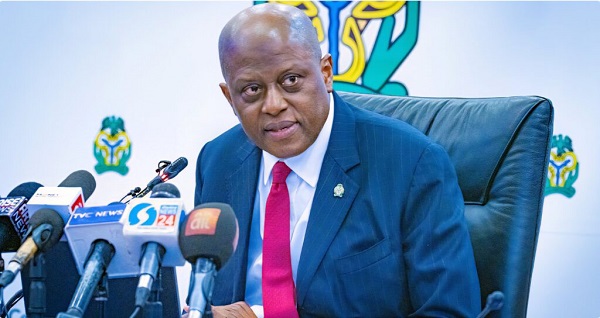
The Governor of the Central Bank of Nigeria (CBN), Mr. Olayemi Cardoso, has asked West African leaders to make sure that countries putting in the most money and taking the most risk in the planned ECOWAS Monetary Union also get a fair share of the power to make decisions.
Mr. Cardoso spoke on Friday, November 20, 2026, on behalf of Nigeria at the Ministerial Session of the 6th Presidential Task Force Meeting on the ECOWAS Single Currency Programme, held in Abidjan. The ministerial committee is made up of finance ministers and central bank governors from the member countries of the task force.
He described the meeting as an important turning point in the long effort to bring the region’s economies closer through a shared currency. According to him, talks in recent times have centred on how the Union will be built and run, including where its institutions will be based, who will lead them, and how power and duties will be shared among them.
Mr. Cardoso told the delegates that the choices made at this stage would affect the Union for many years. “The decisions we take today will shape the future of the Union for decades to come,” he said. He added that such choices would determine how investors and development partners view the Union, how ordinary citizens judge it, and whether member countries feel their contributions are matched by a real voice in its institutions.
The CBN Governor said Nigeria had long been committed to the ECOWAS monetary cooperation plan and to the creation of the ECO currency. He pointed to the country’s large financial contributions, steady technical support and willingness to give way on some issues for the sake of agreement in the region. “Nigeria has and will continue to demonstrate solidarity and fairness, respecting the sovereignty of other member states,” he declared.
However, he argued that unity among nations must go hand in hand with fairness. In his view, bigger economies that carry heavier financial duties deserve a fair say in the running of the bodies they help to fund. He warned that arrangements in which countries share obligations but not influence may be signed, but may not last. He also noted that leaders of larger economies must defend their country’s heavy contributions before their parliaments and civil society groups at home.
Mr. Cardoso made it clear that Nigeria’s position was not a claim to dominance or a sense of entitlement. Rather, he said, it came from a feeling of responsibility, since Nigeria is the largest economy in the region and one of the biggest contributors to the proposed Union. He said Nigeria would put in “substantial financial resources, reserves and institutional capital” to make the Union succeed, so it was only reasonable that accountability and participation in decision-making match the size of that commitment.
He urged delegates to approach the talks with an open mind, respect for one another and readiness to compromise, and said he was confident a balanced agreement could be reached. He added that every member country must have a real stake in the Union’s success, and that no nation should be left to carry heavy obligations without a matching voice in how the Union is governed.
The meeting centred on speeding up preparations for the gradual introduction of the ECO single currency from 2027, and gave member countries the chance to discuss the institutional and governance arrangements needed to set up the ECOWAS Monetary Union.