
Nigeria Pledges Stronger Fight Against Corruption, Asset Recovery
By Patience Ikpeme
Nigeria has declared its continued commitment to the recovery of looted assets and the fight against corruption in line with the United Nations Convention Against Corruption (UNCAC).
The pledge was made at the 16th Session of the Implementation Review Group (IRG) and the 19th meeting of the Open-Ended Intergovernmental Working Group on Asset Recovery, held in Vienna on Friday.
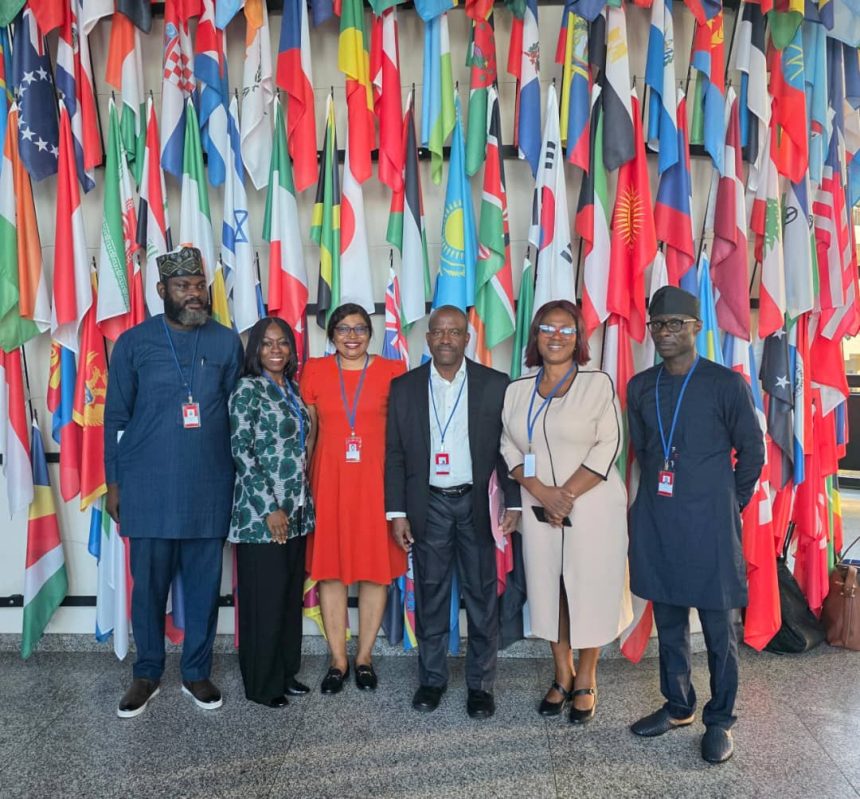
The Nigerian delegation to the meeting comprised the Head of the Technical Unit on Governance and Anti-Corruption Reforms (TUGAR), Mrs. Jane Adidu-Onwumere; the Head of Anti-Graft and Law Enforcement Agencies Liaison/AML CFT/IFF and Proceeds of Crime Country Expert of the Federal Inland Revenue Service (FIRS), Alhaji Idris Muhammadu Abdullahi; a Director in the Federal Ministry of Justice, Mrs. Bosede Oguntuberu; and representatives of the Nigerian Financial Intelligence Unit (NFIU), the Economic and Financial Crimes Commission (EFCC), and the country’s Permanent Mission in Vienna.
Delivering Nigeria’s position, Adidu-Onwumere stressed that the country remains committed to the full implementation of the UNCAC convention, particularly in the areas of asset recovery, transparency, and international cooperation.
“The Federal Republic of Nigeria stands resolute and remains committed in its fight against corruption. We will continue to pursue asset recovery with transparency and widen global cooperation to curb corruption,” she said.
She noted that Nigeria had made progress in the fight against corruption following the completion of its implementation review in the first and second cycles of the UNCAC mechanism. To this end, the government has adopted a comprehensive remediation plan to address gaps identified in the review process.
According to Adidu-Onwumere, “We have taken bold steps in consolidating anti-corruption legislation across relevant sectors. We have also developed a robust framework for periodic evaluation of the efficiency and effectiveness of anti-corruption measures and policies at the national and sub-national levels. This evaluation framework involves a systematic review of existing measures, identification of gaps, and formulation of targeted strategies to strengthen corruption prevention efforts. Our prevention strategy continues to emphasize tackling corruption from the root through our conduct of corruption risk assessments.”
She explained that Nigeria had conducted a scoping and mapping of its ethics infrastructure while unpacking codes of conduct for public officers as part of its prevention strategy. Last month, the government also launched an interactive virtual learning tool designed to enhance awareness, promote preventive compliance, and serve as a resource for oversight institutions and citizens.
On asset recovery, Adidu-Onwumere disclosed that Nigeria had strengthened its legal and institutional frameworks through the enactment of recent laws. These include the Proceeds of Crime (Recovery and Management) Act, 2022, the Nigerian Tax Act, 2025, and other tax reform laws set to take effect in 2026.
She explained: “The enactment and implementation of several laws … have provided a solid legal foundation for transparent, accountable and effective systems for asset recovery and financial integrity. These laws strengthen the legal basis for beneficial ownership information for use in tax investigations.”
To support these laws, Nigeria has developed a standardized and automated asset forfeiture management system, including a centralized national database for recovered assets. This initiative is backed by the Proceeds of Crime (Standardized Automated Asset Forfeiture Management System) Regulations 2024, aimed at ensuring due process, transparency, and efficiency in asset management.
Adidu-Onwumere added that Nigeria had also expanded its international cooperation efforts, systematically working across jurisdictions to trace and identify assets linked to corruption-related activities.