

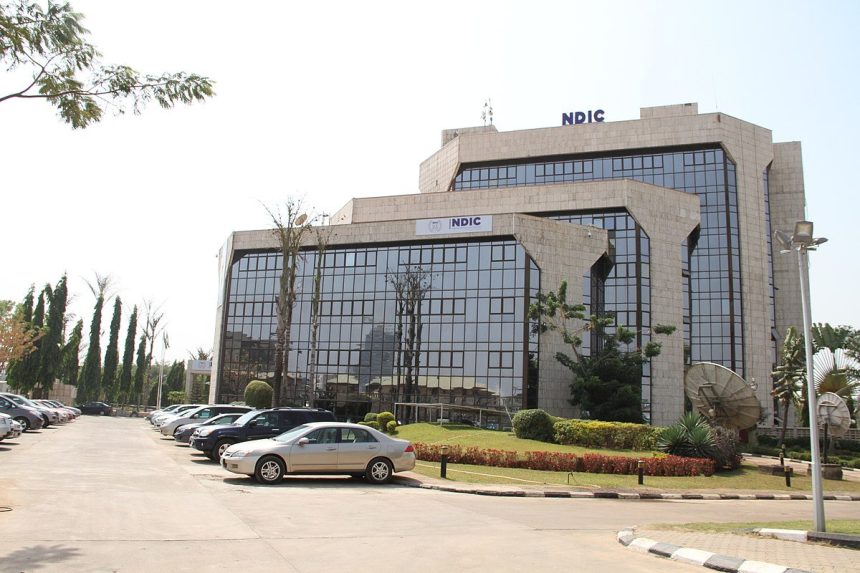
NDIC Beefs Up Funds to Protect Depositors, Stable Banks
By Patience Ikpeme
The Nigeria Deposit Insurance Corporation (NDIC) has voiced its commitment to continuously build up its Deposit Insurance Funds (DIFs) to keep the country’s financial system safe and strong against unexpected shocks.
The Managing Director and Chief Executive of the NDIC, Mr. Thompson Oludare Sunday, made this known during a courtesy visit to the Director-General of the Budget Office of the Federation, Mr. Tanimu Yakubu, in Abuja.
Mr. Sunday explained that growing these insurance funds is vital to helping the corporation step in quickly during banking troubles without needing to beg the federal government for financial bailouts.
“While financial crises may be inevitable, robust Deposit Insurance Funds are central to our contingency planning and crisis preparedness,” Mr. Sunday said.
To show how effective a well-funded pocket can be, the NDIC boss pointed to the corporation’s quick action in December 2025, when it started paying back depositors of the failed Aso Savings & Loans and Union Savings & Loans within 72 hours after the Central Bank of Nigeria took away their operating licenses.
He promised that the corporation will keep working hand-in-hand with the Budget Office to match its daily operations with the national budget and support data-backed planning that pushes the economy forward. He added that the NDIC is fully on board with the Federal Government’s goal to build a one-trillion-dollar national economy by the year 2030.
Responding to the presentation, the Director-General of the Budget Office, Mr. Tanimu Yakubu, praised the NDIC for its openness and honesty in running the insurance funds. He however urged the corporation to bring in modern, technology-driven investment methods to grow the funds even bigger and protect ordinary bank depositors.
Mr. Yakubu advised the corporation to measure its investment choices against global best practices used by top international deposit insurance bodies, noting that this would make the funding system much heavier and keep the public’s trust in Nigeria’s banks alive.