

Steady Hand on the Helm: MPC Holds Key Rate at 27% Amid Disinflation Gains
By Patience Ikpeme

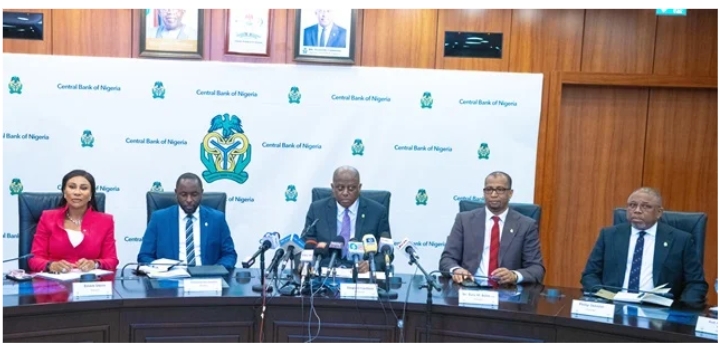
In a widely anticipated but closely watched decision, the Monetary Policy Committee (MPC) of the Central Bank of Nigeria (CBN) voted at its most recent meeting (held in November 2025) to retain the Monetary Policy Rate (MPR) at 27.0 per cent.
This decision marks a pause following the subtle easing observed in the September meeting, as the Committee opts for a period of sustained policy consolidation to anchor recent, fragile macroeconomic gains.
The decision reflects the CBN’s strategic desire to balance the ongoing fight against high, albeit moderating, inflation with the need to prevent any premature monetary easing that could reignite price pressures or undermine the recent stability in the foreign exchange market.
The MPC also retained all other key policy parameters: the Cash Reserve Ratio (CRR) for commercial banks remained at 45.0 per cent, the CRR for merchant banks at 16.0 per cent, the CRR on non-Treasury Single Account (TSA) public sector deposits at 75.0 per cent, and the Liquidity Ratio (LR) at 30.0 per cent. The only adjustment made was to the Standing Facilities Corridor, which was modified to +50/-450 basis points around the MPR, down from the previous +250/-250 bps.
The Rationale: Sustaining the Disinflation Momentum
The Committee’s primary motivation for the ‘hold’ decision centers on consolidating the seven consecutive months of declining headline inflation. According to the MPC, headline inflation (year-on-year) moderated to 16.05 per cent in October 2025, down from 18.02 per cent in September. This notable deceleration was observed across all three measures—headline, core, and food inflation—providing strong evidence that the lagged impact of previous aggressive monetary tightening cycles is finally taking root.
CBN Governor Yemi Cardoso, speaking at the conclusion of the meeting, explained the Committee’s position, stating that the decision is “underpinned by the need to sustain the progress made so far towards achieving low and stable inflation.”
Members noted that the deceleration in price pressures was supported by several factors beyond monetary policy, including the relative stability in the price of Premium Motor Spirit (PMS), increased food supply due to the ongoing harvest season, a stable exchange rate, and a surge in capital inflows.
The Governor cited the significant reduction in inflation from “over 34 percent” a year prior to “around 16 percent” in October as a policy success. However, the MPC determined that inflation, despite the steady decline, remains at an undesirably double-digit level, requiring continued high interest rates to fully solidify the disinflationary trend.
The Corridor Adjustment: A Subtle Shift in Liquidity Management
While the retention of the MPR signaled a continued commitment to a tight monetary stance, the adjustment of the asymmetric corridor around the MPR—moving from \pm 250 basis points to +50/-450 basis points—sends a subtle but critical signal to the financial market.
This technical adjustment effectively slashed the Standing Deposit Facility (SDF) rate by 200 basis points while only slightly tightening the Standing Lending Facility (SLF) rate. The SDF is the window through which the CBN borrows excess liquidity from commercial banks, whereas the SLF is the window through which banks borrow from the CBN.
By significantly reducing the rate at which banks can deposit excess funds with the CBN (the SDF rate), the Committee has deliberately made it less attractive for banks to simply park their liquidity at the central bank. This move is designed to discourage financial institutions from passive investing and instead incentivize them to channel funds toward productive sectors of the economy through increased lending to the real sector.
The MPC acknowledged that this adjustment “complements the MPC’s anti-inflation stance by supporting investment and productive activities without signalling strong monetary easing.” It represents a nuanced way for the CBN to maintain its primary focus on price stability while simultaneously encouraging a mild, targeted expansion of credit to support output growth.
Economic Resilience and External Sector Performance
The MPC meeting was held against a backdrop of generally improving macroeconomic indicators, which likely informed the Committee’s confidence in its ‘hold’ position.
Output Growth: Real Gross Domestic Product (GDP) sustained its positive trajectory, having expanded by 4.23 per cent in the second quarter of 2025, an increase from 3.13 per cent in the first quarter of the year. Furthermore, the Purchasing Managers’ Index (PMI) surged to 56.4 in November 2025, the highest level recorded in five years, signaling growing optimism and acceleration in the manufacturing and services sectors.
External Sector Strength: The Committee noted the robust performance of the external sector. This includes a substantial surplus current account balance and a steady accretion to foreign reserves. Gross external reserves reportedly increased by 9.19 per cent, reaching US$46.70 billion in mid-November 2025, sufficient to cover over ten months of imports for goods and services.
“Members noted the robust performance of the external sector, evidenced by the surplus current account balance and steady accretion to reserves, which have contributed to stability in the exchange rate and moderation in inflation,” Governor Cardoso said. He also noted that portfolio investors are returning due to market openness and transparency, and that “reserves are being built in a systemic and sustainable way.”
The Committee also welcomed Nigeria’s recent upgrade of its sovereign credit rating by major agencies and the country’s delisting from the Financial Action Task Force (FATF) grey list, acknowledging that these developments are crucial for boosting investor confidence and improving capital flows.
Reaction and Outlook: A Call for Fiscal-Monetary Coordination
The MPC’s decision to maintain the MPR at a high level drew mixed reactions. Analysts who had expected a further rate cut of up to 100 basis points, citing the sharp disinflation, acknowledged the CBN’s caution, interpreting the ‘hold’ as an attempt to preserve recent stability.
However, the real sector expressed concern. The Manufacturers Association of Nigeria (MAN) publicly acknowledged the decision to halt the increase in MPR but stressed that the current lending environment remains “punitive for manufacturers.” The Association maintained that manufacturers had expected a “further reduction in the rate to reduce the cost of borrowing,” a condition essential for stimulating real sector growth.
Looking forward, the MPC projects that the disinflationary trend will persist in the near term, driven by the delayed effects of previous tightening, continued stability in the foreign exchange market, and improved food supply. The Committee called for continued vigilance and strong coordination between the fiscal and monetary authorities to translate policy decisions into tangible real sector gains and sustained growth.
In essence, the November MPC meeting was not a pivot but a firm consolidation. By keeping the benchmark rate high while nudging banks towards lending via the corridor adjustment, the CBN is strategically prioritizing the complete conquest of double-digit inflation before allowing any broad-based monetary easing to take hold. It is a decision that suggests the central bank believes it is still too early to declare victory in the fight for price stability.


