

SEC Pushes Global Standards with Market-to-Market Valuation
…Sets IFRS 9 Deadline

By Patience Ikpeme
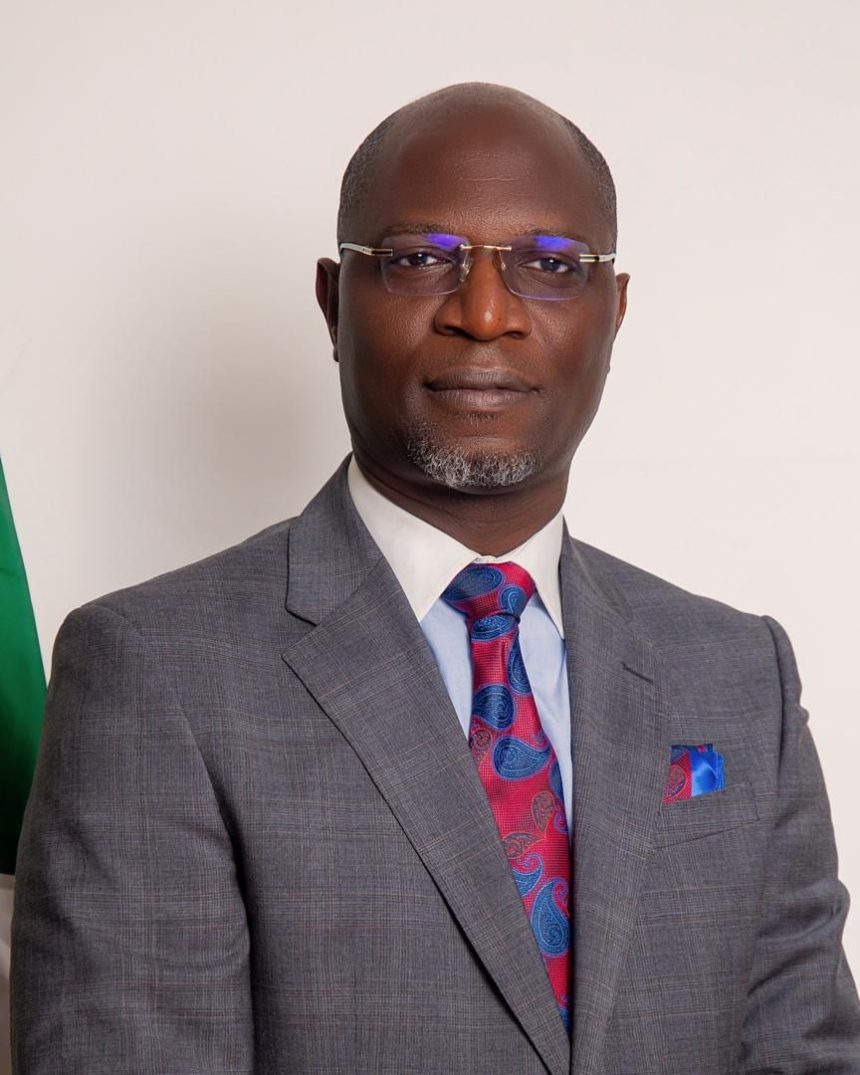
The Director-General of the Securities and Exchange Commission (SEC), Dr. Emomotimi Agama, has stated that the transition to market valuation is crucial for ensuring that asset values accurately reflect real-time market conditions, a move he says will strengthen fair value reporting and investor trust.
Speaking in an interview over the weekend, Dr. Agama outlined the key modalities guiding Nigeria’s transition to the Market-to-Market (MTM) valuation of assets in the fixed income space of the capital market, a policy that stemmed from engagements with market participants.
Dr. Agama said that while the SEC is keen on implementing the changes, it remains responsive to industry concerns. “Timelines have been carefully considered, you know, especially with the concerns being raised by market participants. For us at the SEC, it is important that while we try to introduce new rules and regulations, we also listen to the market and say, okay, how do we meet, how do we meet at the junction where we can all agree to move forward?”
He noted that the October 2, 2025, deadline for the submission of implementation plans would enable the Commission to assess each institution’s preparedness, while the September 2027 deadline remains the target for full transition to IFRS 9.
“Requesting for implementation plans is not a bureaucratic exercise—it’s to gauge capacity, identify challenges, and meet operators at the point where we can all achieve compliance with one purpose and one goal,” Agama said.
The SEC boss explained that the reform primarily targets the fixed income space. “Equity funds are already reported at fair value. The aspect of the Fund Management that was not aligned with international best practice was in the Fixed Income Funds space and that is what this policy alignment covers,” he said.
Dr. Agama was definitive about the need to meet global standards: “Nigeria has come of age, and we must be seen to be doing things according to global standards. IFRS 9 requires market-to-market valuation of assets, and we cannot be left behind among the committee of nations.”
He added that the reform would ensure that Nigerian assets are comparable globally, allowing investors to assess market performance more accurately. “Our goal is to create a market that is internationally competitive,” he stated, adding, “Adopting IFRS 9 enables ease and compatibility among assets from different nations, clearly positioning Nigeria within the global market space.”
Responding to criticisms that the shift to market valuation could expose investors to short-term volatility, Dr. Agama clarified the intent of the move.
> “Some have expressed concerns about volatility, but our intention is not to disadvantage Nigerian investors,” he clarified. “It is to expose them to global standards and transparency. Over time, as the market adjusts, these concerns will ease off and everyone will benefit from a more transparent and credible system.”
Beyond IFRS 9, Dr. Agama revealed that Nigeria is leading Africa in adopting the International Sustainability Standards Board (ISSB) framework, which is vital for climate and sustainability disclosures.
According to him, “We pride ourselves as performers—first among nations to accept and adopt the ISSB standards. But we are not oblivious of our contextual issues. We are taking a gradual approach so that our companies are not unduly burdened.”
He concluded by expressing optimism about the Nigerian capital market’s performance in the final quarter of the year, citing the government’s macroeconomic reforms and the enactment of key laws such as the NIIRA 2025 and ISA 2025 as catalysts for stability and investor confidence.
“Markets do not operate in a vacuum, they thrive on stability. With the micro- and macro-economic stability being championed by President Bola Ahmed Tinubu, the market is positioned for significant growth. The NIIRA 2025 is a game changer that provides the framework for sustainable expansion,” Agama noted.