

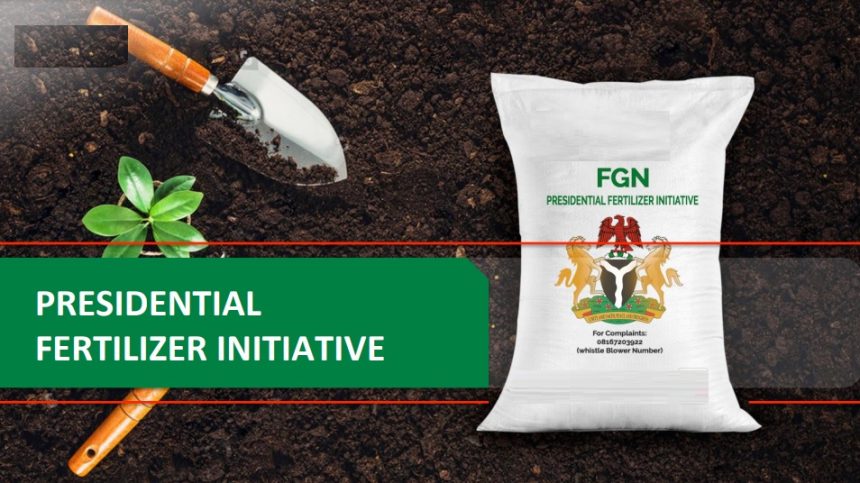
Presidential Fertilizer Initiative Moves from NSIA to MOFI in November
By Patience Ikpeme

After nearly a decade of operations, the Presidential Fertilizer Initiative (PFI)-NPK Limited will undergo a management transition from the Nigerian Sovereign Investment Authority (NSIA) to the full control of MOFI Management Company Limited (ManCo) in November 2025.
The transition will mark the end of the co-management arrangement between the two entities, with MOFI taking sole responsibility for the operations and management of the programme.
Since its inception in 2016, the PFI has been one of Nigeria’s most significant agricultural interventions, created to address structural inefficiencies in the fertilizer supply chain and reduce the nation’s dependence on imports. Under the strategic guidance of the NSIA, the initiative has reshaped the fertilizer landscape in the country.
Speaking during a stakeholder engagement meeting in Abuja over the weekend, the Chief Executive Officer of the Ministry of Finance Incorporated (MOFI), Dr. Armstrong Takang, assured industry players of MOFI’s readiness to build on the PFI’s legacy.
“Success must never be allowed to be a disincentive for further progress,” Dr. Takang said. “Only sustained stakeholder engagement can unlock new opportunities for the initiative. Stakeholders across government, industry, and the private sector must continue to engage in dialogue, focusing on the progress made, the challenges ahead, and the collaborative pathways to sustain and scale the initiative’s impact.”
In his remarks, NSIA Managing Director and Chief Executive Officer, Mr. Aminu Umar-Sadiq, outlined the significant achievements recorded under the agency’s stewardship of the PFI.
“Through the strategic direction of the PFI programme, we have transformed Nigeria’s previously moribund fertilizer blending landscape. From just four operational blending plants in 2016, the country now has over 90 by July 2025. We have delivered more than 128 million bags of high-quality blended fertilizer to Nigerian farmers,” Umar-Sadiq stated.
He noted that these interventions have made fertilizer more accessible and affordable, improved food security, and generated over 100,000 direct and indirect jobs across the country.
Despite challenges such as global supply chain disruptions from the COVID-19 pandemic, the Russia-Ukraine conflict, persistent foreign exchange volatility, and macroeconomic pressures including the naira’s devaluation, the PFI maintained a stable supply to farmers. “Working closely with relevant stakeholders, we ensured uninterrupted fertilizer availability at stable prices,” he said.
Umar-Sadiq also highlighted recent strategic restructuring aimed at positioning the PFI for long-term sustainability. This includes the introduction of wet blend technology, expansion into underserved regions, and increased private sector participation.
“By strategically leading the PFI for almost a decade, NSIA has advanced food security, empowered stakeholders within the value chain, and contributed to sustainable economic growth. As the initiative transitions to MOFI, we remain committed to catalysing impactful investments and supporting initiatives that optimise positive outcomes in Nigeria,” he added.
The Federal Government established the PFI to stimulate local production by reviving the fertilizer blending industry, make fertilizer affordable to farmers, boost food production, reduce food-induced inflation, and stimulate economic activities across the agricultural value chain.
This transition is expected to usher in a new phase for the programme, with stakeholders optimistic that MOFI will sustain and expand its impact.