

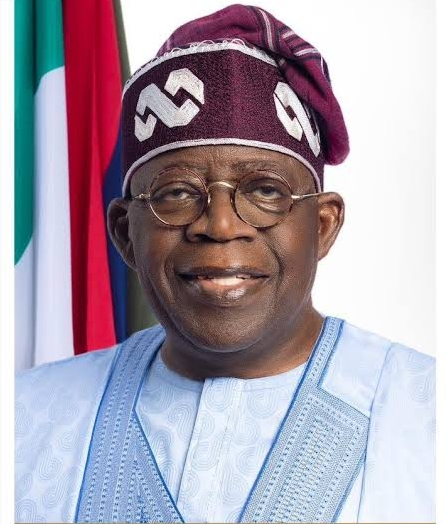
President Tinubu Calls for Regulation of Digital Currencies
By Patience Ikpeme

President Bola Ahmed Tinubu has warned that the rise of digital currencies and stablecoins poses a new challenge to the traditional banking system and has directed capital market and banking authorities to monitor the evolving landscape.
Speaking at the 18th Annual Banking and Finance Conference of the Chartered Institute of Bankers of Nigeria (CIBN), the President said a digital revolution is driving many people away from traditional banking methods toward digital currencies.
Represented by the Minister of Finance and Coordinating Minister for the Economy, Mr. Wale Edun, the President acknowledged the need to move from “resilience to reinvention” to drive inclusive growth and industrialization. “We know that you need to go from resilience to reinvention in order to drive inclusive growth and help with industrialization,” he said.
The President’s remarks also touched on the need for increased revenue from within the country, especially with less emphasis on debt and elevated interest rates.
Earlier at the same event, the Governor of the Central Bank of Nigeria (CBN), Mr. Olayemi Cardoso, announced a projection that Nigeria would reach a target of $1 billion a month in diaspora remittances by next year.
“When we started that journey, we spoke about the fact that at a point in time we were at 250 million U.S. dollars per month. And we said we would double that to 500. And now we are 600,” Cardoso said.
He attributed this success to the CBN’s reforms and international outreach with Nigerian banks, which has changed the perception of the financial system among diasporans.
President Tinubu also spoke about how technology and tax reforms will be critical to the nation’s economic progress. He noted that the newly implemented tax reform regime is designed to be fairer and more transparent, which should lead to increased revenues and a reduction in non-debt sources of income.
He also pointed to new technological measures, like the link between the government and the Central Bank, which provides “full visibility on government finances” as of August 1st. “That will lead to increased government revenues,” he said.
The President said his “Renewed Hope Agenda” is focused on inclusive growth, national prosperity, and recognizes the role of banking, public policy, and technology in achieving Nigeria’s full potential.
Edun noted that the key focus areas are stabilizing the macroeconomic environment, creating jobs, reducing poverty, and mobilizing private sector investment.
In his welcome address, the President of CIBN, Professor Pius Deji Olanrewaju, provided an overview of the banking sector’s recent achievements.
He said that since 2024, 16 listed banks have raised over N2.5 trillion in fresh capital, and net domestic credit to the private sector has risen to over N82 trillion.
Prof Olanrewaju also pointed out that Nigeria’s non-oil export basket has expanded to 236 products in the first half of 2025, a significant increase from 202 the previous year.
The professor also spoke about the new tax reform laws, which he said will consolidate over 100 tax-collecting agencies into a streamlined Nigeria Revenue Service. He said the new laws “portend a new lease of life, with a lot of opportunities inherent in it for all and sundry.”