

Policy Uncertainty Is an “Invisible Tax”, Oyedele Says
By Patience Ikpeme
The Federal Government has unveiled a new framework it says will end years of stop-start policymaking and give businesses the certainty they need to invest and create jobs.
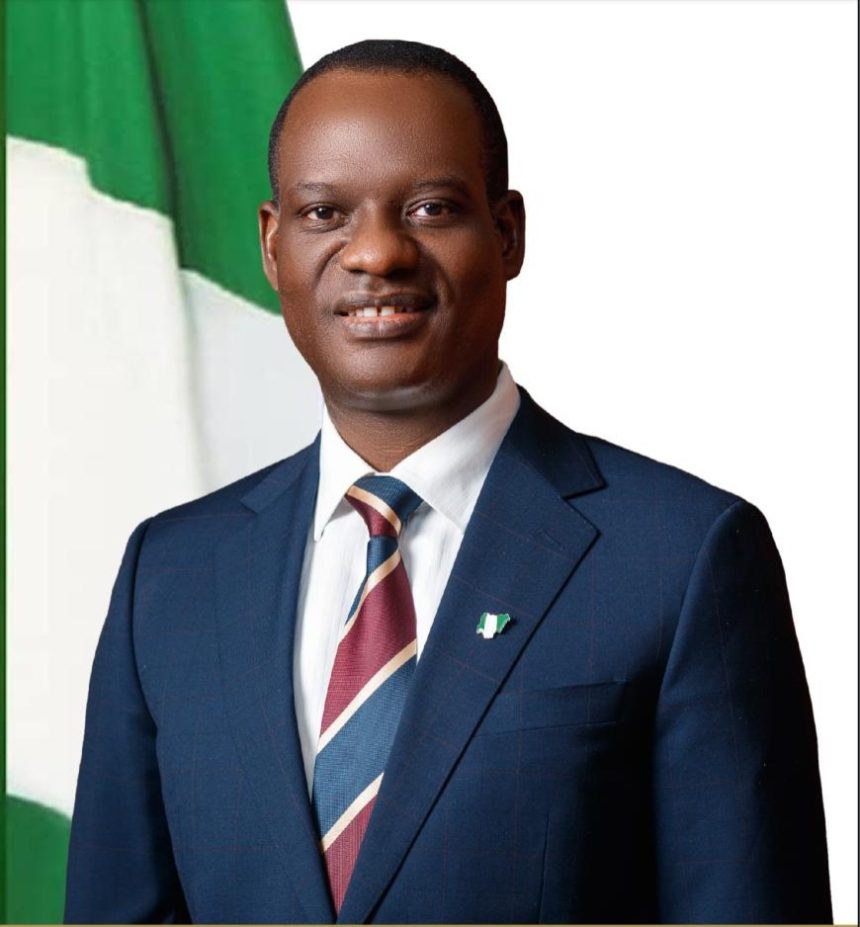
The Minister of Finance and Coordinating Minister of the Economy, Mr Taiwo Oyedele, announced the Nigeria Economic Policy Framework on Monday at the NES summit in Abuja. The summit’s theme was “Growth that works: delivering jobs, productivity and shared prosperity”.
Mr Oyedele said the document is not a development plan, a list of projects or the manifesto of any government. “Rather, it’s a national economic doctrine,” he said. He added that it “establishes how Nigeria makes economic decisions, the non-negotiable principles that guide them, and how we measure real progress.”
The Minister said Nigeria’s problem has never been a shortage of ideas. “If development plans alone created prosperity, Nigeria would already be among the wealthiest nations on earth,” he said. “Our challenge has never been a shortage of ambition or good ideas. It has been the absence of an enduring economic philosophy, consistent policy making, and disciplined implementation.”
He blamed sudden and poorly supported government decisions for shaking business confidence. He asked how often regulators announce major policies without enough evidence or proper study of their effects, and how often important rules change and take effect immediately, leaving businesses no time to adjust. He also asked how often policies are driven by personal preferences and impressions instead of data, and how often rules are written for the convenience of the regulator instead of the competitiveness of the economy, with little real consultation with those who must obey them.
The cost of this, he said, is heavy. “Policy uncertainty is an invisible tax on enterprise, and unlike most taxes, it generates no revenue for government. It only destroys value and discourages investment.”
The framework describes its vision as “a productive, competitive, diversified, and inclusive economy that delivers quality jobs, expands real household incomes, and creates shared prosperity.” To guide reforms, it focuses on seven areas: stability, productivity, enterprise, capital, people, markets and institutions.
The first principle is that private enterprise is the engine of growth. Mr Oyedele said businesses create production and jobs, while the state provides public goods, maintains the rule of law, corrects real market failures and protects the vulnerable.
The second is open but fair markets. He said government supports industrial policy but will not protect inefficiency forever. “A tariff must serve as a runway for local industry to take off, never a permanent shelter from competition,” he said.
The third is that government must act as one body. “Businesses do not interact with isolated ministries, departments, or agencies,” he said. “They experience the cumulative cost of government.”
To stop hasty decisions, the framework introduces what the Minister called a policy impact assessment. Under it, no major economic move should be made without answering key questions on the record. These include a tax change, a tariff shift, a new restriction or an incentive. “What specific problems does this solve? What empirical data supports it? Who benefits? Who bears the cost? And under what condition will it sunset?” he said.
To hold government to account, the Finance Ministry will publish an annual National Economic Scorecard on or before Independence Day. Mr Oyedele described it as “a single transparent page showing whether real wages are rising, whether productive jobs are multiplying and whether poverty is retreating.”
The Minister said the document is only a draft for public comment. “This document is a consultation draft, not approved government policy yet,” he said. Consultation runs from Monday until November 27, 2026, and the draft is on the Ministry’s website, finance.gov.ng. He invited the Nigerian Economic Summit Group (NESG) and the private sector to take part. “I invite the NESG and the private sector to contribute to this draft, critique it rigorously, and help us turn it into an enduring covenant,” he said.
He asked Nigerians to back their views with facts. “In God we trust. All others must bring data. When you bring data, our policies are likely to endure and make the impact that we want of them,” he said.
The Ministry said the draft will next go for validation, then to the Federal Executive Council for approval and the National Economic Council for endorsement.
Closing his speech, Mr Oyedele said a nation’s real advantage is not its oil or its population. “It is the capacity to make sound, disciplined decisions and sustain them across generations,” he said. “Nigeria has the talent. We have the enterprise. What we must now build together is policy certainty.”