

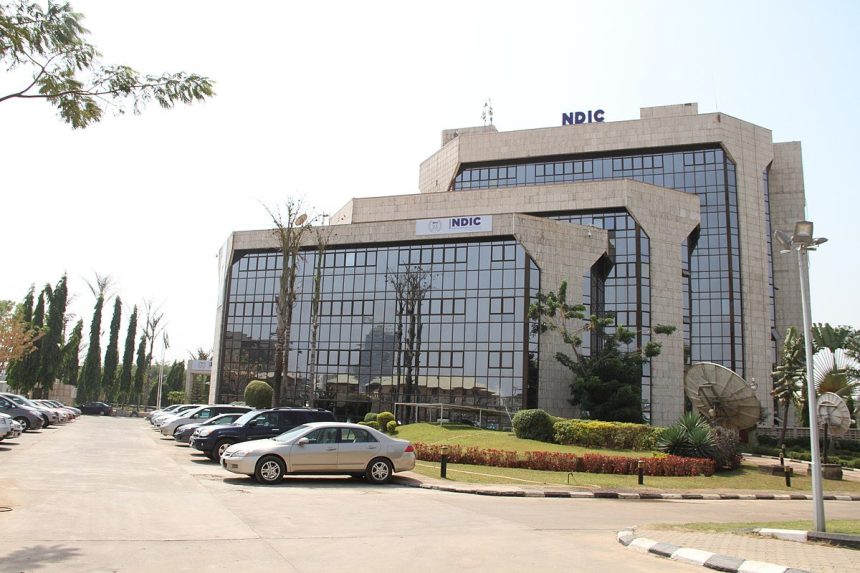
NDIC Says Debtors Are Delaying Payouts to Bank Depositors
By Patience Ikpeme
The Nigeria Deposit Insurance Corporation (NDIC) has accused some borrowers of frustrating efforts to recover money owed to failed banks. It says they hide their assets, drag out court cases and threaten the officials sent to recover the debts.
The corporation said such behaviour can delay the payment of depositors whose money is trapped in closed banks.
The NDIC’s Director of Asset Management, Mr Ogungbemi Theophilus, spoke on Monday at a stakeholder seminar in Abuja. He said some borrowers wrongly believe their loans are wiped out once a bank loses its licence. According to him, the debt remains, and the corporation will keep chasing it in a professional manner.
Mr Theophilus said loans that were not being repaid while a bank was still open often become harder to collect after it shuts down. Time also eats into the value of other assets, he said. Empty buildings run down, equipment loses value and old debts become harder to trace and recover. “Every delay slows payment to depositors,” he said.
The Asset Management Department looks after the loans, properties and investments of closed deposit money banks, primary mortgage banks and microfinance banks. It collects debts and sells assets, and the money raised is used to pay depositors whose balances are above the insured limit.
Explaining how deposit insurance works, Mr Theophilus said customers of deposit money banks, non-interest banks and mobile money operators are covered up to N5 million each per bank. Customers of microfinance banks, primary mortgage banks and payment service banks are covered up to N2 million.
He said these limits fully protect about 99 per cent of depositors. People with larger balances must wait for money from the sale of a failed bank’s assets to get back the rest.
The corporation recently sold some of those assets. On November 3 and 4, 2026, it held sealed-bid auctions of physical properties belonging to Union Homes Savings and Loans, Heritage Bank and Resort Savings and Loans. The auctions took place in Lagos, Taraba and Adamawa states, and the department organised them with auctioneers it had appointed.
Mr Theophilus said the cost of recovering a debt should never be more than the value of what is recovered. He also cautioned professionals who work with the corporation against using inside information for personal gain, putting a lower value on assets than they deserve, working secretly with buyers and diverting sale proceeds.
The NDIC is preparing an Asset Management Policy that will set out how assets are identified, documented, valued and sold, and who answers for what. He said the corporation also wants closer cooperation with auctioneers, valuers, surveyors and other professionals, so that more money is recovered and depositors are paid faster.
The Abuja seminar is one of a series of stakeholder meetings planned for Abuja, Enugu and Lagos. The meetings are meant to deal with practical problems in recovering assets from failed banks and to improve teamwork among those involved.