

Forum Raises Alarm Over BDC’s New Recapitalization Policy
By Patience Ikpeme
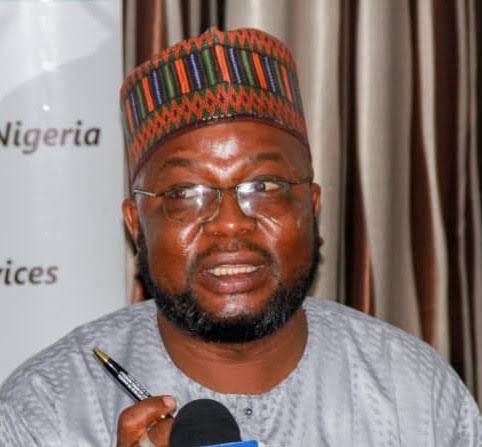
The Arewa Economic Forum (AEF) has raised the alarm over the Central Bank of Nigeria’s (CBN) revised capital requirements for Bureau De Change (BDC) operators.
The has argued that the policy could lead to the eradication of northern participation in the sector, displace thousands of small business owners, and exacerbate insecurity across the region.
During a press briefing in Abuja on Thursday, Dr. Ibrahim Dandakata, Chairman of the Arewa Economic Forum, issued a caution, appealing to President Bola Tinubu to intervene.
He warned that a swift implementation of the policy could inflict lasting damage on regional economies and social stability. Dandakata called for the apex bank to extend the implementation period by six to 12 months, allowing operators crucial time for sensitisation and capital mobilisation.
Under the CBN’s new regulatory framework, Tier 1 BDCs must now maintain a minimum capital base of N2 billion to operate nationally, while Tier 2 operators require at least N500 million and are confined to operations within a single state. Dandakata pointed out that this represents a drastic shift from the previous N35 million capital requirement under the 2019 guidelines, marking an increase ranging from 1,300 percent to a staggering 5,600 percent.
The Forum voiced serious concern that over 90 percent of BDCs currently capable of meeting these elevated thresholds are based in the southern part of Nigeria, particularly Lagos, which accounts for the majority of compliant operators. Dandakata cautioned that established BDC hubs, including Kano’s Wapa market, Zone 4 in Abuja, Sokoto, Minna, Benin, and various parts of Lagos, now face the risk of collapse. The new framework also bars banks, non-governmental organizations, foreigners, and public officials from BDC ownership, alongside imposing rigorous scrutiny on funding sources.
Drawing comparisons with international practices, Dandakata argued that BDC licensing in countries like South Africa, Ghana, Kenya, Egypt, and India remains relatively affordable and accessible, unlike Nigeria’s more restrictive model. He conveyed the forum’s belief that the policy risks deepening financial exclusion and hindering regional economic development and overall financial inclusion.
“This policy, if left unaddressed, will wipe out the entire northern participation in the BDC space. It is not just an economic issue. It is a national security threat,” Dandakata stated directly. He continued, “You cannot displace thousands of youth from their means of livelihood in a region already battling terrorism, banditry, and high unemployment without expecting serious consequences. This is not a call for division but a firm plea for equity, fairness, and inclusive economic governance.”
To mitigate the anticipated negative impacts, Dandakata put forward several proposals. These include the formation of Northern-led BDC consortia and regional investment vehicles to enable small operators to remain in business. He also advocated for a more inclusive, phased approach to regulation that considers the significant regional disparities in access to capital. Furthermore, he sought transparency in ongoing negotiations by the Association of Bureau De Change Operators of Nigeria, cautioning against sidelining grassroots players. He concluded by calling for fairness in financial regulatory appointments to better reflect Nigeria’s diversity and diminish perceptions of marginalisation in the North.
Abdulwahab Yusuf, President of Northern BDC Operators, echoed these sentiments, describing the CBN’s recapitalisation directive as “practical punishment.” Yusuf questioned the feasibility of the new capital base. “How can you move share capital from N35m to N2bn?” he queried. “And it is not only like that. You cannot even go to access money from any bank.”
He also pointed to the stringent vetting process for funds, where operators must provide a detailed history of their money, as a significant hurdle.
Yusuf stressed the repeated requests for more time, noting previous extensions of three months each. “N500m is not a joke. Let’s even forget about the billion. The N500m they are talking about. Where do you get that money?” he asked. “So, we have been talking to them: extend this time, extend it, or otherwise, give us an open door where we can access funds.”
He concluded by comparing the BDC sector with the banking industry, where recapitalizing banks can access the capital market, a pathway unavailable to BDCs. “So, it’s like a punishment. And so, I think this request or demand is coming at the right time,” Yusuf concluded.