
Edun: Nigeria’s Finances Not Collapsing
…Reforms for Long-Term Growth Ongoing

By Patience Ikpeme
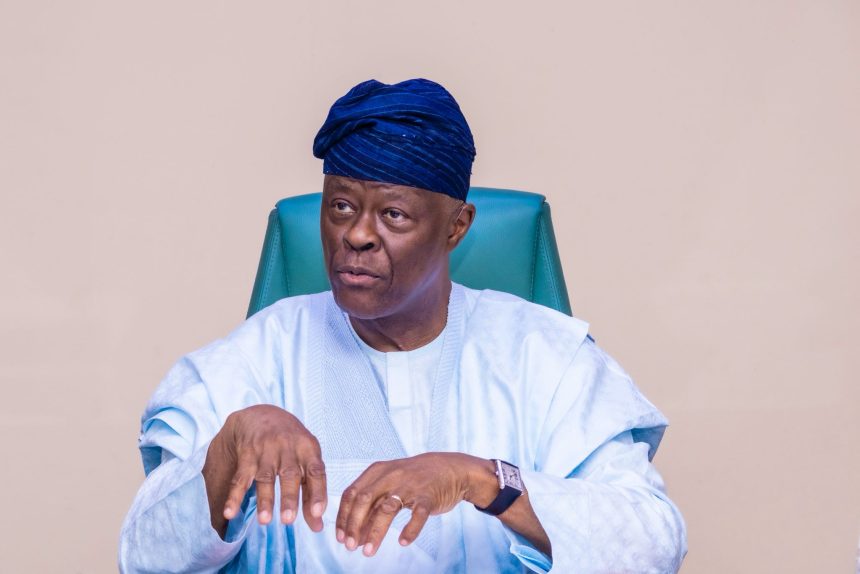
The Minister of Finance and Coordinating Minister of the Economy, Mr. Wale Edun, has clarified that Nigeria’s economy is not facing a breakdown but is instead going through a necessary period of correction to fix past issues.
Speaking in Abuja on Saturday, the Minister explained that the government is currently making bold changes to make the country’s finances more transparent and disciplined to encourage future growth.
“The administration has chosen long-term sustainability over short-term illusion,” Mr. Edun said, adding that the government is focused on building a foundation that will last rather than chasing quick but temporary fixes.
He pointed out that while there is a lot of talk about the country’s debt and spending, the actual evidence shows that money coming into the government’s purse is rising and major projects are still moving forward.
A major point of confusion for many Nigerians has been how the government collects and reports its money. The Minister noted that although the Nigeria Revenue Service (NRS) collects a large portion of taxes, hitting their target does not automatically mean the entire Federal Government has met its own funding goals. He said that “this technical sequencing often leads to confusion in public commentary,” explaining that different rules apply once the money reaches the Budget Office.
On the issue of infrastructure, the Minister denied claims that the government has abandoned capital projects. While it may look like less money is being released to various ministries, he explained that many projects are actually funded directly by international partners through loans that do not pass through the government’s local bank accounts. Data shows that in 2024, the government achieved an 84% performance rate on its ₦11.59 trillion capital budget, while as of November 2025, it had reached 76% of its ₦11.7 trillion plan.
He said that “capital projects are ongoing. Execution continues. The financing mix differs,” noting that the public often misses the full picture by looking only at cash released to ministries.
The Minister also addressed why the cost of paying back debts has increased. In 2024, the government spent ₦12.63 trillion on debt service, which was ₦4 trillion more than originally planned. For 2025, the cost rose to ₦14.57 trillion. Mr. Edun explained that this was not caused by reckless borrowing but by the fall in the value of the Naira and higher interest rates used to fight inflation. When the Naira loses value, the cost of paying back loans taken in dollars automatically goes up in local currency.
Furthermore, the Minister stated that Nigeria’s debt is not growing out of control. He explained that a large part of the increase seen on paper is because the government decided to be honest and include ₦30 trillion in “Ways and Means” loans that were previously hidden from the official records. Another ₦70 trillion of the debt increase is simply due to the new exchange rate valuation of old foreign loans.
The government’s report shows a significant jump in revenue, rising from ₦12.48 trillion in 2023 to ₦20.98 trillion in 2024, and reaching ₦22 trillion by November 2025. This increase is credited to better tax collection and the removal of the petrol subsidy.
While acknowledging that these changes are difficult for citizens, the Minister said the country is moving away from a system of hidden deficits and toward a more transparent, market-based economy.