
Banks Raise ₦2.5trn Fresh Capital – CIBN
By Patience Ikpeme

The Chartered Institute of Bankers of Nigeria (CIBN) has disclosed that since 2024, 16 listed banks have raised more than ₦2.5 trillion in fresh capital to strengthen their balance sheets.
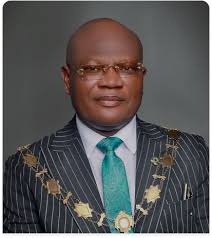
Professor Pius Olanrewaju, President/Chairman of Council of CIBN, made this known at the 18th Annual Banking and Finance Conference in Abuja. He said net domestic credit to the private sector has risen to over ₦82 trillion this year, supporting businesses and job creation.
He further noted that the National Credit Guarantee Scheme was launched in July 2025 to de-risk lending to small and medium enterprises (SMEs).
“Today, there are more than 500,000 agent banking outlets across the country, serving over 40 million Nigerians,” Olanrewaju said.
On non-oil exports, he explained that Nigeria’s export basket expanded to 236 products in the first half of 2025, up from 202 the previous year. This generated $3.23 billion in revenue, a 19.6 per cent year-on-year increase.
Speaking on fiscal reforms, the CIBN president recalled that on June 26, 2025, President Bola Tinubu signed four tax reform bills into law, consolidating over 100 tax-collecting agencies into a streamlined Nigeria Revenue Service, effective January 2026. “These new laws portend a new lease of life, with a lot of opportunities inherent in it for all and sundry,” he said.
Olanrewaju also spoke about Nigeria’s economic reforms, noting that before May 2023, the country struggled with high inflation, multiple exchange rates, unmet FX demand, and dwindling foreign reserves. He said recent reforms have unified exchange rates, stabilised reserves, improved the current account, and restored fiscal discipline. According to him, debt service is now below revenue, inflation is easing, and interest rates are moderating as productive capacity expands.
He acknowledged that reforms affect Nigerians differently. “For some, they are seen through the lens of immediate hardship, for others, through the promise of longer-term stability. All views are valid. But what the New Economic Playbook offers is a way to place these pieces side by side to see a fuller picture of where Nigeria is heading,” he said.
In his presentation, Olusegun Zaccheaus, Partner and Chief Economist at PricewaterhouseCoopers, stated that the financial and insurance sector expanded by 15 per cent in Q1 2025, outpacing GDP growth of 3.1 per cent. He explained that this was driven by growth in digital finance, fintech, informal financial services, and foreign portfolio inflows, with banks attracting 55 per cent of all capital imports in Q1, amounting to $3.1 billion.
However, Zaccheaus observed that agriculture, manufacturing, construction, and ICT remain underfunded despite their significant contribution to GDP. Agriculture, which contributes 27.8 per cent of GDP, received ₦2.9 trillion in credit, manufacturing with 8.24 per cent GDP share attracted ₦8.6 trillion, construction with 4.74 per cent share secured ₦2.36 trillion, and ICT with 9.8 per cent contribution received ₦1.9 trillion.
By contrast, oil and gas, with only a 3.38 per cent GDP share, absorbed ₦17.1 trillion in credit, while power and energy, with 0.7 per cent GDP share, received ₦1.78 trillion.
“This shows structural imbalances where growth-driving sectors such as agriculture, manufacturing, construction, and ICT remain underfunded, while less contributory but credit-intensive industries attract disproportionate financing,” Zaccheaus said.