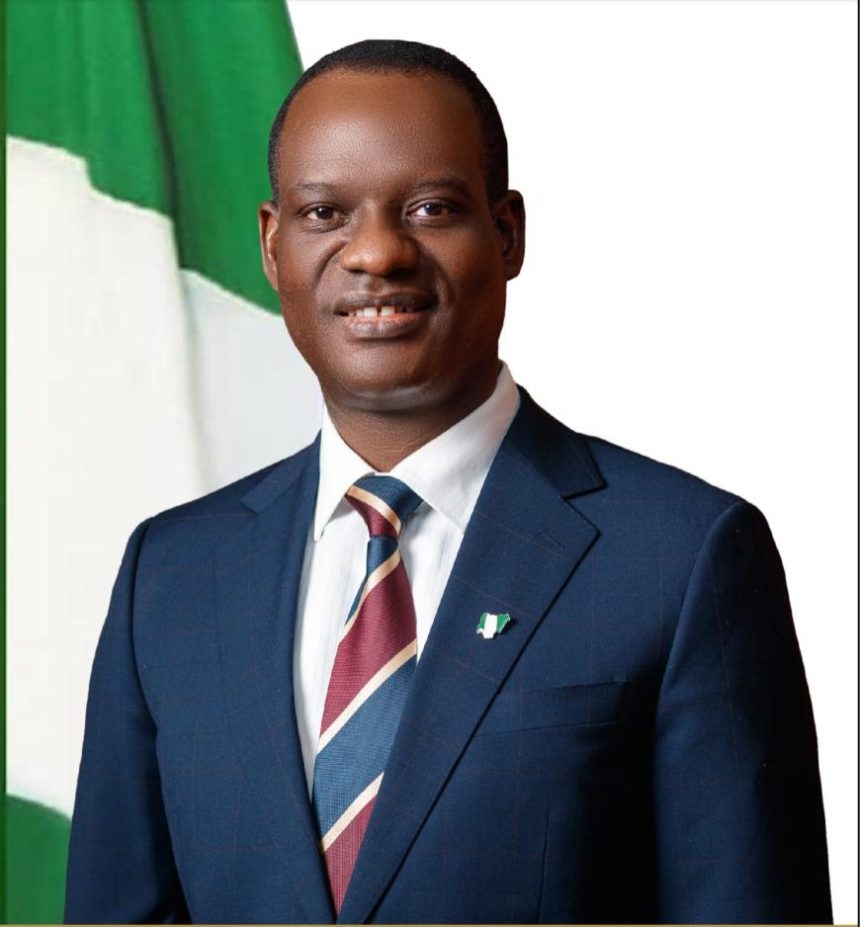
FG Cuts Interest on Late Tax Payment
…Sets One Monthly Rate for All Tax Offices

…New order takes effect on October 1
…Applies to Fed, State and FCT Tax Authorities
By Patience Ikpeme
The Federal Government has reduced the extra charge that taxpayers pay when they fail to pay their taxes on time. For late payments made in Naira, the interest will now be one percentage point above the Central Bank of Nigeria’s benchmark rate, down from five percentage points above it.
The change is contained in the Nigeria Tax Administration (Interest on Late Payment of Tax) Order, 2026, issued in Abuja on Thursday by the Minister of Finance and Coordinating Minister of the Economy, Mr Taiwo Oyedele. It takes effect on October 1, 2026, and is made under section 65 of the Nigeria Tax Administration Act, 2025.
Under the order, anyone who owes tax in Naira will pay interest at the CBN’s Monetary Policy Rate plus one percentage point. The rate cannot fall below the yield on 364-day Treasury Bills, which is roughly what Government pays to borrow money for one year. This floor is meant to stop late payers from paying less than it costs Government to cover the shortfall.
Tax owed in foreign currency will attract interest at the Secured Overnight Financing Rate, known as SOFR, plus six percentage points. SOFR is the international benchmark for US dollar borrowing. If it is ever discontinued, its official replacement rate will be used.
The Ministry said the order links the cost of late payment more closely to market rates and gives taxpayers a clear idea of what delay will cost them. Together with the existing default penalty, it is meant to ensure that keeping tax money is never cheaper than borrowing from the market.
Only one rate will apply in each calendar month. According to the details supplied, it is fixed on the last business day of the preceding month, and the Nigeria Revenue Service has been directed to publish it on its website by the third business day of every month. Interest is simple interest, worked out daily from the date the tax was due until the day it is paid. It is not compounded.
The same rules will apply whichever office a taxpayer deals with. Self-assessment, the Nigeria Revenue Service, and the State and FCT Internal Revenue Services will all use the rate in the same way.
Explaining the thinking behind the order, Mr Oyedele said late payment of tax is not a private matter. “Tax that is due belongs to the public,” he said. “When it is paid late, Government may have to borrow to fill the gap, and the cost falls on everyone.”
He said the order was designed to close a loophole in which delay could become a cheap source of funds. Tying the charge to real market rates, he said, means that “delaying tax does not become a cheaper form of credit than the market itself.”
The Minister also said certainty was a major aim. “Every taxpayer, whether dealing with the Nigeria Revenue Service or a State revenue service, will know the rate in advance, see it published every month, and be charged in the same way,” he said. “Clear rules make compliance easier and support a fair, predictable tax system.”
On how the order will work in practice, the Ministry said the new rates will apply to interest arising from October 1, 2026, including interest on tax that fell due before that date. However, interest that had already arisen before October 1 will not be affected, to the extent that the rules in force at that time specifically provided for it. The order replaces the 2017 notice on interest on unpaid taxes and all other earlier notices on the subject.
Some things remain the same. The 10 per cent penalty for late payment under section 65 of the Act has not been changed. Tax authorities also keep the power under section 66 of the Act to waive a penalty or interest where a taxpayer shows good cause.
The Ministry urged taxpayers to file their returns and pay taxes on time and to check the monthly rates on the Nigeria Revenue Service website. Those with unpaid tax were advised to settle it quickly or contact the relevant tax authority.