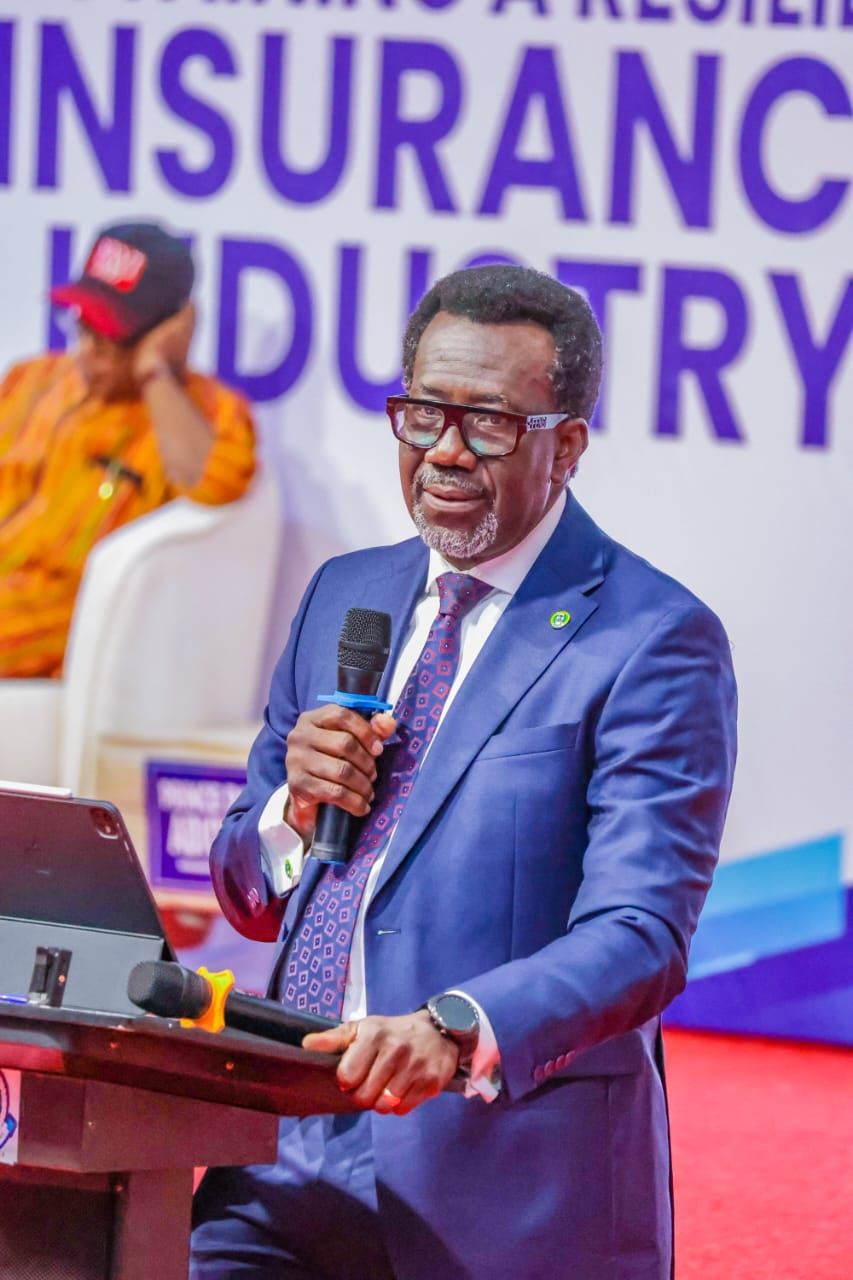
NAICOM: New Capital Must Deliver Better Insurance Services
By Patience Ikpeme

The National Insurance Commission (NAICOM) has challenged insurance companies to show that the capital raised during the recently concluded recapitalisation exercise is translating into stronger underwriting capacity, faster claims payment, better services and greater public confidence.
The Commissioner for Insurance and Chief Executive Officer of NAICOM, Olusegun Ayo Omosehin, said the industry must now move beyond measuring the success of the reforms by the amount of money companies raised.
Speaking at the BusinessDay Insurance Conference 2026, Omosehin said the real value of recapitalisation would be seen in what insurers are able to do with the stronger capital base. He said: “Capital without capacity is merely a number on a balance sheet.”
The Commissioner said the industry’s attention should now shift to whether the additional capital has strengthened insurers’ ability to underwrite risks, pay claims, improve customer experience, introduce new products and adopt better technology.
He said the recently concluded recapitalisation was not designed simply to produce bigger balance sheets, but to build institutions capable of providing better services to Nigerians and supporting economic growth.
According to him, the reforms, particularly those carried out under the Nigerian Insurance Industry Reform Act (NIIRA) 2025, were intended to strengthen the industry’s capacity rather than make capital raising an end in itself.
He said, “The conversation must therefore evolve. We must move from discussing how much capital has been raised to examining what that capital is accomplishing.”
Omosehin said some of the key questions that should now guide the assessment of the industry are whether insurers have increased their underwriting capacity, improved their ability to pay claims, raised customer satisfaction and restored public confidence.
The Commissioner said adequate capital remains important because insurance companies make financial promises to individuals, families and businesses that depend on them when losses occur.
He explained that insurers need sufficient financial strength to meet their obligations, absorb major losses and take on large and complex risks.
However, he said financial strength would have little meaning if it did not translate into better services for policyholders and greater capacity to support the economy.
Omosehin said Nigeria’s economic environment offers significant opportunities for the insurance industry, given the country’s growing population, expanding business activities, infrastructure investments, digital economy, agricultural transformation and emerging middle class.
He said insurers must develop the capacity to take advantage of these opportunities by providing protection for major projects and businesses, retaining more risks within the domestic market and creating products for emerging risks.
“Capacity means the ability to underwrite major infrastructure projects. Capacity means retaining more risks within our domestic market. Capacity means developing products that address emerging risks,” he said.
He added that capacity should also involve extending insurance protection to underserved communities and supporting national development through better risk management and financial stability.
The Commissioner, however, said the growth of the sector could not be achieved through regulation alone.
He called for greater investment by insurance companies in their employees, while urging boards to strengthen corporate governance and management teams to invest in innovation.
He also called for more public education to help Nigerians understand insurance and its benefits.
According to him, these efforts are necessary to create the institutional strength required for sustained growth in the sector.
A major part of the Commissioner’s message was the need to rebuild public trust in insurance.
Omosehin said trust remains central to the growth of the industry, noting that low confidence can discourage people from buying insurance and make it harder for companies to expand their customer base.
He said building trust requires consistency, integrity, transparency and, most importantly, keeping promises made to policyholders.
The Commissioner said NAICOM had therefore placed renewed attention on consumer protection and claims settlement.
He described claims payment as the most visible demonstration of the value of insurance, saying policyholders ultimately judge an insurer by how it responds when they suffer a loss and need support.
“The true test of any insurance company is not how many policies it sells. The true test is how effectively it responds when policyholders need support,” he said.
Omosehin said every properly settled claim can strengthen confidence in insurance, while delayed claims and unresolved complaints can damage public trust.
He said NAICOM would continue to support policies and initiatives that put policyholders at the centre of insurance operations.
The Commissioner also said technology would play a major role in determining which insurance companies remain relevant as consumer expectations continue to change.
He said Nigerians increasingly expect services that are convenient, fast, transparent, simple and tailored to their needs.
According to him, insurance companies are no longer being compared only with other insurers. Customers are also comparing their experiences with those provided by technology companies, digital banks, e-commerce businesses and telecommunications firms.
He said insurers must therefore adopt technology to simplify their processes, use data to understand customers better and apply artificial intelligence responsibly to improve service delivery. “The future belongs to insurers that embrace innovation,” Omosehin said.
He added that insurers must develop affordable and accessible products that reflect the everyday realities of Nigerians.
At the regulatory level, Omosehin said NAICOM recognised the potential of technology and innovation to transform the sector.
He said the Commission would continue to support digital transformation, InsurTech development, inclusive insurance, product innovation and greater operational efficiency.
For him, innovation should not be treated merely as a way for companies to gain an advantage over competitors.
“It must be viewed as an obligation,” he said, adding that the industry has an obligation to make insurance simpler, more accessible and more relevant.
Beyond financial and technological investment, the Commissioner said the industry must also strengthen its human capital.
He said the quality of professionals in the sector would have a major influence on its ability to manage increasingly complicated risks.
He called for greater investment in talent development, professional education, ethical leadership and continuous learning.
Omosehin listed cyber threats, climate-related risks, supply-chain disruptions, artificial intelligence risks, pandemic-related exposures and geopolitical uncertainties among the challenges facing businesses today.
He said dealing with such risks requires insurance professionals with modern skills and a broader understanding of developments in Nigeria and around the world.
“The industry’s capacity will ultimately be determined by the quality of its people,” he said.
The Commissioner also linked the development of insurance to Nigeria’s wider economic transformation.
He said a strong insurance industry can support entrepreneurship, facilitate investment, protect businesses, promote financial inclusion and strengthen economic resilience.
He said insurance should therefore occupy a more important position in Nigeria’s development plans by providing the risk protection needed for large infrastructure projects, modern industries and emerging sectors.
According to him, the industry also needs to build institutions that can command the confidence of both Nigerian and international investors.
He said this would require an insurance ecosystem based on professionalism, innovation and trust.
Omosehin said achieving these goals would require cooperation among all participants in the sector.
He said NAICOM could not transform the industry on its own and called for contributions from regulators, insurers, brokers, the media and policyholders.
According to him, regulators must provide effective oversight, insurers must improve innovation and operational performance, brokers must strengthen their advisory services, while the media should continue to educate the public about insurance.
He also called on policyholders to engage with the industry with confidence and responsibility.
Omosehin said the objective should ultimately be to build an insurance industry that does more than simply meet regulatory requirements.
“We can build an industry that not only meets regulatory standards but exceeds public expectations,” he said.
The Commissioner said the next phase of the industry’s development should therefore be judged by the ability of insurance companies to convert their stronger financial position into real economic and consumer benefits.
He said the sector’s future would depend on its ability to turn capital into capacity, capacity into innovation, innovation into trust and trust into sustainable growth.
“We must build an insurance industry that is financially strong, technologically advanced, customer-focused, and globally competitive,” Omosehin said.
He added that the industry must become one that inspires confidence, delivers value and supports Nigeria’s economic transformation.