
States Get $27m World Bank Cash for Good Performance
By Patience Ikpeme
A major financial boost is coming to several Nigerian states as the HOPE Governance Programme gears up to distribute $27 million in cash rewards.
This money is meant to reward states that met the strict conditions laid down for fixing public schools and local health centres.
The HOPE Governance Programme is a massive 500 million dollar plan backed by the World Bank, and it is located inside the Federal Ministry of Budget and Economic Planning.
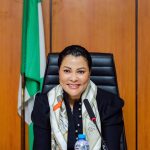
The big payout was announced in Abuja on Tuesday by the National Coordinator of the program, Dr. Assad Hassan, during a special meeting organized for state Commissioners, Permanent Secretaries, and Budget Directors from across the federation.
Dr. Hassan explained that an independent body called the Interim Independent Verification Agent was hired to check the work done by the states. After looking at the results, the independent inspectors confirmed that some states successfully met the targets set for the first stage of the program, which is called Year Zero.
To qualify for the funds, states were given clear deadlines to organize and publish their budgets for basic education and primary healthcare. They were also required to make sure that local government areas under them started using a unified and transparent budget system. Furthermore, the states had to publish a simplified “Citizens Budget” on their official websites before the end of February 2025 so that ordinary people could easily see how government plans to spend public money on schools and clinics.
The reward money will be shared based on the specific targets each state achieved. For making a clear plan and budget for basic education on time, five states will receive 1.5 million dollars each. These lucky states are Bayelsa, Borno, Kano, Kebbi, and Yobe.
The same group of five states—Bayelsa, Borno, Kano, Kebbi, and Yobe—will also collect an extra 1.5 million dollars each for successfully organizing their primary healthcare budgets according to the rules.
For getting local governments to adopt a clean and standard budgeting format, nine states passed the test and will receive 500,000 dollars each. The states in this category include Adamawa, Bayelsa, Borno, Delta, Gombe, Kano, Plateau, Taraba, and Yobe.
Finally, fifteen states qualified for another 500,000 dollars each for publishing their education and health budgets early enough for the public to read. These states are Abia, Plateau, Bayelsa, Borno, Edo, Ekiti, Enugu, Imo, Jigawa, Kano, Kebbi, Kogi, Nasarawa, Ondo, and Yobe.
Dr. Hassan made it clear that many other states missed out on this money entirely. He said those states failed because they either rushed to upload their budget details after the March 31, 2025 deadline had passed, completely missed the required standards, or forgot to put the information on their official state websites where the public could verify it.
The National Coordinator pointed out that the main reason many states failed to get the money was due to a lack of teamwork. He explained that different government ministries and offices failed to work together, which made it hard for them to take control of the reforms.
However, he noted that the independent verification team is already on the field working to finish the next round of checks by July 2026.
To ensure that struggling states do not miss out next time, Dr. Hassan stated that the program has already started a fresh plan to give them direct technical help and training so they can fix their mistakes.
He stated that the entire essence of the HOPE Governance Program is to make sure that every kobo sent by the federal and state governments actually gets down to the grassroots to fix primary health centres and basic schools. The programme wants to bring open governance, stop the secret movement of public funds, and make sure states hire more qualified teachers and health workers to serve the public.