
Commercial Court Proposal Will Improve Investment Climate, Oyedele Says
By Patience Ikpeme
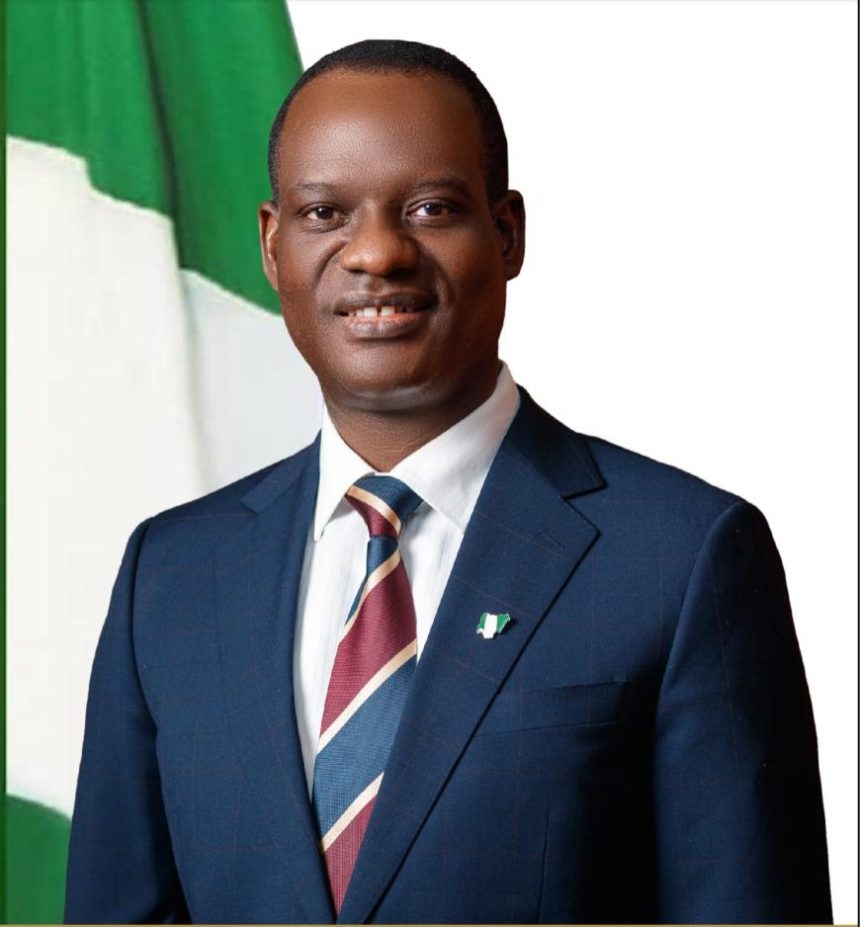
The Federal Government is considering a major reform of Nigeria’s justice system aimed at making the country more attractive to investors, with the Minister of Finance and Coordinating Minister of the Economy, Taiwo Oyedele, proposing the creation of a specialised tribunal to handle commercial disputes within a much shorter time.
Oyedele said investors are often discouraged from bringing long-term capital into Nigeria because business-related court cases drag on for many years, creating uncertainty and raising the cost of investment.
He spoke in Abuja on Tuesday while delivering his inaugural lecture as a Fellow of the Capital Market Academics of Nigeria (CMAN) at the association’s second biennial conference.
According to the minister, commercial disputes currently spend an average of about 15 years moving through Nigeria’s courts before final judgments are delivered, a situation he described as harmful to economic growth and private sector development.
To tackle the problem, he proposed the establishment of a Commercial Dispute Resolution Tribunal that would focus exclusively on business and financial disagreements. He explained that the body should consist of judges and arbitrators with specialised knowledge of commercial transactions and should rely on technology and fixed timelines to ensure cases are concluded quickly.
Oyedele said the tribunal would serve businesses, investors, suppliers and joint venture partners whose projects are often delayed because of prolonged legal battles.
He noted that confidence in the capital market depends heavily on the ability of investors to enforce contracts, pointing out that financial instruments such as bonds and other investment arrangements cannot function effectively where disputes remain unresolved for years.
The minister also challenged widespread public criticism of government borrowing, arguing that the real issue is not the volume of debt but how borrowed funds are used.
“The relevant question is never simply how much debt there is. It is always debt for what, at what cost, against what return and repayable on what terms,” he said.
He maintained that loans used to finance projects capable of generating economic returns should not be viewed negatively, adding that governments and businesses sometimes lose valuable opportunities when they avoid borrowing for productive investments.
Oyedele also encouraged Nigerian business owners to rethink the desire to retain complete ownership of their companies at all costs.
He said many entrepreneurs could achieve greater success by allowing external investors to provide additional capital that would enable their businesses to expand, instead of holding on to full ownership of relatively small enterprises.
Speaking on what drives investment decisions, the minister said investors pay closer attention to policy stability, effective institutions and confidence in the legal system than to generous tax incentives.
“Capital hates uncertainty more than taxation,” he said.
He explained that frequent policy changes, inconsistent regulations, foreign exchange instability and weak contract enforcement continue to discourage investors from committing long-term funds to Nigeria.
According to him, countries that build independent institutions, efficient public agencies and credible financial regulators are more likely to attract sustainable investment than those relying solely on political leadership.
Oyedele also called for better communication of government reforms, saying Nigeria often fails to receive adequate recognition for policy improvements because they are not effectively presented to the international investment community.
Also addressing participants, the Director-General of the Securities and Exchange Commission (SEC), Dr Emomotimi Agama, said closer cooperation between academics and regulators would produce stronger policies for the country’s capital market.
He described research as an essential tool for developing regulations capable of responding to changes within the financial system.
“I have long believed that good regulation begins with good thinking. The policies we make at the Securities and Exchange Commission are only ever as strong as the evidence and the ideas that inform them,” Agama said.
He noted that the implementation of the Investments and Securities Act, 2025, together with the new 10-year Capital Market Master Plan, presents opportunities that require continuous research and informed policy discussions.
Agama said the Commission remains willing to consider fresh ideas from scholars and industry experts in its efforts to strengthen investor confidence and improve market operations.
“The Commission’s door is open to evidence, to challenge and to fresh ideas, wherever they may lead. The finest measure of these two days will not be the sessions we hold, but the policies and the practices they go on to shape,” he added.
In his welcome address, CMAN President, Prof. Uche Uwaleke, said Nigeria must build stronger partnerships between universities, regulators and financial institutions if it hopes to develop a more resilient financial system.
He observed that while universities produce quality research and the financial sector possesses practical experience, both have not worked together closely enough to influence national economic development.
Uwaleke proposed changes to university policies that would give greater recognition to experienced professionals from the banking, finance, insurance and investment sectors in academic appointments and promotions.
He also urged regulators to introduce structured research fellowships and sabbatical programmes that would allow academics to contribute directly to policy development while gaining practical industry experience.
The CMAN president further proposed the creation of a national financial markets research partnership involving government, regulators, universities and private sector operators to produce studies capable of addressing challenges in capital markets, infrastructure finance, pensions, insurance, financial inclusion and sustainable finance.
He said stronger cooperation among all stakeholders would help transform academic research into practical solutions that support economic growth and strengthen Nigeria’s financial system.