

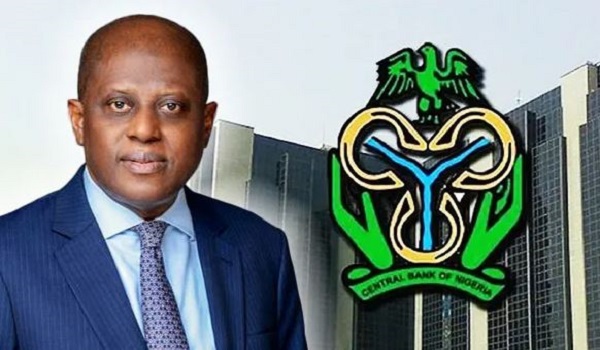
Cardoso Rejects CBN Interventions
…Pledges Strict Orthodox Monetary Policy
By Patience Ikpeme
The Central Bank of Nigeria (CBN) will resist mounting pressure to return to sector-specific interventionist programmes, choosing instead to protect its financial health and sustain its focus on traditional regulatory functions, Governor Olayemi Cardoso stated on Thursday.
Speaking at the opening session of the Monetary Policy Committee (MPC) workshop in Abuja, themed “Strengthening Monetary Policy Effectiveness Towards Sustainable Macroeconomic Stability,” Cardoso noted that past direct interventions heavily compromised the apex bank’s financial positioning.
A statement from the CBN on Sunday quoted the Governor warning against a regression into those practices, noting that such initiatives “had previously distorted the Bank’s balance sheet.”
Cardoso linked the central bank’s growing reputation directly to its departure from developmental lending and its adherence to standard monetary mechanisms. “The institution’s renewed credibility over the past two and a half years has largely stemmed from its disciplined reliance on conventional policy tools,” he said.
Reflecting on the macroeconomic climate inherited by his administration, the Governor pointed to systemic weaknesses that hampered the bank’s operational efficiency. He recalled a period characterized by weakened institutional autonomy, diminished policy credibility, and a dependence on unorthodox monetary tools that “blurred the distinction between fiscal and monetary responsibilities, reduced transparency, and limited the effectiveness of policy interventions.” He added that an opaque foreign exchange market and weak fiscal-monetary coordination actively drove up inflation, triggered exchange-rate volatility, and eroded investor confidence.
To reverse these trends, the current leadership returned the apex bank to an orthodox monetary framework, positioning the policy rate as the primary signalling mechanism. While acknowledging that inflation remains high, Cardoso pointed out that the strategic tightening has yielded measurable progress. He stated that inflation “has begun to moderate, and exchange-rate stability has improved,” adding that enhanced transparency in the foreign exchange market has supported more efficient price discovery and insulated the domestic economy from severe external shocks, including recent geopolitical tensions in the Middle East.
Looking ahead, the CBN chief indicated that the current reforms are groundwork for a more significant structural shift. The ongoing internal upgrades, which prioritize data-driven analysis and consistent communication, align with the bank’s medium-term objective of “transitioning to a more explicit inflation-targeting framework.” Cardoso noted that this transition will require deeper institutional reforms, stronger collaboration, and sustained technical work. He also cited the recently concluded banking recapitalization exercise as proof of what can be achieved through effective policy coordination and rigorous financial-sector supervision.
In his welcoming remarks, the Deputy Governor of the Economic Policy Directorate, Dr. Muhammad Sani Abdullahi, explained that the workshop was specifically designed to provide a platform for structured dialogue, technical exchange, and shared learning.
He noted that the participation of experts from policy, research, and professional practice is vital for navigating a landscape heavily shaped by evolving domestic economic conditions and global spillovers, expressing optimism that the communique from the sessions will directly fortify the CBN’s policy formulation and implementation strategies.