

CBN Holds Rates Steady at 26.5%, Retains other Parameters
…Cardoso Cites Strong Economic Buffers Amid Global Shocks

By Patience Ikpeme
The Monetary Policy Committee (MPC) of the Central Bank of Nigeria (CBN) has chosen to maintain its current monetary policy trajectory, electing to retain the Monetary Policy Rate (MPR) at 26.5 per cent.
The decision, reached during the Committee’s 305th meeting held on May 19 and 20, 2026, reflects a cautious approach to steering the nation’s economy through emerging global and domestic headwinds. Alongside the benchmark rate, the CBN kept the Standing Facilities Corridor around the MPR at +50/-450 basis points. The Cash Reserve Requirement (CRR) was also held constant at 45.00 per cent for Deposit Money Banks, 16.00 per cent for Merchant Banks, and 75.00 per cent for non-TSA public sector deposits.
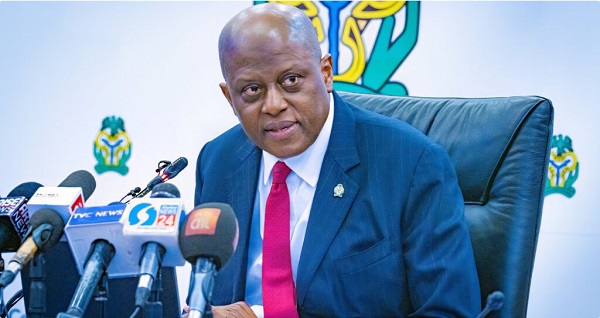
Addressing the rationale behind the decision, CBN Governor Olayemi Cardoso noted that while inflation has seen a marginal uptick for two consecutive months due to external pressures, the regulatory body views this trend as temporary. The Committee expressed strong confidence that the current macroeconomic environment possesses the necessary resilience to steer the economy back toward a path of lower inflation.
A primary concern for the committee was the ongoing geopolitical tension in the Middle East, which has driven up global energy prices and escalated transportation and logistics costs. However, the apex bank noted that domestic policy reforms have successfully insulated the local economy from severe damage.
“The impact of the crisis on the Nigerian economy has been largely muted due to the benefits of prior policy reforms,” the MPC stated in its official communique. “These include exchange rate stability, improvements in external reserve buffers, strengthened monetary policy transmission, well-capitalised banking system, and ongoing fiscal consolidation, which have significantly bolstered the economy’s ability to absorb external shocks.”
The apex bank further explained that without these critical reforms, the pass-through effect of global commodity and energy price shocks onto domestic inflation would have been far more severe. According to the committee, “the essential conditions for price stability remain firmly in place.”
Confidence in Nigeria’s economic trajectory was recently bolstered by a sovereign rating upgrade. The MPC pointed out that this upgrade validates the strength of the country’s macroeconomic fundamentals and builds deeper trust in its ongoing policy credibility. Nevertheless, the committee maintained that “a cautious and vigilant policy stance is necessary to anchor inflation expectations and safeguard macroeconomic stability.”
On the domestic banking front, the MPC expressed satisfaction with the conclusion of the banking sector recapitalisation exercise, which has resulted in the emergence of 33 banks boasting stronger financial soundness indicators and an enhanced capacity to support economic growth. Looking ahead, the committee urged the central bank to remain proactive and deploy the necessary measures to manage any potential post-recapitalisation risks to protect the stability of the financial system.
Domestic economic data presented at the meeting showed that headline inflation rose marginally to 15.69 per cent in April 2026 from 15.38 per cent in March, primarily driven by seasonal factors and high logistics costs affecting food prices. Conversely, core inflation moderated to 15.86 per cent, and the 12-month average inflation dropped to 19.16 per cent, marking its sixth consecutive monthly decline. Furthermore, month-on-month headline inflation slowed significantly to 2.13 per cent in April compared to 4.18 per cent in March.
On growth, the nation’s Real GDP expanded by 4.07 per cent in the fourth quarter of 2025, up from 3.98 per cent in the previous quarter, driven by agriculture, industry, and a 6.79 per cent expansion in the oil sector linked to improved downstream refining. This growth is backed by robust gross external reserves, which stood at US$49.49 billion as of May 15, 2026, providing 9.04 months of import cover and continuing to anchor exchange rate stability.
The MPC stated that it maintains a forward-looking, evidence-based framework focused on its primary mandate of achieving price stability while keeping the financial system resilient. The next meeting of the committee is scheduled to take place on July 20 and 21, 2026.