

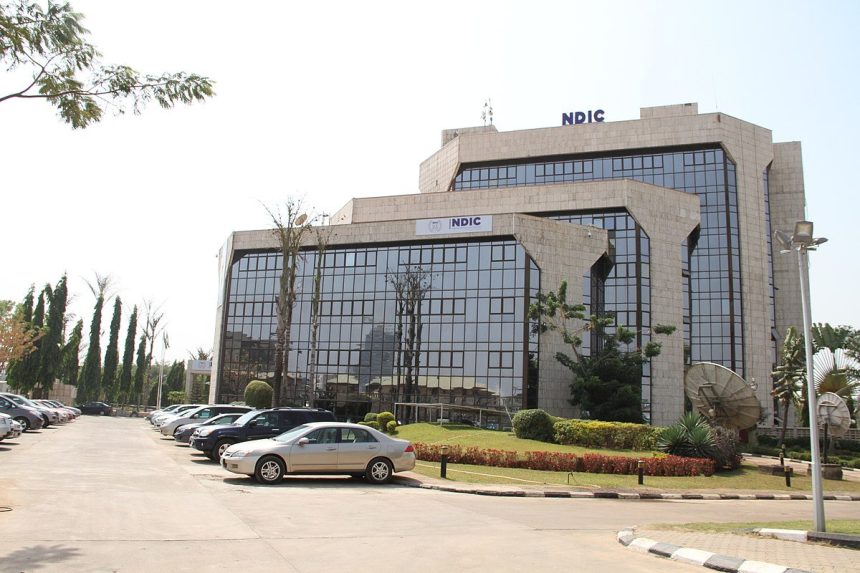
NDIC Finalizes Liquidation of 89 Banks as New Owners Take Over
By Patience Ikpeme
The Nigeria Deposit Insurance Corporation (NDIC) has formally moved to conclude the liquidation of 89 closed Microfinance Banks (MFBs) and Primary Mortgage Banks (PMBs). This development follows the successful acquisition of these institutions by new investors under the Purchase and Assumption (P&A) resolution model, a strategic maneuver designed to protect depositors and maintain financial stability.
The affected banks were among the 179 microfinance institutions and four mortgage banks whose operating licenses were withdrawn by the Central Bank of Nigeria (CBN) in May 2023. By utilizing the P&A model, the NDIC facilitated a transition where the assets and liabilities of the defunct entities were transferred to 89 newly licensed eligible institutions, which have since opened their doors to the public under new identities.
In a formal statement regarding the legal progression of this exercise, the Corporation noted that it is now taking the final steps to wind down the affairs of these banks. The Corporation stated that in its capacity as the Liquidator of the defunct banks, it will be presenting applications to various Judicial divisions of the Federal High Court to obtain orders of dissolution for the closed banks and to release the Corporation as Liquidator.
This judicial process serves as the legal seal on the exit of the old entities from the Nigerian financial landscape. The transition has seen a wide geographical spread of re-emergent banks, ensuring that micro-banking services remain accessible to citizens across various states, from the commercial hubs of Lagos to the grassroots of Adamawa and Kano.
In Lagos State, several notable shifts occurred as part of this resolution. For instance, the defunct Eyowo Microfinance Bank transitioned to Entrepreneur Microfinance Bank, while Arise Microfinance Bank now operates as Shine Microfinance Bank. Other major changes in the state include the takeover of Purple Money Microfinance Bank by Willows Microfinance Bank and the transition of Primera Microfinance Bank to Koins Microfinance Bank.
The restructuring also touched deep into the South-South and South-East regions. In Anambra, Enugwu-Ukwu Microfinance Bank was replaced by Umunri Microfinance Bank, and Obosi Microfinance Bank became Adike Microfinance Bank. In Edo State, the former ABC Microfinance Bank is now known as Okada Microfinance Bank, while in Akwa Ibom, Eduek Microfinance Bank has been taken over by Mint Microfinance Bank.
Northern operations also saw significant changes under this model. In Kaduna, NARICT Microfinance Bank shifted to Basawa Microfinance Bank, and in the Federal Capital Territory, Mainsail Microfinance Bank was acquired and renamed Duxbank Microfinance Bank. Adamawa Homes & Savings Ltd, one of the few mortgage banks in the group, has been restructured as Adamawa Mortgage Bank Ltd.
The Corporation confirmed that these 89 new institutions were issued fresh licenses by the CBN specifically to facilitate this takeover, allowing for a seamless continuation of banking services. This method ensures that the “defunct banks have since commenced operations under new names,” thereby preventing the total loss of banking presence in the affected communities.
As the NDIC approaches the Federal High Court, the focus remains on the legal dissolution of the original corporate shells. This action marks the final chapter for names like BIPC Microfinance Bank in Benue, which now serves customers as Novus Microfinance Bank, and Osogbo Microfinance Bank in Osun, which has been rebranded as Bold Microfinance Bank.
The move is widely seen by industry observers as a vital step in cleaning up the balance sheets of the micro-banking sub-sector while ensuring that the “liquidation activities” are finalized in strict “accordance with the provisions of its enabling Act and other relevant laws.”