
Edun Urges Developing Nations to Shield Economies Through Proactive Reform
By Patience Ikpeme
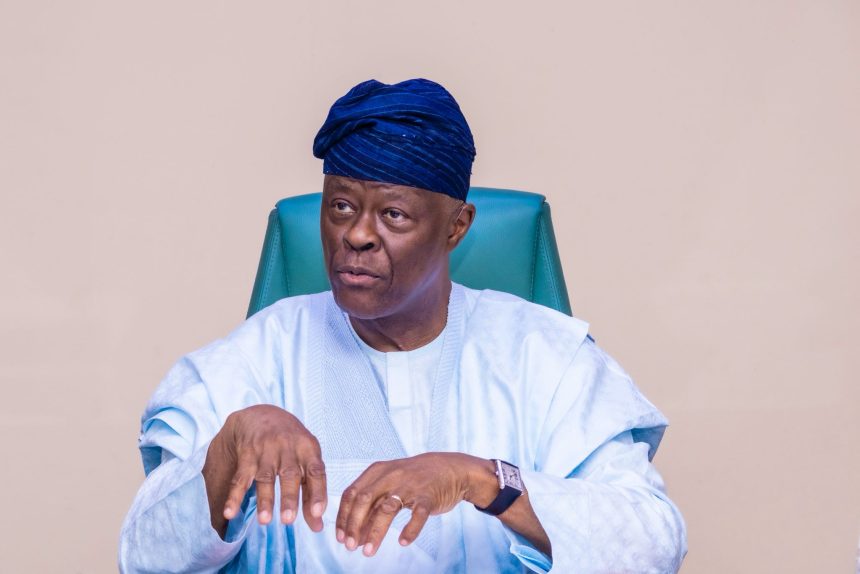
Nigeria’s Minister of Finance and Coordinating Minister of the Economy, Mr. Wale Edun, has issued a compelling call to action for developing nations, urging them to implement proactive and strategic measures to shield their economies from the volatile waves of global economic shocks.
The Minister delivered this charge during a high-profile G24 news conference held on Tuesday on the sidelines of the International Monetary Fund (IMF) and World Bank Spring Meetings in Washington, D.C. In a detailed statement released on Wednesday by the Head of Information and Public Relations Unit of the Ministry of Finance, Mrs. Efe Ovuakporie, the Minister articulated a vision for economic survival that balances aggressive reform with social protection.
Addressing a room of global financial leaders and journalists, Edun pointed out the precarious position of Central Banks in emerging markets. He noted that the timing of monetary policy is now a matter of national survival, as the wrong move could trigger a collapse of hard-won economic progress.
“Premature or excessive interest rate hikes could undermine ongoing economic reforms, while delayed policy responses risk fuelling inflation. Central Banks in developing economies play a critical role in navigating challenges such as energy crises and geopolitical tensions,” Edun said.
The Minister observed that the impact of the current global climate is uneven, creating a complex landscape where policy responses must be tailored to specific national realities. He drew a sharp contrast between the fortunes of oil-producing nations and those that rely on imports, noting that while the former might see a boost in balance sheets, the underlying pressure remains universal.
“While countries like Nigeria may benefit from increased oil revenues, oil-importing countries face higher costs. However, both groups continue to grapple with inflationary pressures stemming from energy markets. Even oil-exporting nations are not immune, as rising costs of gas, fertiliser, and food are being felt across economies,” he remarked.
A significant portion of the Minister’s address focused on the necessity of maintaining the momentum of structural reforms. He was explicit in his counsel against returning to populist subsidy regimes, which he argued have historically drained national treasuries without providing long-term stability. Reflecting on the Nigerian experience, Edun noted that the bold decisions to remove fuel subsidies and liberalise the foreign exchange market have created a more robust economic framework. These reforms, he suggested, are the bedrock of future resilience.
“Reforms such as fuel subsidy removal and foreign exchange liberalisation have strengthened Nigeria’s economic framework despite recent external shocks. It is important to build economic resilience by utilising existing fiscal buffers and implementing targeted, temporary relief measures for vulnerable populations, rather than reversing key reforms already in place,” the Minister stated.
He further urged fellow ministers and policy leaders to ensure that the burden of reform does not fall disproportionately on the poor. He advocated for a governance model that prioritizes the poorest citizens, ensuring they can manage the rising cost of living through direct support systems rather than through broad, inefficient subsidies that jeopardize long-term structural reforms essential for sustainable growth.
Edun’s report to the G24 also touched on the opportunities presented by market volatility. For oil-exporting countries, he suggested that positive price shocks provide a rare window to fix fiscal imbalances, provided the windfall is managed with strict discipline.
“Positive oil price shocks could strengthen fiscal and external balances for exporting countries, creating room for responsible public investment. However, there is a need for disciplined macroeconomic management,” he said.
He pointed toward the use of advanced financial tools, such as hedging strategies, to create a sense of certainty in an uncertain market. By stabilizing oil revenues through such mechanisms, Edun noted that nations could achieve a level of predictability that supports long-term fiscal planning. However, the Minister did not shy away from the harsher realities facing the developing world. He noted with concern that the traditional safety nets of international aid are fraying, as overseas development assistance is declining at the very moment that debt servicing obligations are reaching a breaking point.
“Debt servicing costs in many developing countries have now surpassed inflows from aid and investment, significantly limiting fiscal space and constraining efforts toward meaningful economic transformation,” Edun lamented.
In his capacity as the Chairman of the G24, Edun used the platform to demand a fundamental shift in how international financial institutions interact with the Global South. He called for a fairer global financial architecture that acknowledges the unique vulnerabilities of developing states.
Specifically, he pushed for the expansion of concessional financing to lower the cost of borrowing and the development of innovative risk management tools to protect against market swings. Furthermore, he advocated for increased private sector participation as a vital strategy to reduce the heavy reliance on external debt.
On the domestic front, the Minister identified resource mobilization as the most sustainable path to sovereignty. He argued that improving tax systems is no longer just a fiscal goal but a national security priority.
“Domestic resource mobilisation is a more sustainable path forward. Improving tax-to-Gross Domestic Product (GDP) ratios will depend significantly on technology adoption, including Artificial Intelligence, to boost efficiency, transparency, and overall revenue generation,” he noted.
While acknowledging that the rapid rise of Artificial Intelligence (AI) could potentially widen the gap between rich and poor nations, Edun maintained an optimistic stance on its utility for governance. He suggested that digitalization and automation are the keys to unlocking hidden revenue and curbing corruption. Turning to global commerce, the Minister expressed deep concern over the visible slowing of trade growth, noting that the world is seeing a trend toward fragmentation and supply chain disruptions. In response, he suggested that developing economies must look inward and toward their neighbors.
“Fragmentation and supply chain disruptions are prompting developing economies to focus more on domestic production and regional integration,” he observed.
The Director of the G-24 Secretariat, Iyabo Masha, echoed the Minister’s sentiments during the conference. She provided a technical perspective on why traditional monetary tools might be failing to curb inflation in certain sectors, explaining that supply-side constraints, particularly in oil production, respond weakly to monetary policy. She suggested that Central Banks should adopt a cautious, data-driven approach to decision-making while multilateral institutions must intensify support, especially in reducing borrowing costs and addressing debt-related challenges.
Concluding the report, the statement from the Ministry of Finance indicated that Nigeria’s own reform program is gaining significant traction across various sectors. Edun remains confident that the country’s pivot toward private sector-led expansion and infrastructure investment will eventually yield tangible gains for the average citizen.
“Nigeria’s reform drive is beginning to firm up macroeconomic foundations, sharpen policy credibility, and strengthen the country’s shock-absorption capacity. The government remains focused on translating reforms into tangible gains through higher incomes and improved living standards for Nigerians,” the Minister concluded.
As the meetings in Washington continue, Edun’s message remains clear: the path to prosperity for the developing world lies in the courage to maintain reforms, the discipline to manage resources, and the collective voice to demand a more equitable global financial system.