
NSDC to Address Barriers Hindering Local Sugar Production
By Patience Ikpeme

The National Sugar Development Council (NSDC) is on the verge of dismantling all obstacles that have impeded the realization of its core mandate: boosting local sugar production in Nigeria.
This commitment was made by Mr. Kamar Bakrin, the Executive Secretary/CEO of the NSDC, during a meeting with key industry stakeholders.
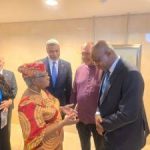
Speaking at a tripartite gathering that included the Ministry of Industry, Trade and Investment and major Backward Integration Programme (BIP) operators, Mr. Bakrin said the Council has elevated its performance monitoring and oversight of the BIP beyond the previous system. He explained that the NSDC, under his leadership, has conducted robust one-on-one, physical, and virtual engagements with operators, setting clear targets and tracking deliverables.
During the meeting, which was presided over by the Minister of State for Industry, Senator John Owan Enoh, the Executive Secretary shared feedback from the operators. They cited several issues as primary causes for delays in their BIP execution.
These include existing loopholes in the free trade zone (FTZ) regime, which they believe some participants have exploited, delays in clearing equipment at ports, sugar smuggling, and resistance from host communities to the expansion of their programs.
Mr. Bakrin provided details on the measures being taken to address these concerns. He said that the loopholes in the FTZ regime are being addressed through an ongoing amendment to the NSDC Act by the National Assembly, a process that has involved engagement with relevant stakeholders to make the industry more attractive to investors. For delays in equipment clearing, the Council is working with the Nigeria Customs Service. Regarding smuggling, he said that while the volume does not significantly alter market dynamics, the NSDC has engaged relevant security agencies on the matter.
On the issue of host community resistance, Mr. Bakrin said the Council consistently intervenes to resolve grievances. He pointed to the successful resolution of a significant issue in Numan, Adamawa State, and stated that currently, no backward integration programme in the country is experiencing host community resistance that restricts access to a substantial proportion of land.
The NSDC boss also informed the gathering that the Council is working to secure comprehensive financial support for the industry, particularly to help operators reduce the cost of irrigation. He spoke of the need to aggressively push for a sugar sector development fund and secure guarantees to lower the cost of borrowing for operators. He added that the Council could also provide support for irrigation facilities to lower the overall cost of infrastructure, though not necessarily as grants.
Mr. Bakrin stressed the need for strict sanctions for underperformance by operators. He said they must immediately halt the deterioration in their current operations, especially concerning agronomic and factory practices, which are below global norms. He also insisted that operators need to take a much more aggressive approach to expanding their BIP programs to meet the targets of the National Sugar Master Plan (NSMP). He said that basic improvements in agronomy and factory practices alone could increase annual raw sugar production to 200,000 metric tonnes in the short term, even from the current land planted with sugarcane.
While acknowledging the surface profitability of importing and refining raw sugar, the NSDC boss maintained that the more challenging work of growing and processing sugarcane in Nigeria is ultimately more sustainable and beneficial for both the operators and the nation.
In a related development, the Minister of State for Industry announced that going forward, the allocation of raw sugar importation quotas to operators will be strictly tied to their performance. He added that his Ministry will take a greater interest in monitoring the activities and performance of the BIP operators.