
NSDC Invites Investors to Drive Growth in Nigeria’s Sugar Industry
By Patience Ikpeme
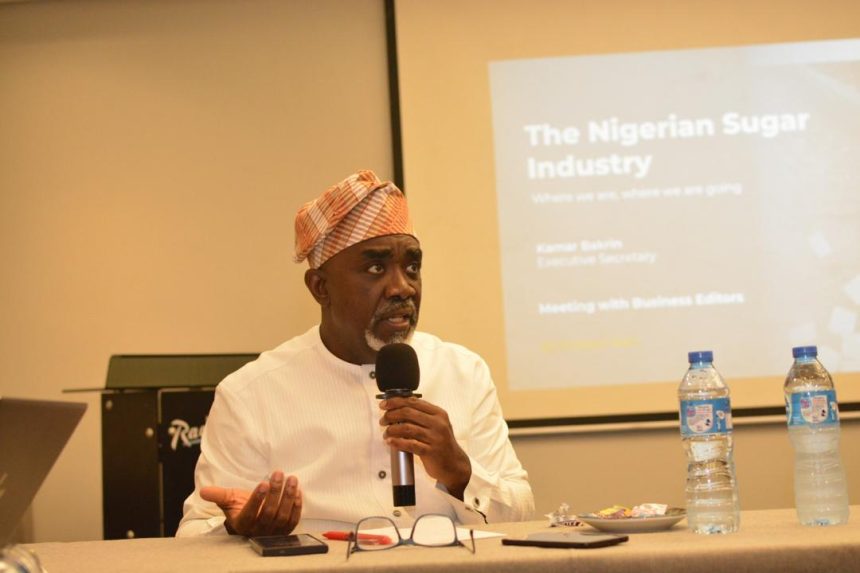
The National Sugar Development Council (NSDC) has called on both local and international investors to capitalize on Nigeria’s expanding sugar production sector.
Mr. Kamar Bakrin, Executive Secretary and CEO of the NSDC, made this appeal during a recent meeting in Lagos, highlighting the substantial potential for growth in the country’s sugar industry.
According to a statement issued by the NSDC in Abuja, Mr. Bakrin emphasized the lucrative nature of the domestic market, which sees a demand of around 2 million metric tonnes annually, along with a strong export opportunity across Africa. “With the Nigerian sugar market valued at $2 billion and an African export market worth an additional $7 billion, the business environment is both viable and profitable,” he stated.
Mr. Bakrin explained that Nigeria’s current macroeconomic environment has enhanced the competitiveness of local sugar production. “With the currency exchange rate favoring local production over imports, the economics are compelling. High Net Present Value (NPV) and Internal Rate of Return (IRR) metrics at attainable scales make the industry highly attractive,” he noted, further adding that financing options tailored to support the sector’s growth are readily available.
Nigeria’s sugar industry has seen improved access to secure land and technical expertise, making it operationally feasible for large-scale projects. Mr. Bakrin also stressed the strong incentive framework, with government policies, such as the Backward Integration Plan (BIP), aimed at boosting self-sufficiency and reducing dependency on imports. “The government is committed to investment-friendly legislation that supports our mission for increased local production,” he said.
Central to this mission is a new host community integration model introduced by Mr. Bakrin. The model mandates that sugar producers invest significantly in their host communities, which includes infrastructure development in education, healthcare, and roads. Additionally, companies are required to reserve job quotas at managerial levels for local residents, ensuring that communities benefit directly from the industry’s growth. “This approach will not only sustain the industry but also foster community support and project longevity,” Mr. Bakrin stated.
Beyond sugar production, Nigeria’s sugar subsector has the potential to create a wide range of valuable products, including ethanol, bioplastics, and packaging materials, which are increasingly in demand across various industries.
Appointed by President Bola Ahmed Tinubu in October last year, Mr. Bakrin has championed a strategic vision for Nigeria’s sugar sector. He aims to accelerate local production with the goal of achieving self-sufficiency within the next eight years. “We have designated 2025 as the year of acceleration for sugar development. We are working to secure substantial funding and drive expansion, bringing in both existing players and new global investors,” he announced.
To support this growth, the NSDC is ramping up efforts to enhance training, research, and best practices within the industry. This includes developing local sugarcane varieties, expanding seed cane production, and strengthening extension services to improve productivity.
With these initiatives, Nigeria’s sugar industry stands poised to become a key player on both the domestic and international stages, offering significant investment opportunities and economic benefits for the nation.