

NRS Assures Nigerians Savings in Bank Accounts Not Taxable Under New Laws
By Patience Ikpeme

The Nigeria Revenue Service has sought to allay growing public concerns over recently enacted tax reforms, assuring Nigerians that funds kept in personal and business bank accounts are not subject to taxation under the new legal framework.
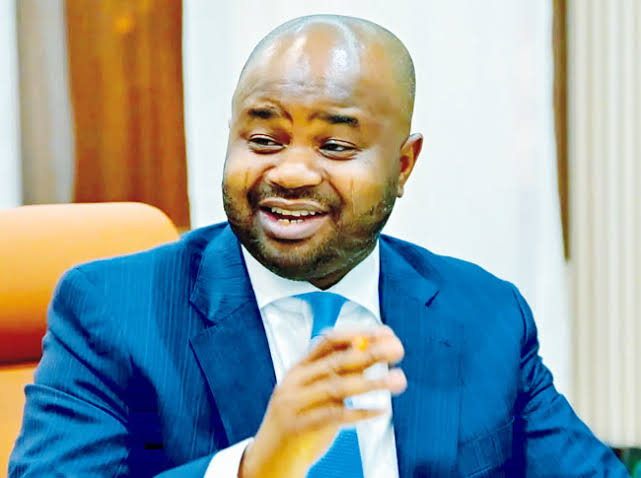
The clarification was given by the Executive Chairman of the NRS, Dr. Zacch Adedeji, during an appearance on Journalists’ Hangout on TVC on January 13, 2026, amid widespread speculation and misinformation on social media following the signing of new tax laws by President Bola Ahmed Tinubu in December 2025.
Adedeji stated clearly that neither the previous tax regime nor the newly enacted laws, including the Nigeria Tax Administration Act, authorise the taxation of money merely held in bank accounts. He explained that Nigeria’s tax system is anchored on income and profit, not on savings or assets.
“Tax is a percentage of your profits,” Adedeji said, adding that “money sitting in your account, whether personal or business, is not taxable.”
He explained that while savings themselves do not attract tax, income generated from investments may be subject to taxation in line with existing laws. According to him, interest earned on fixed deposits or certain investment accounts can qualify as taxable income, but routine inflows such as salaries, personal transfers, gifts or family remittances are not considered profits and therefore do not attract tax.
Adedeji noted that only unusually large or unexplained inflows could be reviewed as potential income, and even then, such reviews would be carried out within the bounds of the law and established exemptions. “This is not an automatic or blanket taxation of bank transactions,” he said, stressing that due process remains central to tax administration.
The NRS chairman said the public clarification became necessary after false narratives circulated online, claiming that all bank transfers would be taxed or that accounts could be frozen under the new laws. He described the claims as baseless, warning that the misinformation had already caused panic among some bank customers.
“We have seen people withdrawing money out of fear, and that is unfortunate,” Adedeji said, urging Nigerians to remain calm. He explained that the objective of the reforms is to modernise tax administration, improve efficiency and transparency, and not to penalise ordinary citizens or their savings.
Under the broader tax reform package scheduled to take effect in 2026, Adedeji said certain compliance measures have been introduced, including the mandatory use of Tax Identification Numbers for activities such as opening new bank accounts, purchasing insurance policies or participating in capital market transactions. He explained that these measures are intended to link financial activities with tax records and strengthen compliance, rather than impose taxes on account balances.
Adedeji also clarified that although the rebranded Nigeria Revenue Service, which replaced the former Federal Inland Revenue Service, now has enhanced access to banking data for oversight and compliance monitoring, constitutional safeguards remain in force. He noted that personal income tax for most Nigerians continues to be administered by state governments, except for specific categories such as members of the armed forces and other federally designated groups.
The NRS encouraged Nigerians with questions about business income, investments or complex financial transactions to seek professional tax advice or consult official guidance issued by the service. According to Adedeji, the reforms are designed to broaden the tax base in a fair and sustainable manner without placing unnecessary pressure on ordinary Nigerians.
“The goal is to ensure that those who should pay tax do so appropriately, while protecting the savings and livelihoods of everyday citizens,” he said.