
Nigeria Urges Stronger IMF, World Bank Support for Reforming African Economies
By Patience Ikpeme

The Federal Government of Nigeria has called upon the International Monetary Fund (IMF) and the World Bank to provide more robust financial support to countries in Sub-Saharan Africa that are actively pursuing economic reforms.
Nigeria advocated for this increased financial backing to be delivered through innovative support instruments designed specifically for economies committed to implementing significant economic transformation agendas.
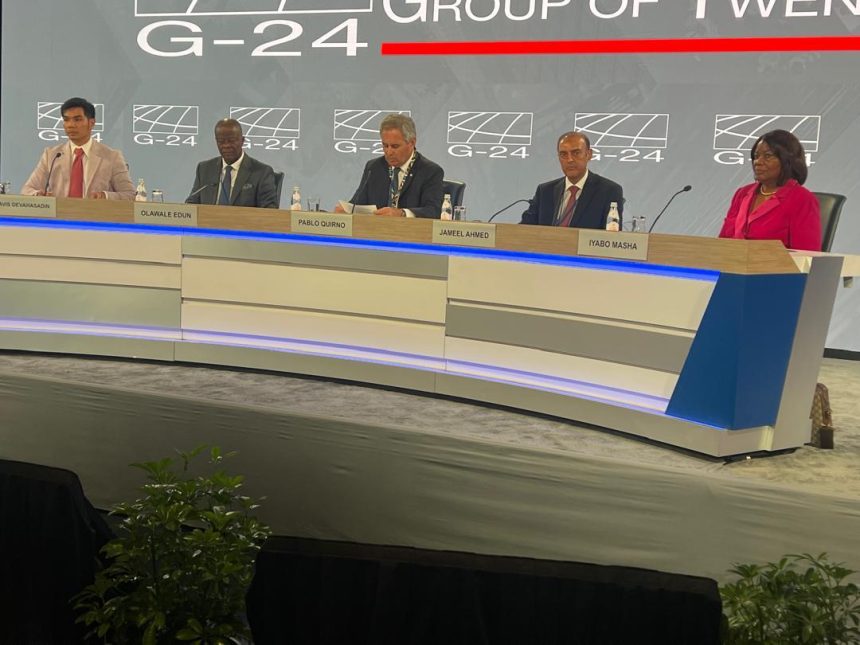
The appeal was made by Nigeria’s Minister of Finance and Coordinating Minister of the Economy, Mr. Wale Edun, during the G-24 Ministerial Meeting held on the sidelines of the ongoing 2025 IMF/World Bank Spring Meetings in Washington D.C.
Addressing an audience of global financial leaders and policy influencers, Mr. Edun argued that it was important to reward economies undertaking challenging yet essential reforms. He noted that beyond acknowledging these efforts, the international financial community must increase access to affordable, sustainable financing that is specifically tailored to support long-term economic transitions.
Edun presented Nigeria’s position in his dual capacity as a national representative and as the First Vice-Chair of the G-24—a coalition of developing nations working to coordinate their stances on monetary and development issues.
He stated that under the leadership of President Bola Ahmed Tinubu, Nigeria is implementing an ambitious reform programme aimed at restoring macroeconomic stability, fostering inclusive growth, and positioning the nation for sustained prosperity.
According to him, these measures include the removal of fuel subsidies, the unification of foreign exchange windows, and an ongoing restructuring of the tax system to broaden the revenue base and improve fiscal efficiency.
“These decisions are not easy,” he acknowledged. “But they are necessary for laying the foundation for a more resilient and inclusive economy that works for all Nigerians.”
Mr. Edun acknowledged the IMF’s recent establishment of a third Sub-Saharan Africa Chair—a move widely seen as an effort to amplify the region’s voice and participation within the institution. He urged for this momentum to continue through greater African representation in leadership and decision-making roles within the Bretton Woods institutions.
“Nigeria is open for business,” he declared, restating the country’s eagerness to collaborate with development partners, investors, and multilateral institutions in advancing its economic transformation agenda.
Mr. Edun’s intervention signals Nigeria’s ongoing commitment to playing a significant role in shaping multilateral development discussions while aligning its domestic policies with global best practices for stability, growth, and sustainable development.