

Nigeria Set to Leverage 6GHz Band for Wi-Fi 6 Applications
By Patience Ikpeme
Nigeria is preparing to join the league of nations utilizing part of the 6GHz spectrum band for Wi-Fi 6 applications.

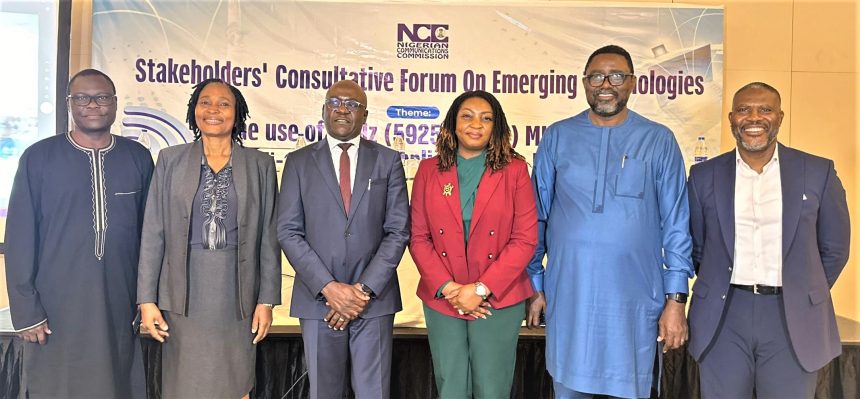
This development was highlighted at a recent consultative forum organized by the Nigerian Communications Commission (NCC), where key stakeholders gathered to discuss the future of spectrum utilization in the country.
The Executive Vice Chairman/Chief Executive Officer of the NCC, Dr. Aminu Maida, represented by the Executive Commissioner of Technical Services, Engr. Abraham Oshadami, addressed the forum. He emphasized the importance of stakeholder engagement in making informed decisions on the use of the 6GHz band, stressing that the Commission seeks feedback from industry players to shape the regulatory framework.
“We present to you our thoughts and recommendations on the use of the Spectrum band to get your feedback for informed decision-making. I welcome you all and wish you fruitful deliberations,” said Engr. Oshadami during his opening remarks.
Reflecting on the NCC’s strategic vision, Engr. Oshadami noted that the Commission has undergone significant repositioning since the appointment of the current leadership in 2023, under the administration of President Bola Ahmed Tinubu. He explained that the NCC is focused on capitalizing on new opportunities through a framework driven by collaboration, data, compliance, and digitalization.
He reiterated that the Commission’s strategy aligns with the Federal Government’s policy, which focuses on key areas such as knowledge policies, infrastructure, innovation, entrepreneurship, and trade. “Guided by our actions in the right direction and, of course, that of the Federal Government through the Ministers’ Strategic Blueprint, we have been able to set the ball rolling to enhance telecommunication service delivery in Nigeria,” he remarked.
A key focus of the consultative session was the potential of the 6GHz band, which spans from 5925 MHz to 7125 MHz. This frequency range is seen as critical in addressing the growing demand for high-speed internet and advanced communication applications in Nigeria. Wi-Fi 6, the next-generation wireless standard, promises improved reliability, higher data throughput, and lower latency compared to its predecessors, making it suitable for both residential and enterprise environments.
“The vast majority of home internet traffic is connected to the end-user through Wi-Fi,” noted Engr. Oshadami. “In enterprise settings, Wi-Fi is essential for handling large amounts of data and simultaneously connecting large numbers of devices. However, the 5GHz and 2.4GHz bands currently used for Wi-Fi (Wi-Fi 5) are becoming overwhelmed due to an increase in demand for capacity.”
As Nigeria moves toward adopting the 6GHz band, the NCC is committed to following global best practices, taking into account the recommendations made at the recently concluded 2023 World Radiocommunications Conference (WRC-23) held in Dubai, UAE. At the WRC-23, the 6GHz band was allocated for both Wi-Fi and International Mobile Telecommunications (IMT) applications, offering countries around the world guidelines on how to make use of this valuable spectrum resource.
The consultative process in Nigeria reflects the NCC’s tradition of participatory regulation and industry-wide consultations. Engr. Oshadami emphasized the need for stakeholder input in determining the most appropriate use of the 6GHz band, highlighting that collaboration is a core pillar of the Commission’s regulatory approach.
“In line with global best practices, we sincerely believe that our actions must be guided by decisions that take into cognizance the inputs from all stakeholders in the industry,” he said. “The 6GHz band offers a substantial increase in available spectrum, which is crucial for supporting the growing demand for high-speed internet and advanced applications.”
Wi-Fi plays a crucial role in the distribution of fixed broadband services in homes, offices, and various public spaces. As more devices become connected and demand for data-intensive applications increases, the pressure on existing Wi-Fi bands—primarily 2.4GHz and 5GHz—continues to mount. The addition of the 6GHz band is expected to relieve this pressure, providing a much-needed boost to capacity and performance.
Engr. Oshadami explained that the 6GHz spectrum will help to meet the country’s growing internet demand by offering wider channels, higher throughput, and more efficient connectivity. This will be particularly beneficial in handling the surge in demand for data in both urban and rural settings, where connectivity remains a challenge.
With the groundwork being laid for the use of the 6GHz band in Nigeria, the NCC is optimistic that this will further propel the country’s broadband penetration efforts and enhance the quality of telecommunication services. The Commission reaffirmed its commitment to making informed regulatory decisions that prioritize consumer needs, industry growth, and national development.
As Nigeria transitions into this new phase of telecommunication advancement, the NCC’s emphasis on collaboration and data-driven decision-making underscores the country’s ambition to be at the forefront of technological innovation in Africa.
Nigeria’s journey toward adopting the 6GHz band for Wi-Fi 6 and IMT applications marks a significant milestone in the country’s digital transformation agenda. As stakeholders deliberate on the best approaches to spectrum utilization, the future looks promising for improved internet connectivity, greater capacity, and enhanced communication infrastructure across the nation.