
New Tax Law to Exempt 98% of Nigerian Workers from PAYE, Says Oyedele
By Patience Ikpeme

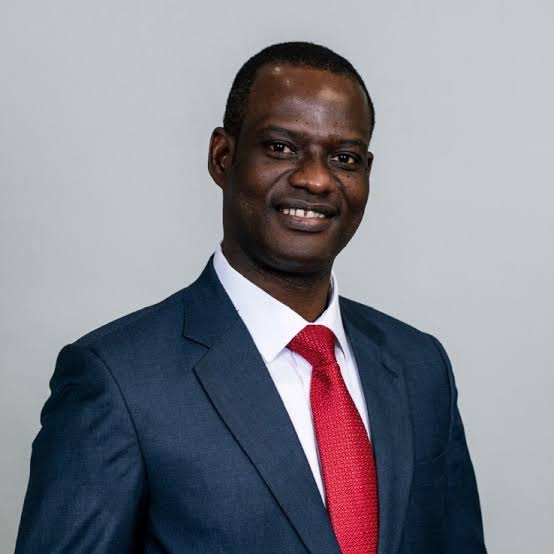
The Presidential Committee on Fiscal Policy and Tax Reforms is set to introduce a landmark change in Nigeria’s tax landscape, with Mr. Taiwo Oyedele, the committee’s chairman, revealing that approximately 98 per cent of Nigerian workers will be exempted from paying Pay-As-You-Earn (PAYE) tax under the new laws scheduled to begin in January 2026.
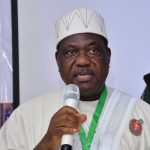
Speaking at the 31st Nigerian Economic Summit (NES31) in Abuja, Mr. Oyedele explained that the reform is principally designed to protect low-income earners and those living near the poverty line while making the system fairer for all.
“The more inequality you create, the more time-bomb you have. These reforms are designed to strengthen governance around revenue generation, improve accountability, and ensure that tax revenues are effectively utilised,” Oyedele said.
The committee chairman also confirmed that he has received death threats for his work but remains resolute, stating that the reforms are crucial for national benefit.
“Reform is tough. I have suffered all kinds of things including death threats. But I am not scared. I Recently celebrated my 50th BirthDay. Even if anything happens, I have done my bit,” he stated. He added, “The reforms belong to Nigerians. The reforms don’t belong to Mr. President.”
Mr. Oyedele made a strong case for wealthy Nigerians and corporate organisations to comply with tax obligations, stressing that orderly tax payment is the only path to national economic stability. The consequences of not doing so, he maintained, are severe and already visible.
“If we don’t pay our taxes in an orderly manner, we’ll pay it in a disorderly manner,” he warned. “We’ve seen that in the past few years with over N30 trillion Naira printed, which is part of the inflation we’re dealing with and the devaluation of the Naira. We don’t want that to happen. We’ve seen countries like Zimbabwe where prices double every other day.”
He confirmed that while the majority of low-income citizens will be relieved of PAYE burdens, high-net-worth Nigerians will pay higher taxes as a measure to ensure fairness in society. Similarly, **companies with low income will be exempted** from certain tax payments to strengthen their operations.
Mr. Oyedele added that the comprehensive fiscal overhaul is projected to have positive macroeconomic effects, helping to enhance Nigeria’s sovereign credit rating, lower borrowing costs for both government and businesses, and stimulate private-sector investment.
Responding to concerns that state and local governments might not support the changes—and may continue to harass vulnerable members of society—the Chairman assured the public that the reforms enjoy broad support. He noted that members of the Joint Tax Board (JTB) were part of the committee and stand behind its decisions.
He also disclosed that guidelines for implementation, including explanatory notes, are currently being prepared by key institutions, including the Federal Ministry of Finance, the IFRS, and the JTB.
On the impact to state finances, Mr. Oyedele expressed confidence that states would receive more from the Federation Account under the new regime without having to create obstacles to businesses.
“Last year all the States generated N3.36 trillion in all taxes. If that 3.36 trillion is not generated in 2026, the States will not do worse. We are convinced that no state will be bankrupt. We can’t do better by taxing our most vulnerable.”
He revealed that to prevent petty harassment, there is a plan for nano businesses to receive tax exempt stickers from government officials.
Addressing systemic failures, Mr. Oyedele criticised some of the current constitutional tax provisions as “retrogressive,” asking, “how will you ask anyone to pay Wheelbarrow Tax?” To rectify this, he confirmed that 10 amendment proposals have been submitted to the National Assembly for legislative action.
Beyond revenue, the committee is also focused on public spending. “We have worked on the expenditure side,” he said, and his team is developing a strategy to ensure transparency and prudence in government expenditure so Nigerians get the full benefits of their taxes.
“We are working seriously on Fiscal regimes,” he concluded, but withheld details, saying that revealing them at this time could jeopardise the objectives.