

NCCIMA: Dangote Group Driving Africa’s Industrial and Economic Renaissance
By Patience Ikpeme
The Niger Chamber of Commerce, Industry, Mines and Agriculture (NCCIMA) has described the Dangote Group as a transformative force in Africa’s economic renaissance, noting that the conglomerate is actively driving industrial growth across the entire continent.
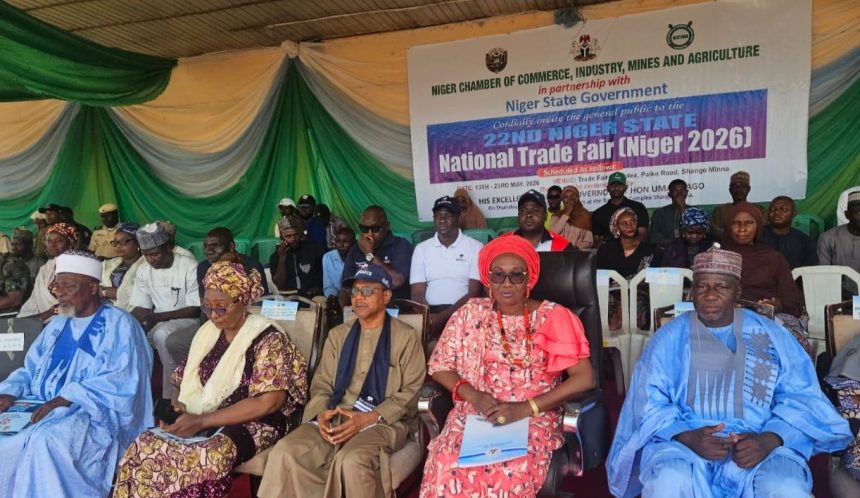
Speaking ahead of the Dangote Special Day at the 22nd Niger National Trade Fair in Minna, the Director General of NCCIMA, Adamu Salihu, stated that the Chamber intends to use the event to showcase the achievements of the Group to the people of Niger State, Nigerians, and the wider African business community.
According to Mr. Salihu, the Dangote Group’s continued investments in cement, sugar, salt, fertiliser, agriculture, and energy have become a model of indigenous industrialisation, serving as proof that African entrepreneurs can build globally competitive enterprises.
The NCCIMA Director General explained that the theme of this year’s fair, *”Public-Private Partnership as a Panacea for Nigeria’s Growth and Stability,”* was deliberately chosen to show the critical role of collaboration between government and the private sector in driving sustainable development.
He noted that the Dangote Group’s investment profile aligns closely with the development priorities of Niger State, particularly in agriculture, where the company’s rice and sugar businesses complement the state’s vast arable land and ongoing drive to become Nigeria’s leading food production hub.
Mr. Salihu expressed optimism that the Group’s Vision 2030 strategy would help unlock large-scale investments in agriculture, mining, and agro-processing in Niger State, sectors in which the state enjoys both comparative and competitive advantages.
The Dangote Group recently unveiled its Vision 2030 roadmap, which seeks to expand African manufacturing, deepen supply chains, and grow group revenue to $100 billion by the end of the decade. The company currently operates across more than a dozen African countries, with interests spanning cement, sugar, salt, fertiliser, petrochemicals, agriculture, and energy. According to the company, its core mission is to build local manufacturing capacity, create jobs, and reduce dependence on imports across the continent.
Mr. Salihu stated that the Group’s backward integration strategy and local sourcing model have created wealth for Nigerians by stimulating domestic production and reducing the nation’s dependence on imports. He described the Dangote Petroleum Refinery as a landmark project that has reshaped Nigeria’s energy landscape by conserving foreign exchange, eliminating fuel shortages, promoting competition, and opening new opportunities for indigenous investors.
According to the Director General, the positive impact of the refinery extends to states such as Niger, where lower logistics costs and improved fuel availability are expected to support manufacturing, agriculture, and commerce. He added that the Dangote Group’s commitment to local content, technology transfer, and infrastructure development demonstrates how African-owned companies can drive the continent’s industrial transformation.
The NCCIMA Director General urged Nigerian entrepreneurs to emulate the boldness of Group President Aliko Dangote by investing in the country and building businesses that create long-term value. He also called on large corporations to support nano, micro, small, and medium enterprises by integrating them into their supply chains, noting that chambers of commerce can help identify credible businesses to serve as suppliers and service providers.
Mr. Salihu appealed to exhibitors, investors, and the public to support the annual Niger National Trade Fair, describing it as a strategic platform for promoting investment, forging partnerships, and advancing the economic aspirations of Niger State and Nigeria as a whole.
He further observed that the Dangote Group’s industrial ambition is extending beyond Nigeria, pointing to recent discussions on the establishment of a major refinery in East Africa as further evidence of the company’s commitment to transforming Africa’s economy.
Mr. Salihu said the proposal, which was unveiled by the President of Dangote Group, Aliko Dangote, would replicate the 650,000 barrels-per-day Dangote Petroleum Refinery in Lagos and serve the East African market if governments in the region provide the necessary support. He described the move as a clear demonstration that the Dangote Group is “not only industrialising Nigeria, but indeed the whole of Africa.”
According to Mr. Salihu, the planned East African refinery shows the Group’s strategic vision of building world-class industrial assets that reduce Africa’s dependence on imports, conserve foreign exchange, create jobs, and strengthen regional value chains.
Aliko Dangote announced the proposal during the Africa We Build Summit in Nairobi, where he said his company was ready to construct an identical refinery in East Africa, potentially within the next four to five years, subject to government backing. Mr. Salihu concluded that this continental expansion aligns with the Dangote Group’s Vision 2030 and confirms the company’s determination to use African capital, expertise, and technology to drive industrial development across the continent.