


NCC, CBN Set 30-Second Refund Rule for Failed Transactions
By Patience Ikpeme
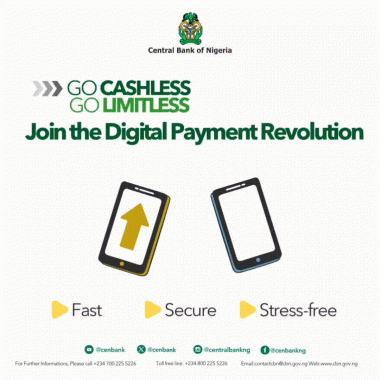
In a major move to protect telecommunications subscribers and bank customers, the Nigerian Communications Commission (NCC) and the Central Bank of Nigeria (CBN) have established a new regulatory framework to tackle the persistent problem of failed airtime and data transactions.
The initiative aims to provide a permanent solution to instances where consumers face network downtimes, system glitches, or human errors during digital purchases.
According to a statement released on Thursday by Nnenna Ukoha, the NCC’s Head of Public Affairs, the document is the result of months of intense collaboration between the NCC, the CBN, Mobile Network Operators (MNOs), Value Added Service (VAS) providers, and Deposit Money Banks (DMBs).
The commission explained that the intervention became necessary due to the increasing frequency of subscribers being debited for services they never received. “These engagements were prompted by a rising incidence of failed airtime and data purchases, where subscribers were debited without receiving value and experienced delays in resolution,” the NCC stated.
The new framework marks a rare unified stance between the telecommunications and financial sectors. By identifying the root causes of failed transactions—such as bank accounts being charged without the successful delivery of airtime—the regulators have introduced an enforceable Service Level Agreement (SLA). This agreement clearly defines what is expected of both banks and telecom operators during every stage of a transaction.
One of the most significant changes introduced by the framework is the timeline for financial recovery. If a buyer is debited but does not receive their data or airtime, the new rules state that the purchaser is entitled to an automatic refund within 30 seconds. In more complex cases where a transaction remains “pending,” the window for a refund is extended to a maximum of 24 hours.
Beyond simple failed top-ups, the framework covers a wide range of common frustrations. It mandates that operators must send an SMS notification for the success or failure of every single transaction. It also provides specific protocols for handling erroneous recharges to ported lines, incorrect purchases, and money sent to the wrong phone numbers.
To ensure these rules are followed, the Director of Consumer Affairs at the NCC, Mrs. Freda Bruce-Bennett, revealed that a Central Monitoring Dashboard will be co-hosted by the NCC and the CBN. This digital tool will allow regulators to see exactly where a failure occurred, who is responsible for the refund, and whether the service providers are meeting their legal obligations in real time.
“Failed top-ups rank among the top three consumer complaints, and in line with our commitment to addressing these priority issues, we were determined to resolve it within the shortest possible time,” Mrs. Bruce-Bennett said.
She expressed gratitude to the leadership of the Central Bank of Nigeria for their dedication to the project, noting that the ultimate goal is to ensure consumers receive full value for their money. Interestingly, the push for this framework has already yielded massive financial results for the public.
“So far, pending the approval of management of both regulators on the framework, MNOs and banks have collectively made refunds of over N10 billion to customers for failed transactions,” she disclosed.
While the framework has been drafted and is currently awaiting final management approval from both the NCC and the CBN, the countdown to its official launch has begun. Mrs. Bruce-Bennett noted that the full implementation of these rules is scheduled to start on March 1, 2026.
This period allows for the necessary technical integration between all banks, telecom operators, and service providers to ensure the 30-second refund window is technically feasible.


