

FG Pushes States to Join $500mn HOPE Governance Programme
By Patience Ikpeme
The Federal Government of Nigeria has begun moves to secure the participation of all 36 states in the $500 million World Bank-backed HOPE Governance Programme, as part of efforts to improve how basic education and primary healthcare services are delivered across the country.
To achieve this, the Federal Ministry of Budget and Economic Planning is working closely with the Federal Ministry of Finance to ensure that state governments sign the required Subsidiary Loan Agreement, which will enable them to access funding under the programme.
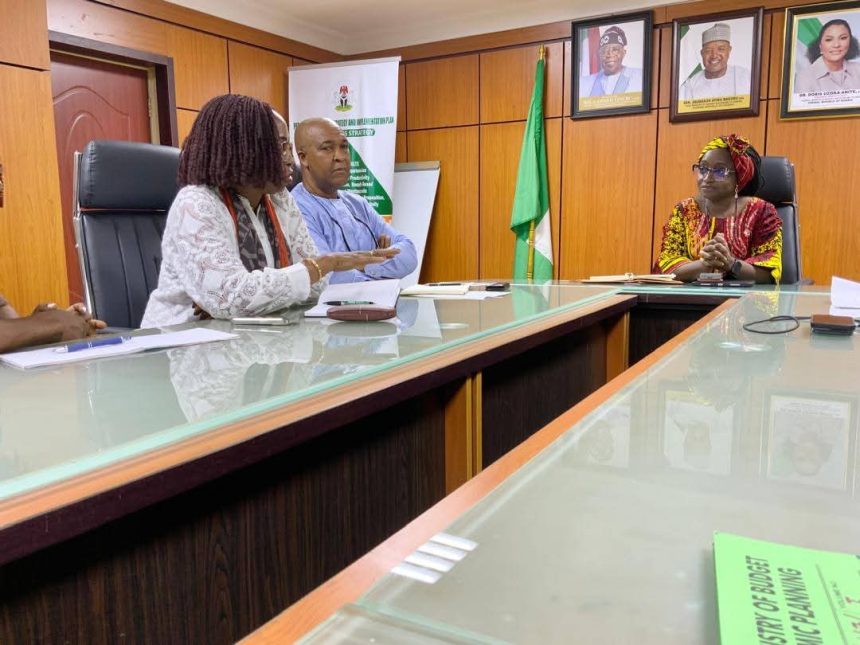
Permanent Secretary in the ministry, Deborah O. N. Odoh, disclosed this in Abuja during a meeting with a delegation from the World Bank, who were on a visit to discuss progress on the initiative.
Odoh said efforts are ongoing to speed up the process, noting that a clear timeline has already been developed to guide implementation.
“We have been engaging with the Federal Ministry of Finance, with the involvement of our Honourable Minister, Sen. Abubakar Atiku Bagudu, and we are intensifying efforts to ensure that this process is concluded within the set timeframe,” she said.
She added that the ministry is committed to providing the institutional backing required for the programme to deliver results that Nigerians can feel, especially in critical sectors such as education and healthcare.
According to her, the engagement with the World Bank team is expected to translate into visible improvements in service delivery in the near term.
“I’m glad this meeting is taking place at this time. We expect to begin to see clear and measurable impact from the programme soon,” Odoh said.
Earlier, the World Bank Task Team Leader for the programme, Ikechukwu John Nweje, called on the ministry to deepen its engagement with state governments to ensure they sign the agreement and qualify for disbursement under the programme.
He noted that timely completion of the process would allow states to access funds once they meet the required performance conditions.
“We would appreciate support in accelerating these processes so that disbursements can commence and the programme can fully take off,” he said.
Nweje explained that governance challenges have continued to affect the quality of service delivery in both education and healthcare, making the intervention necessary.
He said improving governance structures would help unlock better outcomes in the two sectors.
“If governance issues are not addressed, the challenges in these sectors will persist. That is why attention is being placed on governance as a foundation for delivering results,” he said.
Also speaking, National Coordinator of the programme, Assad Hassan, said the meeting provided an opportunity to brief the Permanent Secretary on progress made so far and the issues encountered in implementation.
He said the interaction with the World Bank was aimed at reviewing achievements and identifying steps needed to move the programme forward.
The HOPE Governance Programme is a $500 million initiative supported by the World Bank and domiciled in the Federal Ministry of Budget and Economic Planning. It is designed to strengthen accountability, transparency, and efficiency in the management of basic education and primary healthcare, with the goal of improving service delivery to citizens across Nigeria.