

FG Moves to Secure Nigeria’s $3bn Investment Stake
By Patience Ikpeme

The federal government has opened a fresh line of communication with global investors to protect about $3 billion in potential foreign investment that was recently at risk of being frozen.
This move comes as the government works to clear up confusion regarding how capital gains tax and private equity rules affect foreign money coming into the country.
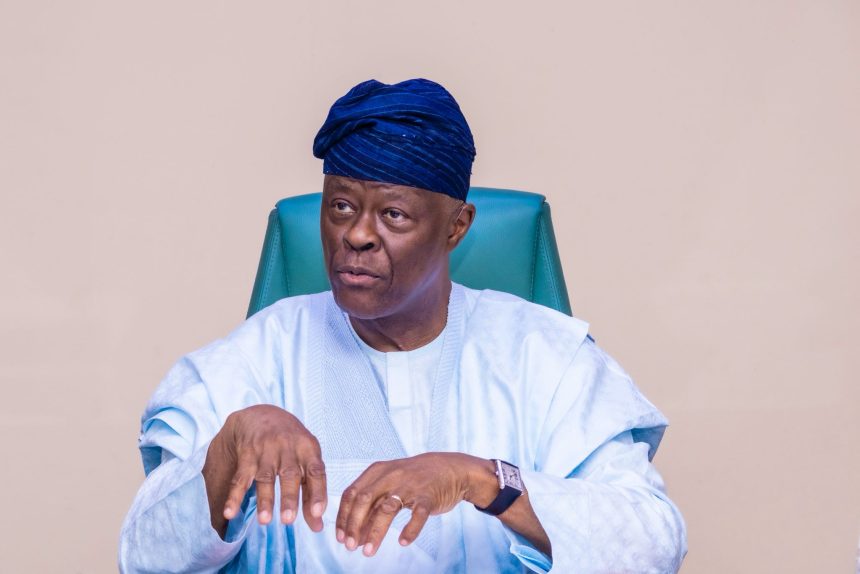
Speaking in Abuja on Friday, the Minister of Finance and Coordinating Minister of the Economy, Mr. Wale Edun, said the government is looking for “patient capital” that stays long enough to build factories, create jobs, and grow the local economy.
He noted that Nigerian officials are now engaging directly with stakeholders through the Tax Implementation Committee to make sure the rules are fair for everyone. “We want funding that stays and adds value to the lives of Nigerians, not speculative money that comes in today and disappears tomorrow,” the Minister said.
To make the country more attractive, the government is pushing for a 7% annual growth in the economy. Mr. Edun explained that reaching this target is the only way to double the current growth rate and stay ahead of the rising population. He pointed out that while oil used to be the main driver of the economy, it now accounts for less than 4% of the nation’s total output, showing that other sectors like agriculture and technology are taking the lead.
A major part of this new economic plan is a recent executive order signed by President Bola Tinubu. This law changes how oil money is handled by the Nigerian National Petroleum Company (NNPC). Instead of the company keeping certain fees, that money must now be paid directly into the Federation Account.
“This is about making sure that the federal, state, and local governments all get their rightful share of the nation’s wealth,” Mr. Edun said. He added that this move brings Nigeria’s oil business in line with global standards where expenses are clearly tracked and separated from the money meant for the public.
To stop the waste of public funds, the government is also moving all revenue-collecting agencies onto a single digital platform. This means that every kobo collected by any department can be seen in real time, making it harder for money to get lost or stolen. The Minister noted that this transparency will help the government fund essential services without always relying on borrowing.
On the issue of taxes, the Minister said the new National Tax Act is designed to protect the poor while making sure those who should pay do their part. A new Office of the Tax Ombudsman has been created to listen to complaints from the public and settle disputes fairly. He also mentioned that small businesses are being given a softer landing with a “presumptive tax” system that uses a simple template so they are not over-taxed or harassed.
“Our story now is one of resilience and progress. We have done the hard work of reforming the system, and now we are seeing the stability that allows investors to plan and grow,” the Minister said.