

Fed Govt Inaugurates Inter-Ministerial Committee for World Bank-Backed HOPE Programme
By Patience Ikpeme

The Federal Government has established an Inter-Ministerial Committee tasked with overseeing the effective implementation of the Human Capital Opportunities for Prosperity and Equity (HOPE) programme, a World Bank-backed initiative designed to improve education, healthcare, and governance outcomes across Nigeria.
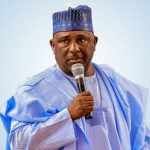
The inauguration ceremony, which took place in Abuja, saw the Minister of Budget and Economic Planning, Senator Abubakar Atiku Bagudu, lead the committee as its chairman.
Co-chairing the committee are several key ministers: Mr. Wale Edun, Minister of Finance and Coordinating Minister of the Economy; Professor Muhammad Ali Pate, Coordinating Minister of Health and Social Welfare; Dr. Tunji Alausa, Minister of Education; and Hajia Imaan Suleiman-Ibrahim, Minister of Women Affairs.
Senator Bagudu conveyed that the committee’s primary objective is to ensure that all relevant Ministries, Departments, and Agencies (MDAs) work in concert to achieve the goals of the HOPE programme.
He clarified that the role of the Budget and Economic Planning Ministry is to coordinate the implementation of national development plans, rather than to engage in competition with other ministries. “We are not competing, we are complementing each other to drive the HOPE project,” he stated.
According to the Minister, the committee is expected to develop a coordinated roadmap to ensure a seamless rollout of the HOPE programme and to provide guidance on national alignment.
The committee has been assigned several crucial responsibilities to bolster the programme’s performance. These include assessing the implementation progress of the HOPE programme and tracking achievements related to Disbursement Linked Indicators (DLIs) across all beneficiary entities.
It is also tasked with evaluating the status of disbursements to implementing agencies and monitoring Investment Programme Financing (IPF) arrangements. Furthermore, the committee will review how the HOPE series of operations align with national priorities, monitor and evaluation strategies, and public communications, including the publication of Annual Performance Assessment (APA) results.
Its duties extend to monitoring the progress of capacity-building initiatives across implementing agencies and identifying and addressing any risks or challenges that could affect the programme’s effective delivery.
The HOPE programme’s coordination at the federal level rests with the Federal Ministry of Budget and Economic Planning, specifically through the HOPE Governance National Programme Coordinating Unit (NCPU), which will also function as the programme’s secretariat.
Dr. Assad Hassan holds the position of National Coordinator of HOPE-Governance. The NCPU is expected to collaborate closely with the federal ministries of Health and Social Welfare, Education, and Finance, along with their counterparts at the state and local government levels. The overarching goal is to ensure that interventions across all tiers of government are integrated and precisely targeted towards improving Nigeria’s human capital development index.
At the meeting, the Ministers of Finance, Health, Education, and Women Affairs expressed their full support for the programme, noting the need for sustained collaboration to improve living standards nationwide.
Finance Minister Wale Edun observed that the programme aligns with the administration’s broader economic reform agenda, which aims to address poverty and boost productivity. Coordinating Minister of Health Professor Muhammad Ali Pate also conveyed confidence in the HOPE programme’s potential to bridge existing gaps in access to quality healthcare services, especially for vulnerable populations. Minister of Education Dr. Tunji Alausa stated that the education sector is prepared to work with all stakeholders to expand access and enhance quality.
Women Affairs Minister Hajia Imaan Suleiman-Ibrahim assured that gender inclusion and the protection of vulnerable groups will remain a central concern within the HOPE framework.
Earlier, the Acting Permanent Secretary in the Ministry of Budget and Economic Planning explained that the HOPE programme was conceived with a primary objective: to support the federal government in strengthening essential service delivery systems and fostering long-term national development.
He noted that this World Bank-supported initiative seeks to achieve measurable improvements in human capital indicators, which are central to Nigeria’s Vision 2050 and the National Development Plan (2021–2025).