

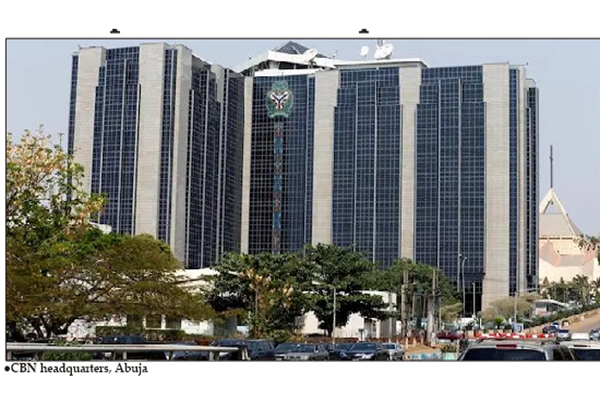
CBN Maintains 5% Ways and Means Advances Limit
By Patience Ikpeme

The Central Bank of Nigeria (CBN) has reaffirmed its commitment to providing Ways and Means Advances to the federal government at a maximum of 5% of the previous year’s actual collected revenue for the fiscal years 2024-2025.
This decision, outlined in the apex bank’s recently published Monetary, Credit, Foreign Trade, and Exchange Policy Guidelines, contradicts a previous bill passed by the National Assembly that sought to increase the borrowing limit to 10%.
The CBN has emphasized that these advances will be repaid within the same year they are granted and will be subject to market-driven interest rates. This policy aligns with the bank’s broader objectives of promoting financial stability and responsible fiscal management.
In addition to the Ways and Means Advances, the CBN has also outlined several other key policy decisions. For instance, the bank will continue to influence interest rates indirectly through its Monetary Policy Rate (MPR). This means that banks will be expected to pay negotiated interest rates on current and savings accounts, reflecting the overall market conditions.
Furthermore, the CBN has reiterated its commitment to improving the efficiency of the Treasury Single Account (TSA) system. The bank plans to interface directly with the Government Integrated Financial Market Information System (GIFMIS) and enable eNaira payments, making it easier for both the government and its vendors to transact.
Regarding foreign currency borrowing, the CBN has set a limit of 125% of shareholders’ funds unimpaired by losses for domestic banks. To mitigate risks associated with such borrowings, banks are expected to adopt hedging strategies and ensure that debts are subordinated and have a minimum tenor of five years.
The CBN has also announced its intention to continue conducting auctions for the sale of Renminbi on trade-backed transactions, following the renewal of the Bilateral Currency Swap Agreement with the Peoples Bank of China (PBoC). Authorized dealers participating in these auctions are required to comply with specific guidelines, including opening Renminbi accounts with correspondent banks and adhering to designated use of the purchased currency.
In terms of banking supervision, the CBN will conduct a self-assessment of its compliance with the Basel Core Principles to ensure effective oversight of the financial sector. The bank has also approved a risk-weight of 50.0% for all exposures to specified sectors, such as agriculture, real estate, construction, transportation, and storage, with a maturity of 3-5 years.
To enhance the adoption of the eNaira, the CBN plans to deploy version 2.0, which will focus on wholesale Central Bank Digital Currency (CBDC) and include features like offline functionality and programmable money. The bank will also collaborate with federal and state governments to increase the use of the eNaira in various sectors.
Looking ahead, Nigeria’s economic outlook is expected to remain positive, supported by policy measures in agriculture, oil, and foreign exchange markets. However, risks such as rising energy prices, security challenges, and inflationary pressures could pose challenges to the growth trajectory. The financial sector is anticipated to remain resilient, benefiting from the CBN’s ongoing monitoring and risk management efforts.
In conclusion, the CBN’s decision to maintain the 5% Ways and Means Advances limit, coupled with its other policy initiatives, reflects its commitment to promoting financial stability and supporting the federal government’s fiscal objectives. While the economic landscape may present challenges, the CBN’s proactive approach and focus on responsible financial management are expected to contribute to a positive outlook for Nigeria’s economy.