

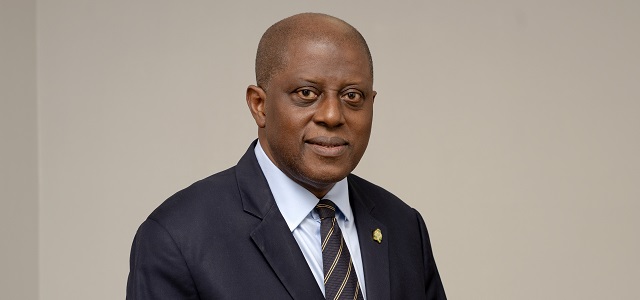
CBN Facilitates $600mn in Remittances via IMTOs– Cardoso
…Focuses on Economic Fundamentals

By Patience Ikpeme
The Central Bank of Nigeria (CBN) has facilitated the remittance of around $600 million through International Money Transfer Operators (IMTOs).
This disclosure was made by CBN Governor Mr. Olayemi Cardoso during the “fireside” event at the ongoing Nigeria Economic Summit #NES30 organized by the Nigeria Economic Summit Group (NESG).
Cardoso revealed that the bank had made significant progress in growing remittance volumes. “When we started, the volumes going through the remittances from overseas were about $200 million, and as of the end of September, we are almost at $600 million,” he said. This achievement, according to him, was the result of focused efforts on strengthening the foreign exchange inflow through IMTOs.
Explaining the CBN’s strategy in engaging IMTOs to address challenges and streamline their operations, Cardoso said, “When I was in Washington for the spring meetings, I called different IMTOs from various parts of the world. We engaged them extensively, understood their problems, and overhauled operations to make it easier for them to get their licenses and operate.” This collaborative approach has led to a significant increase in remittance volumes.
On the broader issue of the Nigerian economy, the CBN Governor noted the importance of addressing fundamental economic issues, stating that there is “no substitute for the fundamentals of the economy.” Cardoso stressed that for Nigeria to achieve sustained growth, the key economic engines must function efficiently. “We’ve got to ensure that institutions are built and that we can balance demand and supply,” he remarked.
Cardoso also underscored the need for economic diversification, urging stakeholders to remain resolute in their commitment to diversification. He explained that while monetary policies aim to stabilize the economy, they do not replace the need for strong economic fundamentals. “Taming inflation is key because it significantly reduces purchasing power and deters investment,” he noted, emphasizing that inflation control is critical for fostering economic growth and encouraging productive sector activity.
Addressing the ongoing process of recapitalization in the banking sector, Cardoso gave the process a positive assessment. “The road towards recapitalization seems to be going in the proper direction,” he said. He acknowledged that some banks were still in the process of raising capital but expressed confidence that they would succeed. The CBN, he added, has taken steps to strengthen its banking supervision capabilities to ensure banks can navigate challenging economic terrain while maintaining stability.
Cardoso also expressed his commitment to enhancing the CBN’s institutional capacity, emphasizing the importance of building a central bank that is efficient and respected globally. “We need to build capacity within the bank, give responsibility, and ensure that the CBN is an institution that can compete with the best central banks worldwide,” he said. He also mentioned his intention to focus more on policy development and less on routine issues.
Regarding CBN interventions, Cardoso disclosed that some elements of past interventions would require completion, which would take time and resources. “The pool of intervention money is not infinite,” he explained, noting that ongoing programs need to be finalized before new initiatives can begin. He indicated that the CBN is working with development banks such as the Bank of Industry (BOI) to create the necessary capacity to manage future interventions effectively.
Cardoso concluded by reaffirming the CBN’s commitment to fostering economic growth and ensuring that Nigeria’s financial system remains resilient. “With time, we will find the appropriate model that will ensure sustainable economic progress without jeopardizing the stability of the financial system,” he said.
The ongoing Nigeria Economic Summit continues to be a platform for critical discussions on the nation’s economic future, with key stakeholders exploring strategies to address challenges and unlock opportunities for growth.