

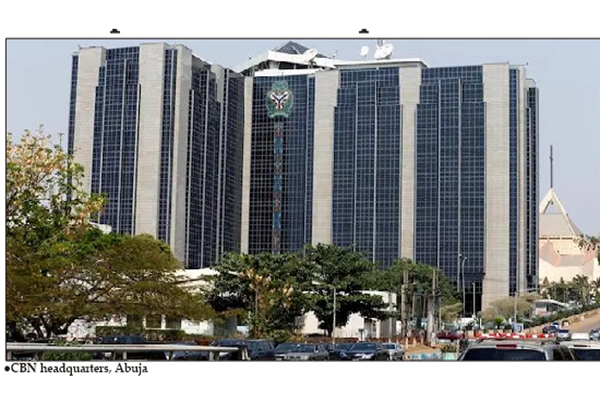
CBN Ends Special Large-Withdrawal Waivers Effective January 2026
By Patience Ikpeme

The Central Bank of Nigeria (CBN) has released a new circular announcing a major restructuring of the country’s cash management framework, introducing revised withdrawal limits and discontinuing previously granted special waivers for large cash withdrawals.
The policy becomes effective on January 1, 2026 and applies to all deposit-taking financial institutions.
According to the circular, the daily withdrawal limit from Automated Teller Machines (ATMs) has been set at ₦100,000 per customer, subject to an overall weekly limit of ₦500,000.
The bank added that the cumulative weekly cash withdrawal limit across all channels—Over-the-Counter (OTC), ATM, and Point of Sale (PoS)—is now ₦500,000 for individuals and ₦5 million for corporate entities.
The apex bank also announced the discontinuation of the special monthly authorization that previously allowed individuals to withdraw ₦5 million once a month and corporate bodies ₦10 million. “The special authorization that previously allowed individuals and corporates to withdraw ₦5 million and ₦10 million once monthly, respectively, is discontinued,” the circular stated.
The CBN said the revised policy forms part of its broader efforts to lower the rising cost of cash management, strengthen security around cash movement, and reduce opportunities for money laundering. It noted that the adjustments represent a significant shift aimed at adopting a more efficient and transparent cash-handling structure across the financial system.
The circular introduced a major change regarding cash deposits. It stated that the cumulative limit on cash deposits has been completely removed, adding that the excess-deposit fee that previously applied will no longer be charged. “The cumulative limit on cash deposits is entirely removed, and the associated fee for excess deposits will no longer apply,” the document said.
For withdrawals above the newly set limits, individuals will be required to pay a 3 percent fee, while corporate customers will be charged 5 percent on the excess amount. The circular explained that the charges will be distributed between the regulator and the banks, with 40 percent going to the CBN and 60 percent to the collecting financial institution.
The circular further noted that the ₦100,000 limit for over-the-counter encashment of third-party cheques remains in place and will count as part of the customer’s weekly withdrawal limit.
The bank provided limited exemptions to the new withdrawal caps. Accounts designated for revenue generation by federal, state, and local governments are excluded from the limits. Similarly, accounts belonging to microfinance banks and primary mortgage institutions maintained with commercial and non-interest banks are exempt.
The CBN directed Deposit Money Banks (DMBs) and other financial institutions to file monthly returns to their respective supervisory departments. These returns must detail all cash withdrawal transactions above the approved limits as well as cash deposits recorded during the period. In addition, banks are required to open dedicated accounts for holding the processing charges collected on excess cash withdrawals.
The circular also announced the removal of earlier exemptions granted to embassies, diplomatic missions, and donor-aid agencies, stating that these entities will now be subject to the same cash withdrawal rules as other account holders.
The CBN maintained that the new measures are designed to strengthen the integrity of the financial system, improve efficiency in cash usage, and align cash-handling practices with the country’s long-term monetary and financial stability objectives.