
Africa’s Growth to Stay Strong Despite Global Shocks — Dr. Yemi Kale

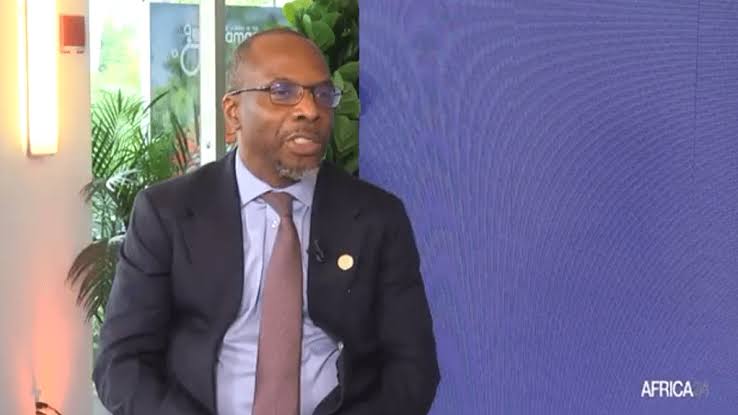
Dr. Yemi Kale, Afreximbank’s Managing Director for Research & International Cooperation and Group Chief Economist, spoke with journalists during the bank’s 32nd Annual General Meeting about why Africa’s growth remains resilient despite global economic headwinds. In this interview, Dr. Kale explains what shields Africa from external shocks, why inflation is likely to decline, and how deeper intra-African trade can drive sustainable growth.
Q: According to your report, how will Africa’s growth remain resilient despite global shocks? And as you mentioned, inflation is expected to decline — how can this downward trend be maintained?
Dr. Yemi Kale:
As you may know, we just released our flagship publication, the Trade and Economic Outlook Report, along with our Annual Trade Report. These reports aim to inform policymakers and stakeholders about economic conditions across Africa, highlight the challenges and opportunities, and provide guidance on how countries can navigate the global environment.
Looking ahead, 2025–2026 is going to be particularly difficult for the global economy. We’re seeing trade wars, heightened geopolitical tensions, and tightening financial conditions worldwide. All these factors influence Africa, whether through aid, trade, or foreign direct investment.
Yet, despite these external challenges, Africa has continued to show resilience. Growth has slowed in recent years, but the continent has not been as deeply affected as many other parts of the world. One of the main reasons is structural: Africa’s limited integration into the global economy, often viewed as a weakness, is now turning into a strength.
For example, the recent US tariff measures are expected to have only limited impact on African countries because just about five percent of our trade goes to the US. This relative isolation protects us from the direct consequences of global trade tensions.
That said, Africa still faces indirect challenges, such as rising global interest rates and inflationary pressures, which could complicate debt servicing and increase costs. But in general, we do not expect the continent to suffer as severely as other regions.
We also believe Africa’s resilience will be supported by stronger growth this year compared to last year. Inflation is expected to come down globally, which should ease pressure on domestic economies.
Q: Beyond external factors, what can African countries do internally to reinforce this resilience?
Dr. Yemi Kale:
One important area is intra-African trade. Research consistently shows that boosting trade among African countries is one of the best strategies for sustainable growth. It makes the continent less vulnerable to external shocks because demand and supply are driven more by regional factors than by the global economy.
We expect to see an increase in trade within Africa, which would also help reduce the impact of global disruptions. This is an opportunity for policymakers to deepen regional integration, improve infrastructure, and make it easier for businesses to trade across borders.
By focusing on these areas, African countries can not only cushion themselves from global turbulence but also unlock new engines of growth that are rooted within the continent.
Q: What do your macroeconomic indicators suggest about Africa’s outlook for the next year?
Dr. Yemi Kale:
All the key indicators point towards improvement. Despite the global challenges we discussed, Africa’s growth is projected to be stronger this year than last. Inflation is on a downward trend, trade volumes are expected to increase, and regional cooperation is improving.
Of course, there will still be difficulties. Africa cannot completely detach from the global economy, and we remain exposed indirectly to changes in global interest rates, investor sentiment, and commodity prices. But on balance, the continent’s economic fundamentals suggest that resilience will continue.
Q: Finally, what message do you hope policymakers and business leaders take from these reports?
Dr. Yemi Kale:
The main takeaway is that, while the global environment is challenging, there are real opportunities for Africa to chart its own growth path. By focusing on regional trade, improving competitiveness, and implementing sound macroeconomic policies, African countries can turn global volatility into an advantage.
Afreximbank’s reports aim to provide practical insights and data to help guide these decisions. With coordinated strategies, Africa can remain resilient, continue growing, and move closer to its development goals despite the uncertainty around us.
Q: What are the main drivers for Africa’s expected growth this year, and how confident are you that monetary policies across African economies will keep inflation trending downward?
Dr. Yemi Kale:
We do expect Africa’s growth to be stronger than last year. Our earlier forecast was even higher — around 4% — but recent developments, such as policy changes in Europe, led us to revise slightly downward. Still, growth prospects remain positive, and this is supported by research from institutions like the IMF, which projects Africa will grow at roughly the same pace as last year, around 3%.
Several factors explain why we remain optimistic. First, there is stronger intra-African trade. Many countries are trading more with each other than before, which shields them from falling demand in traditional external markets like the US or China. Nigeria’s recent trade data, for instance, shows that for the first time, it traded more within Africa than anywhere else.
Second, multilateral financial institutions like Afreximbank step in when African countries face tight conditions in global financial markets. This support ensures that trade finance keeps flowing, even when private markets retreat.
Third, there is the effect of recovery from previous economic shocks, including COVID-19 and domestic policy reforms. After large initial impacts — for instance, when subsidy reforms sharply raised inflation — the following years tend to see smaller increases, which means inflation gradually comes down from those peaks. As inflation eases, consumers regain some purchasing power, demand improves, and growth follows.
Forecasting is never perfect; new global events keep emerging, and our models must adjust. But based on current data and trends, we are reasonably confident that inflation will keep declining and Africa’s growth momentum will hold up.
Q: Some argue Nigeria and other big economies get a large share of financing. Is this fair?
Dr. Yemi Kale:
Allocations are based on economic size and capacity, not simply on equal distribution. Think of it like this: if you have two children — one older, one younger — you naturally spend more on the older child’s schooling or needs. Similarly, Nigeria, as Africa’s largest economy with the biggest population and most businesses, attracts more financing.
At Afreximbank, resources are allocated by looking at the size of the economy, its business activities, and capacity to absorb funding effectively — not by simply dividing the total equally among all countries.
Q: Why is Afreximbank working on an African-owned rating agency, and how can it gain acceptance internationally?
Dr. Yemi Kale:
Traditional rating agencies often apply models built for completely different economies. They sometimes conclude African countries are “high risk,” apply higher interest rates, which in turn raise the chance of default — and then use that as proof that the countries are indeed risky. It becomes a self-fulfilling cycle.
An African-owned rating agency can design indicators that reflect local realities — from the informal economy to cultural and family-based business practices that global agencies don’t always understand. Over time, as the new agency proves its transparency and methodology, international investors will begin to use its ratings alongside others.
Other regions, like Asia, have successfully built their own agencies, and Africa can do the same.
Q: Africa is also working to settle more trade in local currencies rather than the US dollar. How is that progressing, and is there a risk of external pushback?
Dr. Yemi Kale:
Progress is steady, but it will take time. Systems that have operated for decades don’t change overnight. Through initiatives like the Pan-African Payment and Settlement System (PAPSS), about 16 African countries now participate, making it possible to trade directly in local currencies.
At present, about 85% of Africa’s trade is still with external partners, which keeps the dollar central. As intra-African trade rises, the use of local currencies in cross-border trade will also rise.
Regarding US pushback, Africa’s trade volume is still a small share of global trade, and so far we’re not the focus of such pressure. That helps us quietly make progress on reforms.
Q: With trade deals like AGOA expiring soon, what alternatives is Africa exploring?
Dr. Yemi Kale:
AGOA mostly benefits a small group of countries — Ethiopia, Kenya, South Africa — and in total, US trade is only about 5% of Africa’s trade portfolio. By contrast, China accounts for around 17%.
China has offered zero tariffs on some African products, which creates new export opportunities. More importantly, Africa is increasingly trading with itself, which helps reduce dependence on any single external market.
While a few countries that rely heavily on AGOA could feel the impact, the overall effect on the continent will be limited. Africa is diversifying, and new trade partnerships with Asia and others will help fill gaps left by expiring Western trade preferences.
Q: Do you see global trade tensions as hurting or helping Africa?
Dr. Yemi Kale:
Paradoxically, they sometimes help. Africa maintains trade relationships with both East and West, so when big economies cut trade ties with each other, they often look to Africa as an alternative supplier.
For example, if the US and China impose tariffs on each other, both sides may need African raw materials or markets even more. This makes Africa a neutral, strategic partner — and sometimes creates opportunities to gain from shifts in global supply chains.
Q: With trade wars and geopolitical tensions, how can African economies still attract the capital they need when most countries are now looking inwards?
Dr. Yemi Kale:
Exactly — looking inwards is itself part of the answer. The reality is that traditional external financing is harder to secure, especially during global crises. That’s why we believe African multilateral financial institutions, like Afreximbank, must be strengthened to fill the gap.
By increasing Afreximbank’s capital base and expanding its shareholder structure, the Bank can lend more to African countries and businesses. This shift toward relying on African resources and institutions is not just practical — it is now essential if we want to keep growing while external funding becomes less predictable.
Q: From a Caribbean perspective, how is Afreximbank addressing shared challenges like poor air and maritime links and the cost of lost opportunities?
Dr. Yemi Kale:
The closer partnership with Caribbean countries is still fairly recent, but it’s already becoming real. Through initiatives like the “Move-up Africa” concept, we see ourselves as part of one economic family, separated only by geography.
In Africa, Afreximbank has already provided financing to plug infrastructure gaps, from logistics to transport. Now, the same approach is being applied in the Caribbean: funding key infrastructure, launching the Pan-African Payment and Settlement System (PAPSS) to eventually become a Pan-African and Caribbean payment network, and helping to reduce the Caribbean’s overdependence on the US economy.
These efforts take time, but they have started — and you can already see deals worth hundreds of millions flowing to Caribbean countries where previously there was very little.
Q: What do global shocks mean for Afreximbank’s own balance sheet, and what risks do you see if African countries face downgrades?
Dr. Yemi Kale:
The biggest indirect risk from global shocks is that they could spark inflation. If that happens, countries would tighten monetary policy and raise interest rates, making debt repayments harder and increasing the risk of default. For now, inflation in major economies like the US hasn’t spiked as feared, so the risk is contained — but we remain watchful.
As for downgrades, these are costly because they raise the interest rates at which institutions like Afreximbank can borrow. If Afreximbank must borrow at higher rates, it becomes harder to lend affordably to African countries.
To manage this, the Bank can diversify its funding sources: for example, borrowing from markets in China or other regions less influenced by Western rating agencies. It can also raise fresh equity by asking African governments to increase shareholding.
We have several alternative channels for financing, including working with partners who better understand African realities — rather than applying rules that were designed for completely different economies.
Q: Given Afreximbank’s support to Africa, what does the future hold if external borrowing becomes too expensive?
Dr. Yemi Kale:
I believe Afreximbank and similar institutions will play an even bigger role. By using creative financing structures, partnering with new lenders, and increasing African shareholder contributions, the Bank can keep providing trade finance and development capital even when global markets tighten.
African countries themselves must also keep investing in homegrown institutions. The goal is to reduce reliance on unpredictable external capital and build an African-led financial system that can support the continent, regardless of what happens globally.