
Customs Chief Calls for Oversight, Technology, and Stronger Partnerships
By Patience Ikpeme

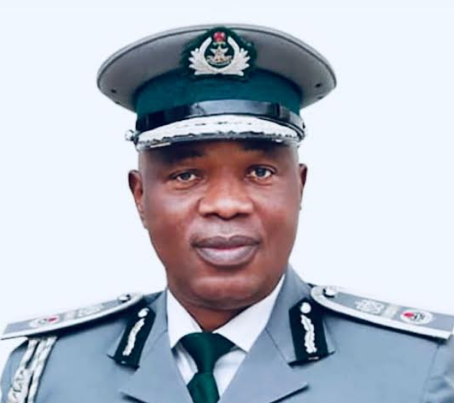
Comptroller-General of Customs Bashir Adewale Adeniyi has called for stronger internal oversight, inter-agency cooperation and responsible use of technology to help the Nigeria Customs Service tackle illicit trade.
Speaking at the inaugural Customs Police Summit 2026 in Abuja, Adeniyi said the Service needed a disciplined and trusted police unit to uphold its standards while facilitating legitimate trade and stopping illegal activity.
“Customs must facilitate legitimate trade and stop illicit trade, and it can do neither without a disciplined and trusted police unit to uphold its own standards,” he said.
Adeniyi said the Customs Police Unit (CPU), inaugurated in July 2019, was established to investigate erring personnel, prevent crime and ensure compliance. He stressed that “no officer is above the law” and said the Unit’s work must be guided by lawful procedures and public accountability.
The Customs chief highlighted the growing sophistication of criminal networks, which he said use routes shared with legitimate traders to move firearm components, narcotics, fake medicines, protected wildlife and illicit funds, including through digital channels.
He urged the Service to adopt a risk-based approach supported by data and international customs instruments. B’Odogwu, he said, brings declarations, valuation, risk management and Authorised Economic Operator processes onto one platform, while the INTERPOL Data Centre at Customs Headquarters provides access to global criminal databases.
“Our answer must be smarter, not harder,” Adeniyi said, pointing to tools including the WCO SAFE Framework, advance rulings and the Revised Kyoto Convention as ways to encourage compliance and help officers focus on higher-risk activity.
He outlined three priorities for the CPU: consolidating procedures and professional development, collaborating with security and regulatory agencies, and adopting technology such as artificial intelligence, advanced scanners, geospatial tools and electronic cargo tracking.
Adeniyi cautioned that technology must remain subject to legal safeguards and human oversight. “Algorithms may flag risks, but only officers acting within the law can exercise enforcement powers,” he said.
He asked the summit to produce a Customs Police doctrine anchored in the NCS Act 2023 and the Revised Arusha Declaration, as well as protocols for joint operations, evidence management and information exchange. He also called for guidance on data and artificial intelligence in investigations, and recommendations on CPU personnel training, welfare and recognition.
“The Red Beret you wear carries the trust of Nigerians and the reputation of the Service,” Adeniyi told CPU officers. “Wear it with discipline. Wear it with restraint. Wear it with pride.”