

Oyedele Warns Nigeria Against Repeating Oil Mistakes in Data
By Patience Ikpeme

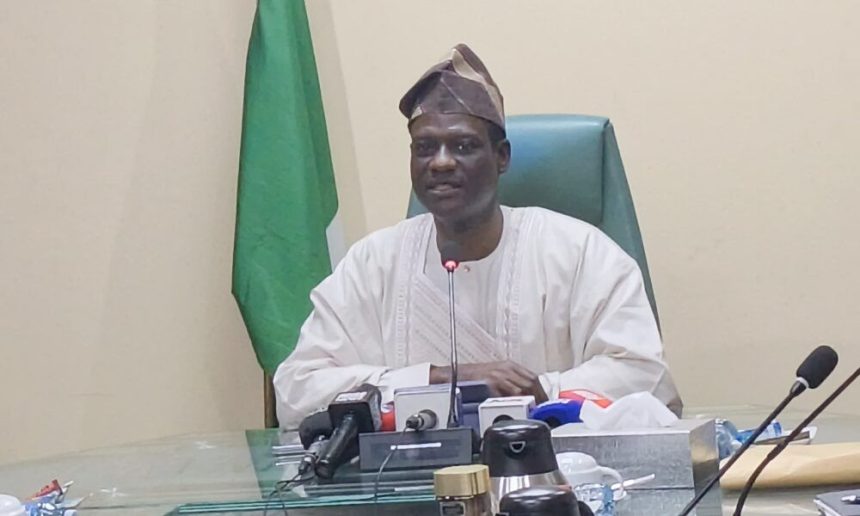
The Minister of Finance and Coordinating Minister of the Economy, Taiwo Oyedele, has warned that Nigeria risks repeating the costly mistakes of its oil industry if it keeps relying on foreign countries to store and handle its data.
The Minister spoke on Wednesday at the University of Uyo, where he delivered the convocation lecture. The lecture was titled “Digital Sovereignty and Ethics: Guarding the Economy for the Next Generation.” His remarks were contained in a statement issued on Friday by Mrs. Efe Ovuakporie, Head of the Information and Public Relations Unit.
Mr. Oyedele reminded the audience of how Nigeria has long sold crude oil abroad and bought back refined petroleum products. He said this practice cost the country a great deal of value, skills and jobs at home. He warned that the same thing must not happen in the digital economy.
In simple terms, he is saying that if Nigerians create the data but foreign companies store it, process it and earn from it, then Nigeria loses out again.
The Minister said the size of the opportunity is already clear. He pointed to figures from the Nigerian Communications Commission (NCC) showing that Nigeria had more than 157 million active internet subscriptions as of May 2026.
He then drew attention to an estimate by the Nigeria Data Protection Commission that more than 90 per cent of the country’s data is kept abroad.
Mr. Oyedele said this reliance on foreign storage comes at a heavy price. Nigeria spends foreign exchange to host and process its data overseas. Nigerian businesses and professionals miss out on work and income that could have stayed at home. Nigerian data is also exposed to the laws and courts of other countries.
The Minister explained that digital sovereignty is a country’s ability to decide, under its own laws, how its data is collected, stored, used and shared with others. He made clear that this does not mean closing Nigeria off from the world’s digital economy. He said the goal is to make sure that when Nigeria takes part, it does so in a way that serves its own interests.
To turn things around, he called for planned investment in digital facilities at home and stronger regulatory bodies. He also called for more local skills and for Nigerian businesses that can turn data into useful products and services inside the country.
Mr. Oyedele also spoke about artificial intelligence, or AI. He said it is changing the kinds of jobs available and the skills that workers will need. He urged the graduating students to use AI and other new technologies, but to keep their own judgement, their ability to think carefully, their creativity, their care for others and their honesty.
He warned that AI can also spread false information, allow people to pretend to be someone else, and make dishonesty easier. For this reason, he said, good conduct and public trust matter more than before.
The Minister advised young Nigerians to be careful about how they behave on the internet. He said their posts, comments and reactions increasingly shape how employers, institutions and society see them, both personally and professionally.
He told the graduates to disagree politely and to challenge ideas without attacking people. He also reminded them that online attention is not the same as respect. Being popular does not make a person believable, and going viral does not mean creating real value.
Turning to higher institutions, the Minister said universities must do more than hand out certificates. He wants them to become centres of new ideas, business creation, honest leadership and practical problem-solving.
He argued that a university’s worth should also be judged by the problems its graduates solve, the businesses they start and what they give back to their communities.
He named agriculture, energy, healthcare, marine resources, environmental management and digital services as areas with strong chances for new ideas and businesses. He called on universities to give students the practical knowledge and skills to build solutions in those areas.
Mr. Oyedele set out five responsibilities for the graduating students. They are to keep learning throughout life, to create value, to act with integrity, to be responsible citizens online, and to take an active part in building the nation.
He said Nigeria’s digital future will depend not only on technology and infrastructure, but also on the values, choices and abilities of the people who shape it.
He urged the graduates to see themselves as active builders of that future. He ended with a line from the management thinker Peter Drucker: “The best way to predict the future is to create it.”