

Customs, Six Agencies Join Forces Against Cross-Border Financial Crimes
By Patience Ikpeme
The Nigeria Customs Service (NCS) led a three-day engagement from October 27 to 29, 2026, bringing together six federal agencies to work more closely against illegal money movements across Nigeria’s borders, money laundering, drug trafficking, the funding of terrorism and other related crimes.
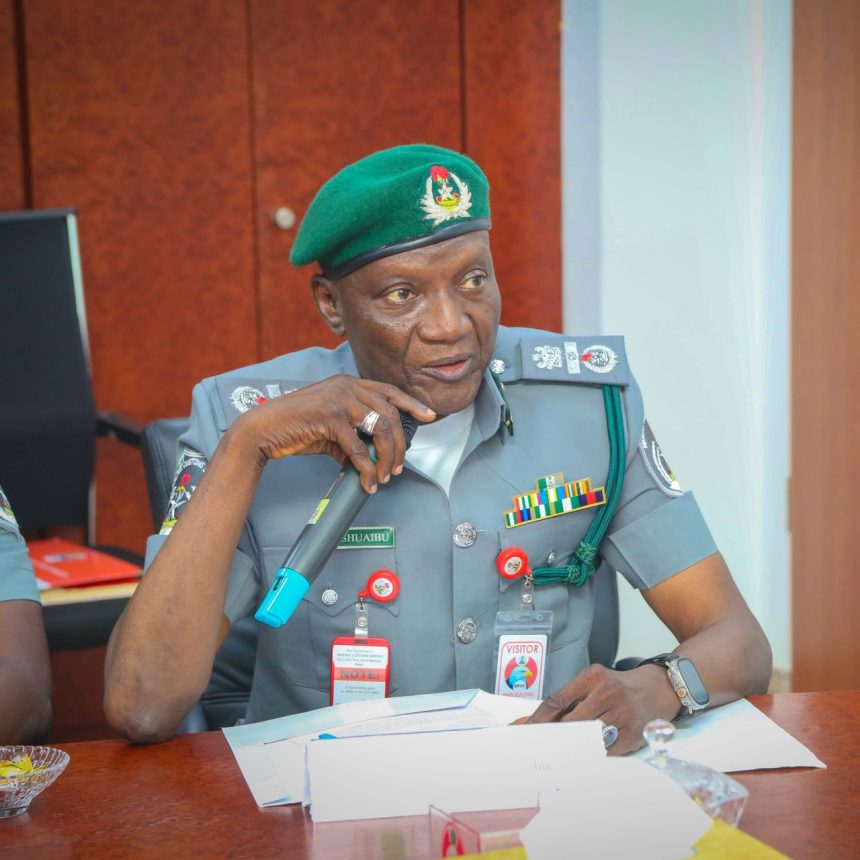
The programme was headed by Assistant Comptroller-General Muhammad Shuaibu. It focused on checking how well border control measures are working and on improving the sharing of intelligence, in order to protect Nigeria’s economy and national security.
The agencies that took part were the Economic and Financial Crimes Commission (EFCC), the National Drug Law Enforcement Agency (NDLEA), the Nigeria Police Force, the Nigerian Financial Intelligence Unit (NFIU), the Nigeria Immigration Service and the National Counter-Terrorism Centre under the Office of the National Security Adviser.
A mentoring team from the World Customs Organisation (WCO), led by Shahiduzzaman Sarkar, also took part. The team offered guidance on the best ways to fight money laundering and stop the funding of terrorism.
Shuaibu said the “sole objective” of the mission was to detect and stop illegal money flows across the country’s borders by improving coordination among the agencies. As part of this, participants visited selected border stations to see for themselves how Customs controls are working on the ground. The visits also gave the agencies a chance to meet directly, so that they can respond to threats faster and more effectively.
Speaking for the NFIU, its Chief Operating Officer, Muhammed-Mustapha, praised the long working relationship between the unit and Customs. He noted that Customs has global experience in border control and intelligence work, and he commended the Service for the active role it has played since the NFIU was set up.
Participants also named several problems that stand in the way of smooth cooperation. These include poor communication between agencies, delays caused by bureaucracy, and worries about the privacy of databases and the sharing of information.
The discussions therefore centred on practical ways to deal with these problems. They include setting clearer rules for exchanging data, simplifying the way the agencies work together, and using technical solutions that protect privacy while allowing intelligence to be shared safely.
The WCO advisers urged the agencies to work even more closely with Customs. They called for more training and for the adoption of international methods against money laundering and terrorism financing, so that Nigeria can better withstand financial crime.
The engagement ended with the presentation of NCS awards and WCO certificates to the partner agencies, a gesture that showed the Service’s commitment to making cooperation among the agencies a permanent practice.
Participants outlined the next steps to include joint operational planning, faster sharing of intelligence as it happens, improvements at selected border stations, and regular drills involving several agencies to test how well they can respond to threats.
If these measures are carried out, they are expected to reduce illegal money flows, improve the prosecution of financial crimes and strengthen the protection of Nigeria’s borders.