
Customs Deploys AI to Fight Fake News, Online Scams
By Patience Ikpeme
The Nigeria Customs Service (NCS) has begun using advanced artificial intelligence (AI) tools to track and stop the spread of online scams and fake news that damage its reputation and make its work harder.
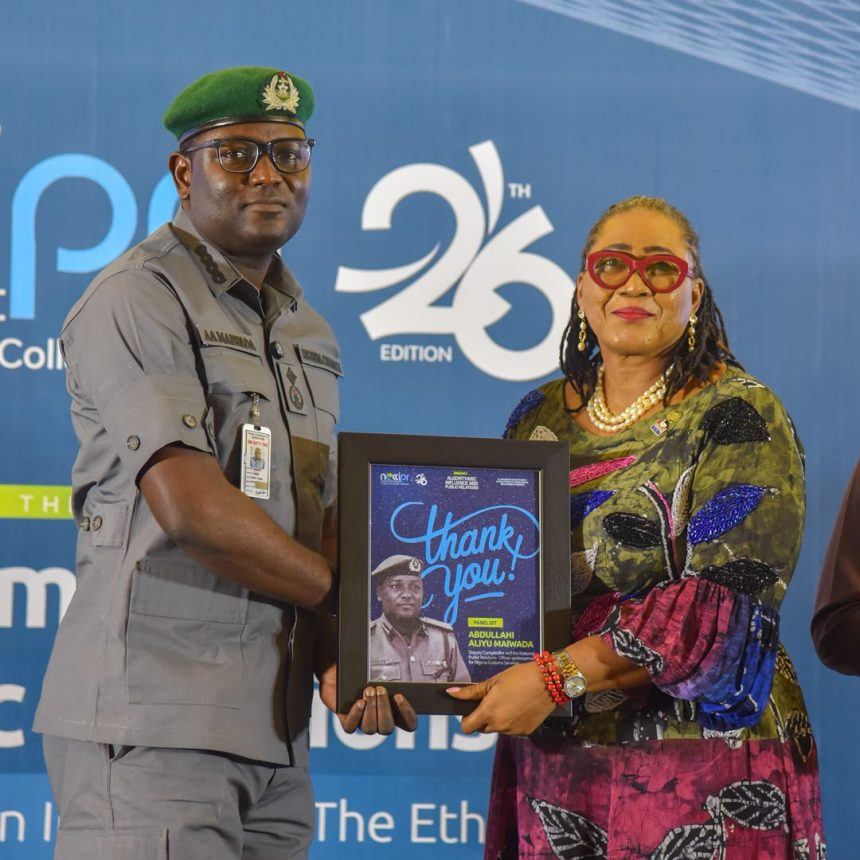
The Service announced the move at the Neccipr Roundtable ’26 Edition in Lagos on October 30, 2026. It shows a shift towards watching the digital space more closely and communicating with the public on the basis of facts.
The Comptroller-General of Customs, Adewale Adeniyi, was represented at the event by the Service’s National Public Relations Officer, Deputy Comptroller Abdullahi Maiwada. He said AI is already being used in both the core work of the Service and its communication with the public.
“AI has been deployed in our core operational duties as well as strategic communication,” Maiwada told the gathering.
He explained that the technology helps the Service manage risk by checking imported goods and grouping them according to how risky they are. This helps customs officers decide where to step in and where to allow goods to pass.
Apart from screening cargo, the Service is also using AI to study public opinion and follow the flow of information on digital platforms. According to the Service, this helps it to quickly spot misleading stories, establish the facts, and work with other agencies to trace and arrest people who spread harmful false information.
Maiwada also spoke on the need for clear communication. He said customs officers sometimes carry out duties that attract public criticism, and that explaining the reasons behind their actions is important if the public is to accept them.
The convener of Neccipr, Nkechi Ali-Balogun, spoke on how technology is changing the way people understand national issues. She said that when computer programmes decide what people see online, institutions and communicators must ask who is shaping public understanding.
“We live in a rapidly changing world, powered by AI, where a single algorithm can shape political narratives,” she said. She called on public relations professionals to take the lead in national discussions.
Other leaders at the event supported the approach of the Customs Service. The President of the Nigerian Institute of Public Relations, Ike Neliaku, and a former Federal Minister, Obiageli Ezekwesili, backed efforts to strengthen trusted channels of information and to bring different sectors together to fight false information. Their presence at the event showed a strong desire for joint, technology-driven action against digital threats.
For businesses and logistics operators, the Service’s use of AI promises more predictable customs procedures and faster correction of false claims that can disrupt trade. By combining risk analysis of goods with round-the-clock monitoring of what is said online, the Service hopes to reduce delays and protect its image. This, in turn, should make import and export activities smoother.
Challenges remain, however. Issues such as protection of personal data, openness about how the computer programmes make decisions, and the skills needed to keep up constant monitoring will require clear policies and investment.
The Service said it will continue to work with other agencies to ensure that the programme follows the law and works well as it grows.
With this move, Nigeria Customs is placing itself at the meeting point of national security, easier trade and the protection of accurate information. It is telling stakeholders that it intends to manage risks to the country’s borders and to public trust, both on the ground and online.