
FG Launches Plan to Triple Capital Market to ₦750tr
By Patience Ikpeme
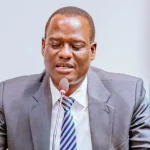
Vice President Kashim Shettima on Monday launched a ten-year plan to grow Nigeria’s capital market from about ₦250 trillion to ₦750 trillion by 2036, three times its present size. He said the plan can only succeed if government policy stays steady long enough for investors to trust it.
Mr Shettima, who was representing President Bola Ahmed Tinubu, spoke at the State House Banquet Hall at the launch of the Nigerian Capital Market Masterplan 2.0 (NCMMP 2.0), which covers 2026 to 2036. The event was part of the National Capital Market Conference 2026.
He said the capital market is no longer just a place where investors trade shares. “It has become a strategic pillar of national economic policy and a critical instrument for Nigeria’s development aspirations,” he said.
The Vice President said the real purpose of the ₦750 trillion target is to put money to work for ordinary Nigerians. According to him, the plan places the market “at the centre of infrastructure finance,” so that long projects such as roads and power are paid for with long-term Nigerian savings, instead of short-term or foreign loans.
The plan also aims to deepen the bond market for state governments, open the way for farming, solid minerals and growing businesses to raise money at home, and make Nigeria a centre for raising capital across Africa. Mr Shettima said it would widen participation through technology and investor education “so that the market belongs to the many, not the few.”
Mr Shettima said the market’s recent run was the reward for hard decisions by the Tinubu administration. When it took office in May 2023, he said, the Nigerian Exchange All-Share Index stood at just over 55,000 points. It is now above 247,000.
The value of listed shares has risen from about ₦30 trillion to over ₦160 trillion, he said, and crossed ₦100 trillion for the first time in January. Counting bonds, he said, the total value of the market is now more than ₦221 trillion. In US dollar terms, he said, Nigeria ranked third out of 92 markets in the world by August, with returns of about 65 per cent.
“Markets reward courage and punish drift,” he said. He listed the removal of the fuel subsidy, the unification of the exchange rate, tax reforms, higher capital requirements for banks and the Investments and Securities Act 2025 as the decisions behind the rally. He admitted that each carried a short-term cost and drew criticism.
Mr Shettima spent much of his speech arguing that the plan needs a steady government to deliver it. “Capital has a long memory and a short temper,” he said. He added that investors remember every reversal of policy and run at the first sign of uncertainty.
He said Nigeria has often launched reforms with ceremony and abandoned them halfway. In his words, the gains of the last three years were not won cheaply, and Nigerians made real sacrifices for them. “The hard part of reform is behind us. The rewarding part is just beginning,” he said.
“Continuity of this Renewed Hope agenda is not a slogan,” he said. “For the investor, the pensioner, the young saver and the enterprise seeking capital, it is the surest guarantee that the progress we celebrate today will grow, not unravel.”
As Chairman of the National Economic Council, Mr Shettima said he meets the governors of the 36 states and the leadership of the Federal Capital Territory every month, and that they keep asking where the money will come from. “The budget alone cannot close that gap, and foreign borrowing cannot be our only answer,” he said.
He said he will ask the Council to work with the Securities and Exchange Commission (SEC) so that every state learns to use the market responsibly, through well-structured bonds and credible project plans. He said a state that raises money openly is held to a higher standard. “A deep capital market is therefore not only a source of finance. It is a discipline for good governance,” he said.
In his welcome address, the Director-General of the SEC, Dr. Emomotimi Agama, said the market has done well but is not yet reaching enough Nigerians. “Our market is growing in value; it is not yet growing deep enough in people,” he said.
He said too few Nigerians own a share, a bond or a unit in a collective investment scheme, and too many savings sit idle, “quietly eroded by inflation.” Many businesses, projects and states, he added, still look abroad or to the banks alone for money that should be raised from Nigerians.
Dr. Agama said the market’s standing has also improved abroad. On 21 September, he said, FTSE Russell returned Nigeria to its Frontier Market Index, ending nearly three years outside the global benchmarks. “That is not a compliment we paid ourselves,” he said. “It is the verdict of the world’s investors on the credibility of our reforms.”
He said the market is up about 60 per cent this year, after a 51 per cent return in 2025.
Alongside the Masterplan, the National Savings Scheme was launched by the Minister of Finance and Coordinating Minister of the Economy, Mr Taiwo Oyedele. Dr. Agama said it will let every Nigerian, “the trader in Onitsha, the farmer in Benue, the young graduate in Yenagoa,” save in a simple and trusted way and have the money invested.
The scheme has full legal backing under the Investments and Securities Act 2025. Its money will be handled by professional fund managers registered with the SEC. Under an agreement signed on the day with the Nigeria Revenue Service and FSD Africa, it will also offer tax incentives to reward people who save. Mr Shettima said: “A nation that saves can invest in itself. The Masterplan provides the channels; the Scheme helps fill them.”
Dr. Agama said a plan is “only as good as its implementation.” The Project Steering Committee and the Capital Market Master Plan Implementation Committee, known as CAMMIC, were inaugurated at the event. “Every commitment in NCMMP 2.0 will have an owner, a timeline and a scorecard, and we will report progress openly to this nation,” he said.
A representative of FSD Africa, Mr Victor Nkiiri, said the new plan is frank about the first Masterplan, which ran for the past decade. It delivered the Investments and Securities Act 2025 and a faster, next-day settlement of trades. Collective investment schemes grew from ₦263 billion to over ₦9 trillion. But only two of the twenty-one main objectives were fully achieved.
“A plan that begins with an honest reckoning is more likely to end well,” Mr Nkiiri said. He said the new plan rests on five pillars: regulation, market infrastructure, issuance, the investor base and institutional capability. Each has named owners, timelines and measures of progress. He added: “Masterplans do not deliver themselves. Institutions do.”
He said the plan also aims to channel Nigeria’s ₦28 trillion pension pool into more productive uses. Its measures on cross-border listings and African Depositary Receipts line up with the African Continental Free Trade Area, and he said they “could help African savings finance African growth.”
FSD Africa and the UK’s Foreign, Commonwealth and Development Office supported the development of the plan. Mr Nkiiri also thanked the consultants Genesis Analytics and Bourse Consult.
Mr Shettima told the SEC and market operators that government had done its part. “Now it is your turn to deliver,” he said, urging them to protect investors, build confidence and make sure every Nigerian can take part. To foreign investors, he said: “Nigeria is open, Nigeria is reforming, and Nigeria intends to stay the course.”
Speaking to the public, he said: “Your savings can build your country, and your country can reward your savings.”
Dr. Agama said the market should not be judged by how high its index climbs. “History will not judge this market by the height of its index,” he said. “It will judge it by how many Nigerians it made owners, how many businesses it financed, and how many futures it secured.”