

NNPC Retail Discount Is Not a Return of Fuel Subsidy, Says Oyedele
…FG Outlines New Measures to Ease the Pain of High Petrol Prices
By Patience Ikpeme
The Federal Government has said the lower petrol prices at NNPC Retail stations do not mean the return of fuel subsidy, insisting that no public money is being spent on the price cut.
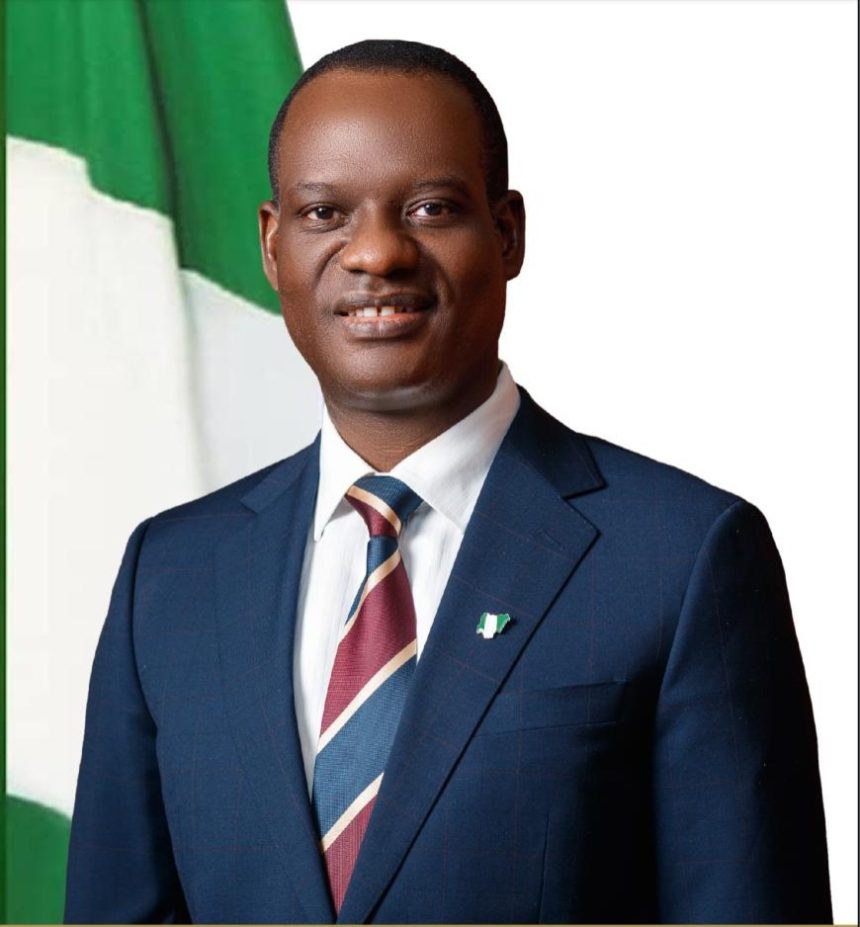
The Minister of Finance and Coordinating Minister of the Economy, Professor Taiwo Oyedele, made the position known in a statement issued in Abuja on Friday. He was responding to commentators who described the discount as subsidy in another form.
According to the minister, motorists have paid less for petrol at NNPC Retail Limited stations since 1 October 2026, after the company reduced its retail margin. He welcomed the relief for households, commuters and transporters, but said the public needed to understand the difference between a margin discount and a subsidy.
Professor Oyedele explained that every fuel marketer adds a margin to the price at which it buys fuel. A margin discount, he said, simply means a retailer agrees to earn less on each litre, or nothing for a period, and passes the saving to customers. The retailer alone carries the cost.
A subsidy, he said, is different because government pays part of what the buyer would have paid, using money that could have gone to salaries, schools, hospitals and roads. He said that arrangement ended in 2023 under this administration and “is not coming back.”
The minister said the discount is not paid for from the federal budget or the Federation Account. He explained that NNPC Retail buys petrol from the Dangote Refinery and other suppliers at market prices and on commercial terms, then adds its own margin. Since the discount is taken from that margin alone, he said, the pump price still reflects the market.
He drew a line between this and the sale of crude oil owned by the Federation. If the country’s crude were sold below market price, he said, the shortfall would be covered by public revenue, and that would amount to a subsidy.
Professor Oyedele added that NNPC Retail, a wholly owned subsidiary of NNPC Limited, has operated for more than 20 years. It was set up to make petroleum products available, accessible and affordable across the country. In his words, its job is to keep supply flowing and to moderate prices, “not necessarily to maximise retail profit.” He noted that it has often sold fuel at lower prices than other marketers, and that the current discount continues that role.
On fears that the discount could reduce the dividends NNPC pays to the Federation, the minister said this need not happen. A smaller margin on each litre can be balanced by higher sales, and the goodwill of customers can last long after the discount ends. This, he said, could raise the company’s profits and its payments to government, which he described as “a win-win” for consumers and the government. He added that retailers all over the world use margin discounts as a normal business strategy.
He also dismissed concerns about smuggling. The retail margin on petrol, he said, is below 5 per cent of the pump price, so a discount within it cannot meaningfully change the price gap between Nigeria and its neighbours, where petrol already costs 20 to 40 per cent more. He said it therefore gives no new reason to smuggle fuel and does not distort the market the way the old subsidy regime did.
Separately, the Presidency, in a statement signed by the Special Adviser to the President on Information and Strategy, Mr Bayo Onanuga, said NNPC had agreed to give up its petrol retail profit margin and sell at cost. The aim is to protect vulnerable households from the effects of global crude oil price shocks. The statement said NNPC Retail, which already sells at the lowest price in the market, will roll out the new arrangement within 30 days, with commercial vehicle operators among the main beneficiaries. For example, if NNPC’s landing cost is N1,300 per litre, it will sell at N1,300.
The gesture, backed by President Bola Ahmed Tinubu, was among several measures announced by the minister. He said he hoped other marketers would follow NNPC’s example, since the current surge in crude and petrol prices is not expected to last.
One of the measures is the forward sale of crude oil to domestic refineries. As output rises and crude already committed to other buyers is freed up, government expects this to protect pump prices from swings in the global market.
The Federal Government is also negotiating a ceiling of N1,350 per litre on the ex-gantry or landing cost of petrol. If costs rise above that figure, refiners and importers would absorb the difference and recover it later, when crude prices or the exchange rate improve, without breaking the ceiling. Professor Oyedele said this is “neither a subsidy nor a price control,” but a way of smoothing prices over time. He gave an example: a steady price of N1,400 today and tomorrow is better than N1,500 today and N1,300 tomorrow, because unstable prices add to uncertainty and cost, and transport fares rarely fall as fast as they rise. The ceiling will be reviewed every month, adjusted as costs change, and the figures published.
On transport costs, he said that under the 2025 tax reform laws, the Federal Government is working with the states and security agencies to curb road taxes and levies that push up fares and the cost of moving goods. Government is also raising funding for cash transfers to the poorest households and for cheaper loans to small businesses and consumers.
Government is also speeding up the rollout of Compressed Natural Gas (CNG) with the states. It says CNG costs 60 to 70 per cent less than petrol and expects transport operators to pass the savings on to passengers through lower fares.
The government will also consider an excess profit tax on any operator in the energy value chain found to be taking unfair advantage of consumers. Money raised from taxing price gouging will be used only to ease the effect of high fuel prices, through transport support or vouchers for minimum-wage earners in cities. The Federal Government will also work with the National Assembly on stronger tax relief for low-income earners in the 2027 Finance Bill.
Other steps include cutting regulatory costs that raise the cost of doing business and, in turn, the prices of goods and services. Traffic agencies will work to ease congestion in major cities to reduce fuel use, while the new NIPOST address codes are expected to make delivery services cheaper and more efficient.
The government is also investing in a National Strategic Fuel Reserve. Under published rules, it will release refined products into the market whenever a global disruption or hoarding threatens supply and prices. The minister said this is not a subsidy and does not fix prices. It is meant to prevent artificial scarcity, discourage market manipulation and give the country long-term energy security.
Professor Oyedele stated clearly that none of these measures brings back a blanket subsidy, which he said would cause long-term harm for short-term relief. Each is aimed at those who need help most, without putting the wider economy at risk.
The Presidency acknowledged the hardship caused by high fuel prices. It said, “Removing the fuel subsidy came at a price,” but the old system had been tried and led to scarcity, smuggling, a collapsing currency and a fiscal crisis. “We cannot afford to live through it again,” it said.
It added that government is not trying to undo a necessary reform but to make sure its benefits reach more Nigerians, faster. It also said a broader package of fiscal measures is being prepared to bring inflation down to single digits in the near term.