
CBN, Singapore Sign Pact to Deepen Financial Innovation
By Patience Ikpeme
Cardoso seeks lasting foreign investment as Nigeria strengthens financial ties with Asia
The Central Bank of Nigeria (CBN) has signed an agreement with the Global Finance & Technology Network (GFTN) of Singapore to promote financial innovation, as Nigeria steps up efforts to attract long-term investment and strengthen links between its financial markets and those of Asia.
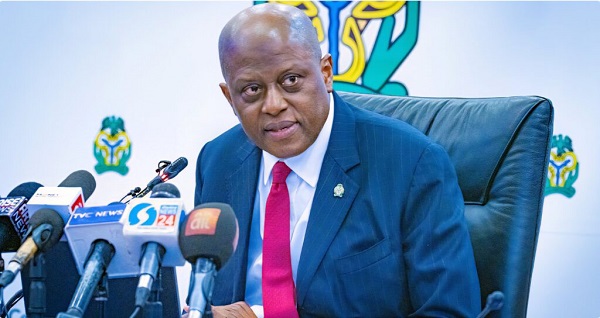
The agreement, signed during CBN Governor Olayemi Cardoso’s engagements in Singapore, provides a framework for cooperation between financial institutions and innovation centres in both countries. It is part of a broader effort to translate Nigeria’s financial sector reforms into stronger international partnerships, improved market infrastructure and new opportunities for investment and trade.
The CBN delegation also held discussions with Singapore’s Monetary Authority of Singapore (MAS) on financial sector development, regulation, market connectivity and emerging technologies.
The engagements came ahead of the IMF–World Bank Annual Meetings in Bangkok, Thailand, and included a Nigeria–Asia Financial Connectivity Dialogue organised by the CBN in partnership with J.P. Morgan, Nigerian Exchange Group (NGX Group) and FMDQ Group.
Speaking at the dialogue, Cardoso said the success of Nigeria’s economic reforms would depend not only on attracting foreign capital but also on building the confidence investors need to maintain and expand their investments in the country.
“The real test of reform is not whether you can attract capital once; it is whether you create the confidence for capital to stay, return and grow,” he said.
The governor said Nigeria was working towards building deeper, more liquid and internationally connected financial markets, with recent reforms providing the basis for the next stage of development.
He explained that changes to the foreign exchange market were designed to remove distortions, improve transparency and restore confidence in the rules governing transactions.
For Nigeria, the challenge is to ensure that these changes produce lasting results by making the financial system more predictable and attractive to local and foreign investors. This would require credible monetary policy, stronger governance, better-functioning markets and clear rules for participants.
Cardoso said economic stabilisation should serve as a foundation for wider investment rather than an end in itself. He pointed to the need for greater participation by long-term institutional investors, stronger financial market infrastructure and closer connections with international markets.
The dialogue, hosted at J.P. Morgan’s Singapore offices, brought together investors, financial institutions, businesses and Nigerians living and working across Asia to discuss Nigeria’s reform programme and the opportunities for stronger financial cooperation.
The discussions covered capital formation, confidence in the foreign exchange market, the development of deeper financial markets and the infrastructure needed to attract sustained international participation.
The panel was moderated by Gbolahan Taiwo, J.P. Morgan’s Chief Economist for Africa. Other participants included Temi Popoola, Group Managing Director and Chief Executive Officer of NGX Group; Zeal Akaraiwe, Group Managing Director and Chief Executive Officer of FMDQ Group; Aderinola Shonekan, CBN Director of Trade and Exchange; and Olumayokun Ajibade, Special Adviser to the Governor on Financial Markets and Economic Policy.
Beyond attracting investment, Cardoso said Nigeria’s engagement with Asian markets was intended to build lasting relationships among financial institutions, businesses, markets and people.
He identified opportunities to strengthen links between Nigerian and Asian banks and financial market institutions, improve payment and settlement channels, and encourage greater participation by Nigerians living and working across the region.
More efficient payment and settlement systems could make cross-border transactions easier for businesses and financial institutions, while closer cooperation between markets could widen access to investment opportunities.
The CBN’s discussions with MAS provided an opportunity for officials from both sides to exchange experiences and explore areas for continued engagement. The talks covered financial regulation, market development and innovation, including the potential contribution of emerging technologies to stronger financial systems.
Although the discussions identified areas of mutual interest, the statement did not announce specific projects or implementation timelines arising from the engagement with MAS.
The separate agreement with GFTN establishes a framework for cooperation in financial innovation. It is intended to connect relevant institutions and innovation ecosystems in Nigeria and Singapore, explore shared priorities and identify practical opportunities for collaboration.
Financial technology and artificial intelligence also featured in the governor’s discussions on the future of the sector. Cardoso pointed to their potential to improve financial services, strengthen risk management, expand access to financial products and enhance the ability of regulators to supervise the financial system.