FG Offers Petrol Relief Package, Rules Out Blanket Subsidy
By Patience Ikpeme

The Federal Government has announced a new set of measures to ease the burden of rising petrol prices on Nigerians, including a proposed ₦1,350 per litre cap on the landing cost of petrol and a 30-day discount on margins at NNPC Limited filling stations.
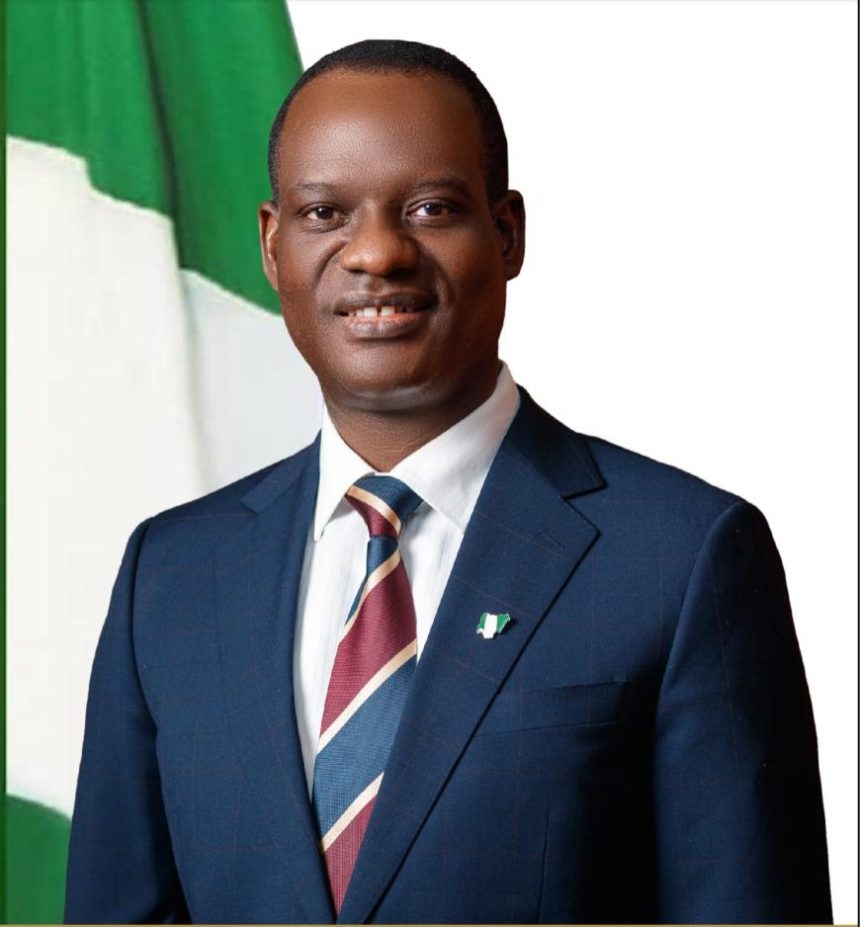
The Minister of Finance and Coordinating Minister of the Economy, Professor Taiwo Oyedele, announced the package at a press briefing in Abuja yesterday, where he spoke on fuel prices and the question of subsidy. He said the measures were meant to reduce the pressure that costlier fuel has placed on households and businesses.
According to the Minister, government is negotiating the ₦1,350 ceiling so that pump prices do not jump sharply each time global crude oil prices or the exchange rate move. Under the plan, refiners and importers would absorb the extra cost whenever their expenses rise above the ceiling, and would recover it later when crude prices or the exchange rate improve.
Professor Oyedele insisted that this was not a return to subsidy. “This is neither a subsidy nor a price control: it is designed to smooth prices over time rather than suppressing them,” he said. He added that the ceiling would be reviewed monthly, adjusted where necessary, and the figures published for transparency.
The 30-day margin discount at NNPC Limited stations will give priority to public transport operators across the country. The government expects it to bring quick relief to transporters and possibly to commuters who have been bearing higher fuel and transport costs. It is also raising funding for cash transfers to vulnerable households and for cheaper loans to small businesses and consumers.
On those who may exploit the situation, the Minister said government would consider an excess profit tax on any operator along the energy value chain who takes undue advantage of consumers. Money raised would be used only to soften the effect of fuel prices, through transport support or vouchers for urban minimum-wage earners considered most at risk. Government also plans to work with the National Assembly on bigger tax relief for low-income earners in the 2027 Finance Bill.
To cut the cost of moving people and goods, government will also work with states, under the 2025 tax reform laws, to remove illegal road taxes and levies. It is also tightening supervision of the petroleum market through the Nigerian Midstream and Downstream Petroleum Regulatory Authority (NMDPRA), which is expected to guard against hoarding, diversion, unjustified margins, poor product quality and under-dispensing at filling stations.
Professor Oyedele said government would continue to prefer targeted and temporary relief over a blanket subsidy. He noted that more than 50 countries had adjusted energy taxes in response to the current global energy crisis, while the International Energy Agency had advised measures that reduce fuel use and secure supply rather than broad subsidies.
He pointed out that Nigeria had already given large tax and duty relief on petroleum products. The full waiver of taxes and duties on petrol, he said, was worth more than ₦3.3 trillion in the year to September 30, 2026, and saves consumers between ₦400 and ₦600 per litre, representing over ₦5 trillion in potential tax revenue. He said this has kept Nigerian petrol cheaper than in many other countries: 20 to 30 per cent below prices in Benin, Togo and Cameroon, and 30 to 40 per cent below Ghana, Kenya and South Africa. He put the Nigerian price at about 35 per cent under the global average, among the 25 lowest in the world.
Government also plans to create a National Strategic Fuel Reserve to shield consumers and businesses from future energy shocks. Under clear and published rules, refined products would be released into the market whenever a global disruption or hoarding threatens supply and prices. The Minister said the reserve would neither act as a subsidy nor fix pump prices, but would help prevent artificial scarcity, discourage market manipulation and reduce price swings.
Domestic refining is also part of the strategy. Professor Oyedele said deregulation had made local refining commercially viable and helped Nigeria keep fuel available when other countries struggled to secure cargoes. Government is considering forward sales of crude to local refineries as domestic output rises and previously committed crude becomes available, which would protect refiners from sudden changes in global prices. He also pointed to the naira-for-crude arrangement, under which local refiners buying Nigerian crude in naira need fewer dollars and are less exposed to exchange-rate movements. He said it would work better as crude production improves.
Government is also promoting compressed natural gas (CNG) as a cheaper alternative to petrol and diesel. More than 120,000 vehicles now run on CNG, supported by over 400 conversion centres, 96 refuelling stations and 18 liquefied-to-compressed natural gas stations. More than 550 CNG buses have been deployed, and fares have dropped by 30 to 50 per cent where they operate. According to customs data cited by the Minister, imports of CNG vehicles, tricycles, electric vehicles and renewable-energy equipment have more than doubled since May 2023, with associated duty waivers above ₦100 billion.
Explaining why a blanket subsidy was off the table, the Minister said it could undo gains made since subsidy removal in 2023. Weaker government revenue, he warned, could lead to a sovereign credit downgrade, higher borrowing costs, capital flight, falling foreign reserves and fresh pressure on the naira. It could also threaten progress on inflation and make it harder for the Central Bank to keep lowering interest rates. He said it could bring back old problems such as fuel smuggling, scarcity, foreign exchange pressure and fiscal weakness. “We have already experienced the consequences of subsidising petrol and cannot afford to return to the same cycle,” he said in substance.
Government said subsidy removal released ₦15.8 trillion into the Federation Account between June 2023 and December 2025, of which ₦10.4 trillion went to state and local governments. The Minister said this helped states escape the salary difficulties they faced earlier: 27 states could not reliably pay salaries in May 2023, but none is in that position today. At the federal level, about two-thirds of the savings, along with other independent revenue and borrowing, funded spending on higher wages, infrastructure, electricity subsidy and social transfers. The rest went largely to stabilising the economy, including higher debt-servicing costs as interest rates rose to fight inflation.
Government will continue to support vulnerable electricity consumers and producers, including through support for feed gas and fertiliser to moderate energy and food costs. It also hopes to cut fuel use and business costs through better traffic and logistics management, with traffic agencies expected to ease vehicle flow in major cities, and NIPOST’s newly launched address codes expected to make logistics cheaper and more efficient.
Professor Oyedele disclosed that government is working on a wider package of fiscal measures to bring inflation down to single digits in the near term, with details to follow in the coming months.
He said government remained open to other ideas, but any plan to lower petrol prices must be credible. “We remain open to ideas. But any credible proposal should answer three questions. What will it cost? How will it be funded sustainably? And what pump price will it deliver?” he said.
Government now faces the task of balancing immediate relief for consumers against the need to protect public finances and the economic gains it says have followed the removal of the petrol subsidy.