
States’ Real Revenue Rises 93%, World Bank Says
By Patience Ikpeme

State governments in Nigeria recorded a 93 per cent increase in revenue in real terms between 2023 and 2025, giving them more money to invest in infrastructure and public services, the World Bank has said.
However, the bank warned that the gains from the Federal Government’s economic reforms would make little difference to ordinary Nigerians unless states improve how they spend public funds, strengthen accountability and deliver better services.
The findings are contained in the latest Nigeria Development Update (NDU), titled Beyond the Federal Purse: How Higher Revenues Reshaped State Priorities, which examines how increased government revenues have affected spending priorities across the country.
According to the report, states benefited from higher statutory allocations, refunds, payments of outstanding Federal Government obligations, special intervention funds and improved Value Added Tax (VAT) collections.
The increase followed a 69 per cent rise in gross federation revenues in real terms over the same period, driven largely by exchange-rate reforms, the removal of petrol subsidy and improved revenue collection.
The additional funds have enabled state governments to increase spending on public projects, although the World Bank said the quality and direction of expenditure would determine whether the revenue gains translate into better living conditions for residents.
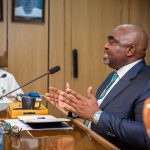
The World Bank’s Country Director for Nigeria, Mathew Verghis, said the increase in state revenues presented an important opportunity to address longstanding gaps in infrastructure and essential public services.
“The bold macroeconomic reforms have substantially increased fiscal revenues at the state level, providing a unique opportunity to improve infrastructure, education, healthcare, and water services, which are critical to creating more and better jobs,” he said.
Verghis, however, warned that having more money available would not automatically improve the welfare of citizens without better management of public resources.
“Strengthening spending efficiency, accountability, and service delivery will be essential to ensuring that public resources improve the lives of Nigerians,” he said.
The report showed that state governments increased their total expenditure by about 92 per cent in real terms between 2023 and 2025, reflecting their greater financial capacity.
Capital expenditure also took a larger share of state budgets, accounting for 61 per cent of total spending in 2025, compared with 46 per cent before the revenue increase.
Transport infrastructure received the largest increase among infrastructure-related spending areas, while housing and agriculture also attracted more funds.
The shift towards capital projects suggests that states have begun directing a greater proportion of their resources towards investments that could support economic activity, improve transportation and create jobs.
However, the bank expressed concern over the declining share of state spending devoted to education, despite the increase in the amount spent on schools in naira terms.
Education accounted for 12.1 per cent of total state expenditure in 2025, down from 14.9 per cent in 2021.
Health spending remained at about seven per cent of total expenditure, while social protection received a larger share, rising from 1.4 per cent to 4.4 per cent over the period.
The figures suggest that increased revenue has not translated into a stronger budgetary commitment to education, a sector central to developing the skills needed by young Nigerians and improving their employment prospects.
The World Bank’s findings also point to growing efforts by state governments to raise more money internally instead of depending almost entirely on allocations from the Federation Account.
Improved internally generated revenue could give states greater control over their finances and help them maintain public services when federal allocations fall.
However, the challenge remains ensuring that the additional income is managed efficiently and directed towards projects that meet the needs of residents.
Economic growth strengthens
Beyond the increase in state revenues, the World Bank said Nigeria’s economy had maintained a stronger growth path, supported by services and an improving contribution from agriculture.
The economy grew by 4.2 per cent in the first half of 2026, compared with 3.9 per cent in the corresponding period of 2025 and 3.5 per cent in 2024.
The bank also reported that the country’s poverty rate had levelled off for the first time since 2019, although the cost of living remains a major concern for many households.
In its separate Africa Economic Update, the World Bank projected that Nigeria’s economy would grow by 4.3 per cent in 2026, compared with four per cent in 2025.
Growth is expected to rise further to 4.4 per cent in both 2027 and 2028.
Nigeria was among the major economies in Sub-Saharan Africa whose growth forecasts were revised upwards, reflecting improved economic performance and stronger activity outside the oil sector.
The bank’s projections suggest that the country is gradually recovering from the pressures associated with economic adjustment, although the benefits of growth will depend on the extent to which it creates jobs and improves household incomes.
Inflation expected to ease
The World Bank also expects inflation to decline over the coming years, offering the prospect of some relief for households and businesses struggling with high prices.
It projected that inflation would fall from 23 per cent in 2025 to 15.7 per cent in 2026 and 12.2 per cent by 2028.
Nigeria was listed among countries expected to record a reduction of more than five percentage points in inflation, alongside Angola, Ghana and Zambia.
The Nigeria Development Update reported that inflation fell from 27.6 per cent in January 2025 to 15.2 per cent in December of the same year.
However, higher fuel prices following the conflict in the Middle East, together with seasonal increases in food prices, have slowed the pace of further declines.
For Nigerian households, a sustained reduction in inflation would mean that prices rise more slowly. It would not necessarily mean that food, transport and other essential items return to their previous prices.
The bank’s outlook therefore points to the importance of sustaining the progress made in bringing inflation down while addressing the pressures that continue to affect household purchasing power.
Oil prices support the naira and external accounts
Higher international oil prices have also supported Nigeria’s foreign exchange position and public revenues, according to the World Bank.
The bank said Nigeria and Angola benefited from stronger oil prices, which generated additional dollar inflows and helped ease pressure on their currencies.
It noted that the increased foreign exchange earnings provided Nigeria with some protection against exchange-rate pressures following the outbreak of the Middle East conflict.
Several other African currencies, including those of the Democratic Republic of Congo, Ghana, Seychelles and South Africa, lost more than five per cent of their value after the conflict began.
Nigeria was not among the countries listed, although the report did not provide an exact figure for the naira’s performance over the period.
Nigeria’s gross external reserves rose above $54 billion in September, supported largely by foreign portfolio inflows.
The increase in reserves provides the country with a stronger external buffer, although the contribution of short-term investment flows means that the position remains exposed to changes in investor sentiment.
The country’s external accounts also recorded an improvement, with the current account surplus rising to $12 billion, equivalent to 7.1 per cent of gross domestic product, in the first half of 2026.
This compared with $8.6 billion, or 6.7 per cent of GDP, in the corresponding period of the previous year.
Higher oil prices contributed to the stronger external position and increased government revenues. However, the report noted that part of the benefit to public finances was reduced by existing oil-backed borrowing and forward sales.
The development means that, although stronger oil prices can improve Nigeria’s financial position, the full benefit may not be available for immediate government spending because of prior financial commitments.
Business activity gains momentum
The World Bank also pointed to improving business conditions, supported by stronger economic activity in agriculture, oil and non-oil sectors.
Nigeria’s economy expanded by 4.43 per cent in the second quarter of 2026 compared with the same period a year earlier, with farming and oil contributing to the growth.
A survey by Stanbic IBTC Bank also indicated stronger private-sector activity in August.
Nigeria recorded a purchasing managers’ index (PMI) score of 54.3, above Kenya’s 49.7 and South Africa’s 50.5.
A score above 50 indicates that business activity is expanding, while a reading below that level points to contraction.
The World Bank said the Nigerian reading reflected “strengthening business sentiment and sustained momentum in non-oil economic activity.”
The improvement suggests that businesses are experiencing better operating conditions, although the extent to which this will translate into additional jobs and higher incomes will depend on how long the momentum is sustained.
The bank also noted that Nigeria and a number of other African countries had largely maintained market-based fuel pricing, limiting the need for governments to spend heavily on shielding consumers from increases in international fuel prices.
However, it said targeted assistance for poor households could still be necessary to protect vulnerable people from the effects of higher energy and transport costs.
Risks to the recovery remain
Despite the improved outlook, the World Bank warned that the benefits of Nigeria’s economic recovery remain vulnerable to external and domestic risks.
It said high fuel prices continued to place a heavier burden on low-income households, making it more difficult to reduce poverty even as economic growth improves.
The country’s reliance on oil-related revenue also leaves public finances exposed to a possible fall in international oil prices.
Other risks include sudden movements in foreign investment, disruptions to oil production and increased government spending ahead of the 2027 general elections.
The bank warned that election-related expenditure could “weaken reform momentum” if it undermined the policies supporting the current economic recovery.
These risks make the management of increased public revenue particularly important for state governments, which are receiving larger allocations at a time when households continue to face pressure from the cost of living.
The central message of the Nigeria Development Update is that higher revenue gives states an opportunity to address infrastructure shortages and improve essential services, but the ultimate measure of success will be whether Nigerians experience better schools, healthcare, water supply, transport and employment opportunities.
For the states, the challenge is no longer only how to obtain more money, but how to turn the additional funds into lasting improvements in the lives of their citizens.