

FG Panel to Review Withholding Tax, Digital Tax Rules
By Patience Ikpeme

The Federal Government has inaugurated a Technical Subcommittee on Fiscal Policy and Tax Reforms, saddling it with the task of reviewing Nigeria’s withholding tax regulations and the rules guiding the taxation of digital and cross-border businesses, ahead of the 2027 Finance Bill.
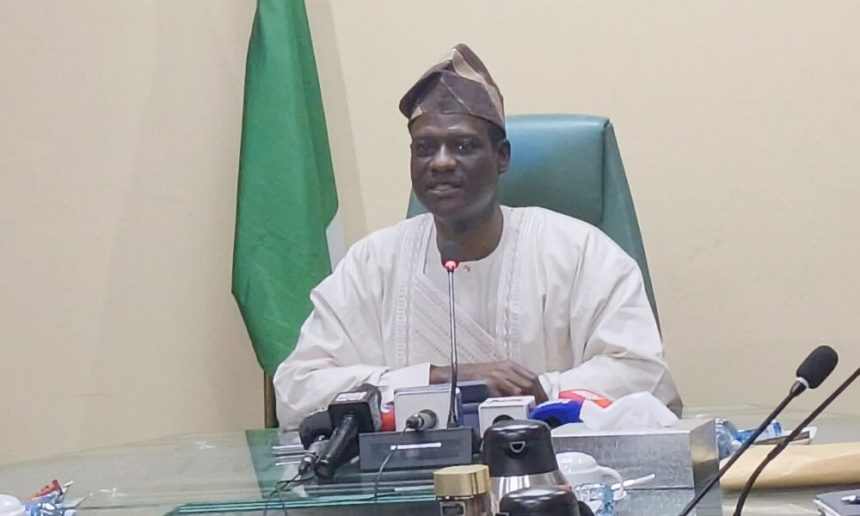
Speaking at the inauguration in Abuja, the Minister of Finance and Coordinating Minister of the Economy, Professor Taiwo Oyedele, who is also Chairman of the Presidential Fiscal Policy and Tax Reforms Committee, said the assignment builds on the work that began when President Bola Ahmed Tinubu set up the parent Committee in July 2023.
He recalled that at the time, Nigeria’s tax system had grown too complicated and scattered, with businesses burdened by multiple taxes and agencies, low-income earners and small businesses carrying more than their fair share of the load, while government revenue remained low despite the many taxes in place.
He said that effort led to the passage of the Nigeria Tax Act 2025, the Nigeria Tax Administration Act 2025, the Nigeria Revenue Service (Establishment) Act 2025 and the Joint Revenue Board (Establishment) Act 2025, all of which took full effect from January this year and are widely regarded as the most far-reaching overhaul of Nigeria’s tax system in decades.
Professor Oyedele explained that passing a law is never the final step in any reform, noting that the real test comes when the law meets everyday economic life, as businesses interpret it, tax officials apply it, investors react to it, and ordinary citizens feel its effect. According to him, this process of implementation naturally throws up areas that need to be clarified or adjusted, and that is the reason the new Committee has been formed.
He described the Finance Bill 2027 as part of an ongoing reform process rather than a routine yearly exercise, stressing that the Committee’s job is not to rewrite the 2025 reforms but to protect their core principles while learning from how they have worked in practice. He said the Committee should identify where the law has created confusion, where it has produced results nobody intended, where compliance can be made easier for taxpayers, and where the country can do more to attract investment and stay competitive.
The Minister said this was why the public Call for Inputs that preceded the Committee’s work went beyond tax matters alone to cover fiscal policy, public financial management, debt, transparency, capital markets and cross-border money flows, since he said the fiscal system covers much more than taxation alone, including how government raises money, spends it, borrows, manages assets and coordinates its institutions.
He disclosed that the government received 134 submissions from all the geopolitical zones under the Call for Inputs, and said the input from businesses, investors, professional groups, civil society, academics and ordinary citizens must be treated seriously and judged strictly on merit rather than on who submitted it.
Oyedele said early themes from those submissions include calls to simplify the new tax laws, including areas like VAT thresholds, withholding tax and capital gains treatment; stronger complaints about multiple taxation and poor coordination among revenue agencies; requests for more digitalisation so taxpayers are not made to submit the same information repeatedly; proposals to protect taxpayers’ rights and speed up refunds, especially for small businesses; and suggestions on how to boost investment in sectors such as mining, renewable energy, healthcare and capital markets.
Laying out the principles that should guide the Committee, Professor Oyedele urged members to protect the integrity of the reforms already achieved, since every tax change creates winners and losers and what matters is whether a policy is fair and workable, not whether everyone likes it. He asked the Committee to be guided by evidence, always asking what problem a proposal solves, what it costs, who gains, who loses, and what side effects it might create.
He also urged members to look at the economy as a whole rather than chase a single goal, saying a measure that raises revenue on paper could end up costing the wider economy far more. He said tax policy should favour investment, business expansion and productivity, explaining that government’s philosophy is to tax wealth rather than poverty, profit rather than capital, and consumption rather than production.
The Minuster further asked the Committee to keep the system as simple as possible, noting that complexity itself functions like a hidden tax, since it raises the cost of compliance and opens the door to abuse. He also asked members to weigh how their recommendations would affect low-income households, workers, small businesses, women and young people, and to think about long-term consequences so that solutions to today’s problems do not create fresh distortions for the future.
On withholding tax specifically, the Minister said the Committee must review the Deduction of Tax at Source Regulations 2024 against the new tax laws and come up with a revised set of Withholding Tax Regulations, stressing that withholding tax is meant to be an advance payment and a compliance tool, not an extra cost of doing business or a tax on companies’ working capital.
On the Significant Economic Presence rules, he said the Committee must review the Companies Income Tax (Significant Economic Presence) Order 2020 and design an updated framework that fits Nigeria’s new tax laws and international best practice, adding that in today’s digital and globalised economy, the country must protect its right to tax digital and cross-border businesses without pricing itself out of competitiveness.
Professor Oyedele gave the Committee six weeks to complete its assignment and submit its report, and said the government deliberately brought together the Ministry of Finance, Ministry of Justice, the Nigeria Revenue Service, the Joint Revenue Board, Customs, SMEDAN, the organised private sector and professional bodies around one table so that issues could be resolved through direct collaboration.
He said the Ministry of Justice would be involved from the beginning of the drafting process rather than being brought in only to review finished documents, and directed members to keep their deliberations and draft documents confidential, declare any conflict of interest, and step aside from voting on any matter where such conflict exists.
The Finance Minister said the first phase of the reform process was about changing the structure of Nigeria’s tax system, but the next phase must be about making that structure work properly by addressing complexity and providing clarity for taxpayers. According to him, success will not be judged by how many sections of the law are changed, but by how many real problems are solved for Nigerians and businesses, and he urged members to be rigorous, listen widely, challenge assumptions and always put the national interest first.
Also speaking at the event, the Co-Chair of the Subcommittee, Mr Albert Folorunsho, described the assignment as both important and time-sensitive, noting that it covers preparing the 2027 Finance Bill, reviewing the withholding tax regulation and examining the Significant Economic Presence order with a view to recommending appropriate rules.
He said, “These assignments are central to building a tax system that is fair, clear, efficient, and supportive of investment and sustainable economic growth,” adding that the Committee’s recommendations must be technically sound, workable for government to implement, and responsive to the real challenges facing taxpayers, businesses and government.
On the six-week timeline, Mr Folorunsho admitted it appears short but said he was confident the experience and commitment of Committee members would see them through.
He said the Committee would work as a team, consult relevant stakeholders and remain focused on strengthening government revenue without placing unnecessary pressure on taxpayers. He assured the Minister, on behalf of himself and other members, of their diligence, objectivity and commitment to producing recommendations worthy of the confidence placed in the Committee, and said he looks forward to working closely with every member as they carry out the assignment.