

FG Pays N18bn to Ex-Nigeria Airways Workers
…Reforms Contractor Payments

By Patience Ikpeme
The Federal Government has paid ₦18 billion in outstanding severance benefits to two thousand seven hundred former workers of the defunct Nigeria Airways, ending a wait that stretched for more than two decades for many of the affected families.
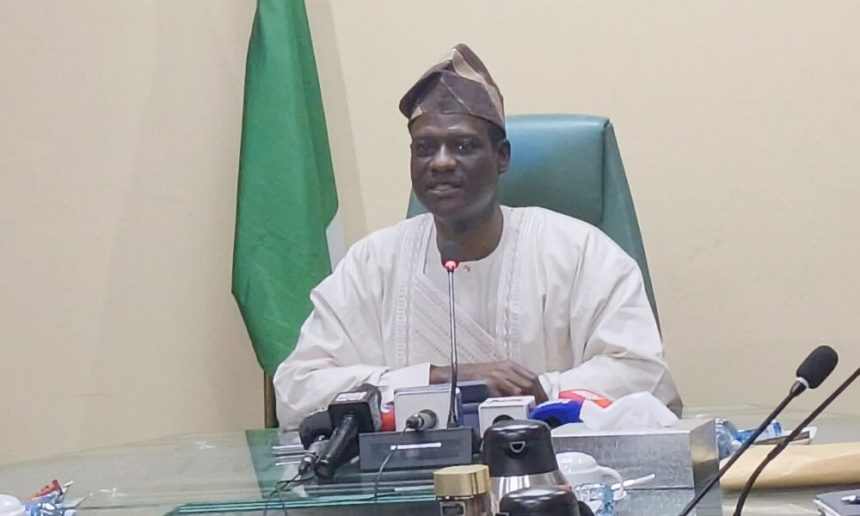
The Minister of Finance and Coordinating Minister of the Economy, Mr Taiwo Oyedele, announced this while explaining that two thousand one hundred former workers have already been paid in batches one to seven, while six hundred more beneficiaries in batches eight and nine will be paid within the next few days. He said the exercise, carried out on the directive of President Bola Ahmed Tinubu, was long overdue.
“Today is about much more than the payment of money. It’s about people, dignity, trust and the responsibility of government to honour legitimate obligations to its citizens,” Oyedele said.
He noted that many of the former workers had grown old waiting for their entitlements, while others sadly died before they could receive what was due to them, leaving their families to continue the fight on their behalf. He described the gesture as one that could never fully make up for the length of the delay, but said it was important for government to face up to long-standing debts rather than allow them to drag on for another generation.
“This is ultimately not a favour from government. It is your entitlement. We apologise for the long delay and thank you for your patience,” he said.
According to the minister, the payment exercise involved extensive verification, including biometric capture and confirmation of personal and banking details, to guard against fraudulent claims while ensuring genuine beneficiaries were not shortchanged. He said a follow-up process, known as a mop-up exercise, will address cases involving outdated records, wrong bank details, and beneficiaries who have died, whose next of kin or estates will need to complete the necessary legal steps to receive payment.
Responding to questions on whether the payments accounted for years of inflation, Oyedele explained that government’s approach was to settle the obligations exactly as documented and verified, since there is no legal provision for adjusting old debts for inflation. He said any request for a different treatment would have to be considered separately, adding that government does not discriminate between junior and senior staff in the exercise.
He also explained why the process took as long as it did, saying that Nigeria, like many other countries, has had cases of so-called ghost workers, and government could not begin paying out large sums without first confirming that beneficiaries were genuine. Rather than wait until every single case was cleared, he said, government decided to start paying those already verified while work continued on the rest.
On the treatment of local contractors, Oyedele said the government adopted a new approach that puts small businesses first. He explained that instead of settling the biggest contractors owed billions of naira, government chose to first clear the debts of smaller contractors, an approach directed by President Tinubu as part of a broader change in spending priorities.
He said the first phase of payments covered more than two thousand contractors owed ₦50 million or less, while a second phase raised the threshold to ₦100million and covered about five thousand more contractors. Contractors owed larger sums, running into billions of naira, are instead being invited to negotiate with government and are being offered promissory notes as a form of settlement.
“You can’t give promissory notes to someone who wants to collect ₦10 million to go and pay the salaries of two or three staff and buy food for his family. That is the approach we have adopted,” Oyedele said.
He said feedback from the business community has been encouraging, as more Nigerians now see that government considers the situation of ordinary citizens and small business owners as it works to raise more revenue. He added that government’s goal in the coming months is to reach a point where its promise to pay a contractor can be trusted completely, without contractors needing to know anyone in government before they receive what is owed to them.
“Your business is to do your work. It’s our business to ensure that you are paid, and nobody should ask you for any commission,” he said, warning that any government official found demanding money from a contractor in exchange for payment would be sanctioned immediately, since such a demand amounts to a criminal act.
Looking ahead, Oyedele said government intends to prevent this kind of debt build-up from happening again by being more realistic in its budgeting and by refusing to commit to new capital projects until it is certain of where the funding will come from.